Canada’s canola industry has some opportunities to expand into domestic North American and European markets, particularly in renewable fuels and biofuels, Saskatchewan Premier Scott Moe says.
These comments come as trade with China begins to reopen after months of disruption.
Moe’s remarks respond to a recent research report warning that 90 per cent of Canada’s canola exports are dominated by just two markets: the U.S. and China.
“We are where we are for a reason,” Moe told BNN Bloomberg.
“But I think it also is an opportunity for us to reflect as to where we are going with respect to our reliance on various countries and various markets and what is such an uncertain trade environment globally.”
Moe recently joined Prime Minister Mark Carney on a state visit to China last week. During this trip, a landmark deal was reached to reduce China’s tariffs on Canadian canola seed to approximately 16 per cent.
In exchange, Canada will allow a quota of 49,000 Chinese electric vehicles into the country at a reduced tariff rate of nearly six per cent.
U.S. and China are premium markets for Canola
Both the U.S. and China are the two largest markets, paying some of the highest prices globally for canola, according to Moe.
The U.S. primarily imports canola oil, while China imports the seed.
“Those are the markets you want to be in if you want a premium for your product,” he noted.
Moe emphasized that the province and Canola industry has worked for decades to establish its presence in China.
Saskatchewan accounts for 54 percent of Canada’s total canola production. In 2024, the province produced 19.2 million metric tonnes, according to the Canola Council of Canada.
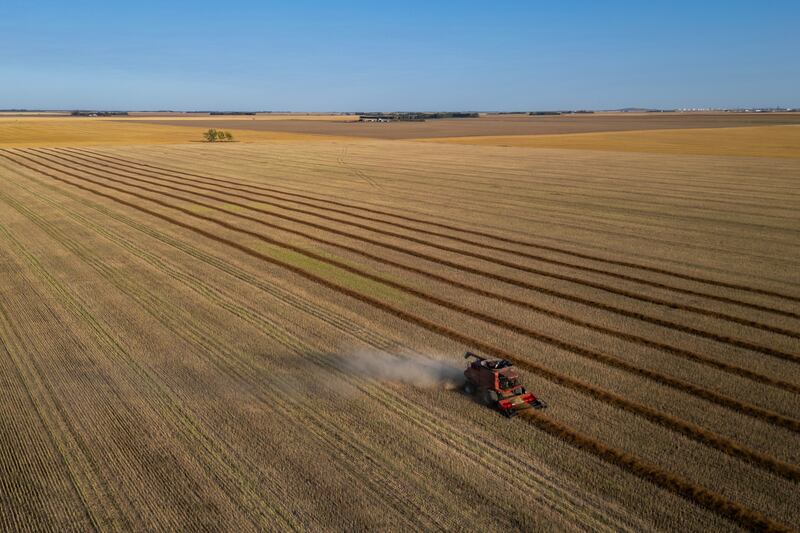
Moe noted that China’s preference for seed reflects its significant domestic crushing capacity. However, Canada’s own canola oil exports have declined for years, and high tariffs on oil remain in place.
“We’ll work to get it removed, but the seed is a much larger number by value, as is the meal,” said Moe.
He added that canola meal is operationally important for Canada’s domestic crush industry.
“The seed and the meal are imperative to the success of the canola industry this year and heading into next year. So we’re pretty happy, and I think the ag industry is pretty happy with the results of this agreement,” said Moe.
Impact of tariffs not felt immediately
Moe noted that the full impact of the tariffs might not have reached the farm gate yet because farmers have been unable to move their crops.
With tariffs dropped, canola can begin moving again in March “from the farm gate to markets like China,” which he said could push prices higher and help bring parts of the agriculture industry back “into the profit zone.”
If there are losses realized, Moe said they were more concentrated in the export sector, particularly among companies that had pre-priced crops and were forced to sell into a depressed market because China was inaccessible.
“All of that being said, this is a huge step forward for not only the Canadian agricultural economy, but the general Canadian economy,” said Moe.
He also pointed to memorandums of understanding tied to opportunities to expand exports to China in areas such as energy, forestry and other products.
Support for Ontario’s auto workers
While Saskatchewan is thrilled with the dropped tariffs on canola, Ontario Premier Doug Ford has slammed Carney’s deal allowing Chinese electric vehicles into Canada, saying it would hurt the auto industry.
“He’s doing exactly what the premier of Ontario should, which is represent the auto workers in the manufacturing sector that are there,” said Moe.
With respect to the recent deal, he said Canada has a significant agriculture industry that is going to benefit form the restoration of agriculture trade.
“Whether it’s canola, seafood, pulse crops...are grown in many provinces, including Ontario, across Canada,” said Moe.

