GM Canada’s recent layoffs and multimillion dollar funding announcement are all part of a broader strategy to expand operations in its Oshawa plant, the company’s president says.
The automaker announced Wednesday it will spend $63 million to upgrade its Oshawa assembly facility, the only GM assembly plant in Canada, to prepare for production of its next-generation pickup trucks.
The funding comes after 500 workers were laid off following the removal of the plant’s third shift. The new investment will not bring back those jobs and is not related to the layoffs, Jack Uppal, president and managing director of GM Canada, told BNN Bloomberg.
“The current investment will be managed by the two shift announcement that we’ve already had in place,” says Uppal.
Uppal said the move is part of a broader production cycle shift.
“We are in a transition year,” he says.
“Our efforts will be to maximize and produce every possible unit that we can as we transition from the current generation to the next generation.”
The $63 million builds on a previously announced $280 million investment for the same purpose in June 2023. In total, GM has invested $1.5 billion in the Oshawa plant since 2020, according to the company.

“These are long-term decisions. If you look at the current generation truck, it’s been building here almost for half a decade,” says Uppal.
“When we make a commitment for the next generation, obviously we make long-term decisions into these investments.”
Truck production tied to demand
The Oshawa plant currently builds Chevrolet Silverado full-size pickup trucks.
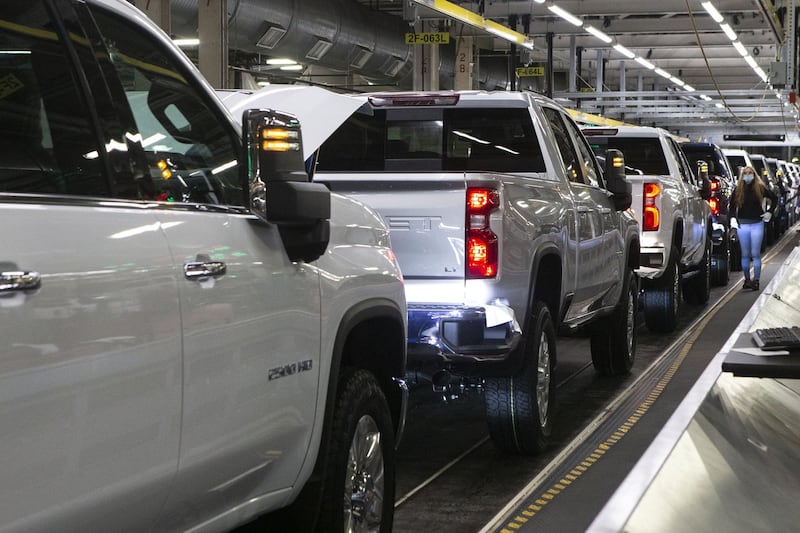
Last year, the facility produced approximately 135,000 pickups. Uppal said this year’s production will depend on consumer demand.
Policy clarity and trade stability key
Uppal also pointed to what he called greater clarity under Canada’s new auto policy, which aims to transition the industry toward electric vehicles while rewarding companies that manufacture in Canada.
He also stressed the importance of the Canada-U.S.-Mexico Agreement (CUSMA) for the entire North American auto industry, which is up for review this year.
“It is a critical piece of how we’ve operated over the last two or three decades, the new North American automotive ecosystem is fully integrated, and the customer basically sets that up,” says Uppal.
With files from Julia Stratton, BNN Bloomberg

