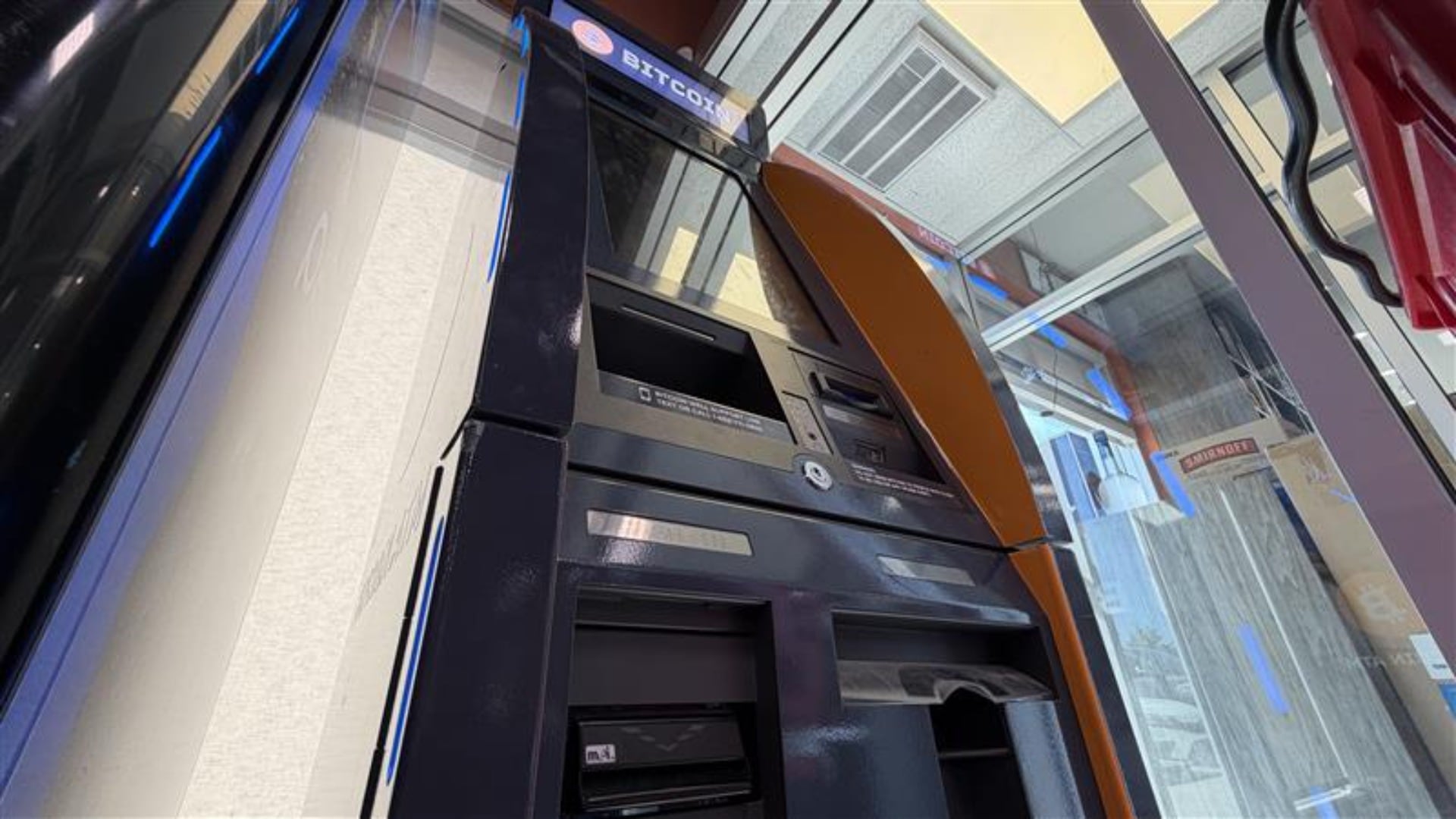
An Edmonton-based cryptocurrency company says new federal proposals that would work to eliminate cryptocurrency ATMs may not address the root of what’s needed for fraud prevention.
Adam O’Brien founded Bitcoin Well in 2014, which first launched in Alberta and quickly spread its operations across Canada and in parts of the U.S.
Bitcoin is a digital currency that allows people to buy goods and services and exchange money without using banks, credit card issuers or other third parties.
O’Brien’s company uses ATMs to facilitate the transfer of cryptocurrency, including Bitcoin, for its customers.
“When I was first buying Bitcoin, there were two options. You could wire money to Russia, you could do some sketchy back-alley deal,” he told CTV News Edmonton.
“We’ve been doing this for about 13 years, and I like to think that we’re leaders in the space for, well, fraud prevention, but also for giving our customers access to Bitcoin.”
Last month, the federal government introduced legislation that would establish a Financial Crimes Agency (FCA), Canada’s first law enforcement agency dedicated to investigating “serious and complex financial crimes” from Ottawa. It would crack down on non-compliant money service businesses.
The federal government’s newly released spring economic update recommends banning crypto ATMs due to their common use as an avenue for scammers.
Alberta RCMP says those ATMs are liable for use in common frauds plastered in headlines as the digital currency rises in popularity: romance or grandparent scams as well as classic online frauds have cost local residents millions in recent years.
The ease for scammers is the ability to have victims transfer money all over the world without any third-party obstacles, like a bank teller.
“Cryptocurrency, by its very nature, is very difficult to trace and locate, and is easily moved around the world,” Alberta RCMP Cpl. Mathew Howell told CTV News Edmonton.
He explained that physical money can be turned into Bitcoin or other forms of cryptocurrency through those ATMs. It then goes into a crypto wallet immediately accessible by a scammer.
“Once it’s into the ATM, it’s irreversible. Because there’s no third-party account holder, we can’t freeze it anywhere,” he added.
O’Brien says he heard about proposed legal changes to crypto ATMs on the TV.
“That was pretty disappointing but at the same time, it’s still just a proposal,” he said. “With that proposal, we’re hopeful that the government is going to consult the industry, and understand what the real implications are here.”
He says those implications are a loss of fluid transactions for users and a need for his company to adapt its software for other uses.
“I believe the downstream effects of this is a reduction of financial privacy and a reduction of financial rights … and a reduction of access to serious financial tools for Canadians,” he said.
He believes a ban wouldn’t eliminate fraud.
“This is not something that’s going to fix the problem. We’re just playing Whack-A-Mole here. We need to actually invest in education.”
While legislation must be passed before any new changes can be made to the future of crypto ATMs, O’Brien says his company will likely work with other industry leaders to advocate to the federal government. That would include looking to educate more susceptible populations to the reality of online frauds.
“We have time-locked messages on the screen that showcase fraud warnings. We are actively monitoring our transactions,” he said of his company.
“There are things we can do. This industry is heavily regulated ... We want to work with the government to, first of all, show them that, but then we also want to work together to understand how we could do a better job in that.”
The Government of Canada website has information available on crypto ATMs, assets and spotting frauds.
With files from CTV News Edmonton’s Connor Hogg

