
Jeffrey Cesari grew up eating ube, a purple yam native to the Philippines, whenever he visited his relatives there. But seven months ago, when he encountered it in a latte at a Turkish cafe, it suddenly sparked a business idea.
The 31-year-old former auditor thought if people in Istanbul were drinking ube lattes, he could launch a similar product in his hometown of Paris. But in joining a growing global hunt for ube, whose signature violet hue has taken over social media in drinks, cakes, and other sweets, Cesari realized that the actual root vegetable was much more elusive, particularly in the wake of its recent fame.
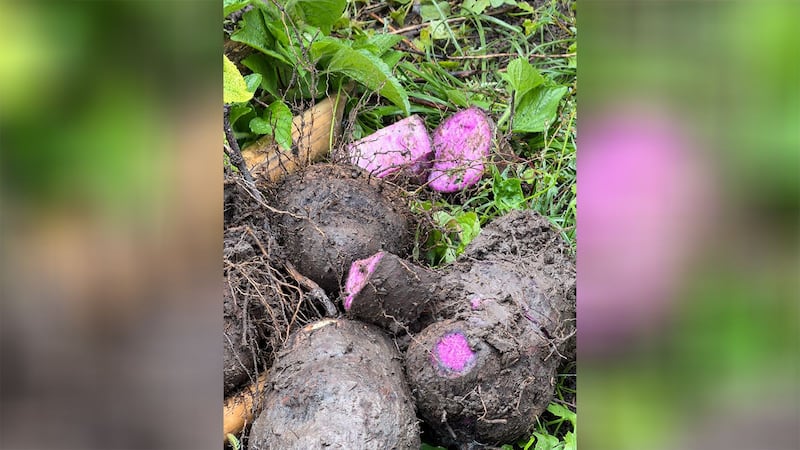
First Cesari scoured Facebook groups and asked ChatGPT and Gemini for leads. But he wasn’t sure he could trust the websites he found. There were different plant varieties – Baligonhon, Sampero, Kinampay – and forms – extract, power, jam. He also worried about getting a product that could have more common crops, like taro or purple sweet potato, mixed in.
He put his search on hold until February, when he went to see his family in the Philippines. There he visited bake shops and wholesalers, hoping to trace their supply chains back to the farmers themselves. However, he said most were reluctant to facilitate contact with their sources.
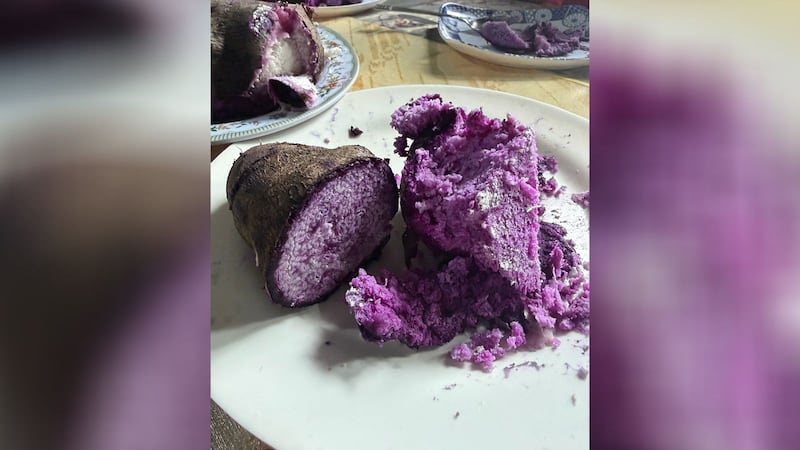
“It was a bit frustrating. If we want to get the high-quality ube, I think we have to be on-site, because you have to feel, you have to see, you have to test,” he said. “You have to be careful. Some projects you don’t know if they are very transparent.”
Finally, a relative mentioned a recent initiative he had heard of to grow more ube for export. Cesari took a two-hour boat ride from Cebu, where his family lives, to the neighboring island of Bohol, to meet farmers who said they could supply him starting with 10 kilograms per month. He’s hoping to launch his ube latte mix, named Ube Signature Paris, by the end of June.
“I can feel the big potential of the ube latte,” Cesari said. “But I have the impression all people are trying to create ube lattes, because they can feel this potential.”
The new matcha
Ube has long been a niche product in much of the world, recognized and consumed most frequently among Filipino communities. But in recent years, it’s gained a reputation as a burgeoning successor to matcha, the bright green Japanese tea that quickly become a coffeeshop staple.
A global shortage of matcha last year was what propelled some food and beverage brands to embrace ube, which also has Asian roots, mild flavor and a vivid hue, said Rhea Topacio, founder of Panama World, an Amsterdam-based seller of ube-flavored products like ice cream and syrup.

“There’s a surge of ube,” said Topacio. “People are always looking for something new. Especially in the times right now, everything is on social media.”
In March, Starbucks added an iced ube coconut macchiato to its menu, which the company said came after its ube flavor became a customer favorite at premium store locations. UK-based competitor Costa Coffee also launched a new ube flavor in the same month for its hot chocolate and frappe drinks.
Datassential, a Chicago-based market researcher, said its surveys indicate 27% of US consumers know what ube is now compared to 15% five years ago. But while ube menu offerings have tripled over the past four years, it is still on less than 2% of US menus.
Though the purple products have not reached the same level of ubiquity as matcha lattes, their growing popularity is putting pressure on the less developed ube supply chain. Ube enterprises can be tight-lipped on sourcing, and Topacio said many consumers likely can’t tell if they are tasting real ube or not.
After Topacio was named the “ube queen” in a European Filipino magazine last year, more businesses started reaching out to both buy and sell ube products. Some offered her ube powder from Malaysia, China or Vietnam, she said.
But Topacio said she wants to help Filipino farmers first, who rarely benefit from global demand because they don’t have direct connections to consumers overseas. Gaps in the local supply chain also lead to uneven distribution around the country, she said.
“There’s a missing link between the farmers and the market,” she said. “They say there is a shortage of ube, but as far as some of my friends know, there is a lot of ube in the marketplace.”
Growing pains
Rising global demand boosted ube and ube-based product exports to more than $3 million last year, according to the Philippines Department of Trade and Industry, a 20% increase from 2024. The government is working with local universities to increase ube production, targeting the US, UK and Middle East as key markets.
But convincing farmers to grow more has been a tough sell.
According to government data, national ube production declined 6.7% in 2025 compared to the previous year. Grace Backian, director of the Northern Philippines Root Crops Research and Training Center, said that’s largely because there’s no financial incentive for farmers to plant more.
Ube takes between nine months to one year to grow, while other vegetables like potatoes can be sold for profit in less than three months. Farmers in remote areas also struggle to find buyers, so it’s often easier for them to offload their harvests to middlemen, albeit at lower prices, than go to market themselves.
“As of this time, it is the traders who really benefit if there are increases in the price of ube,” she said. “Our farmers do not consider it a cash crop.”
Supply could become even more constrained as younger generations abandon agriculture, she added. Meanwhile, lower production and increasing demand leave fewer seed tubers to be planted in following seasons. Her research center is trying to reverse the trend by developing more planting materials and hosting training sessions on how to grow ube.
To provide farmers more financial security, the Bohol Ube Project, a joint initiative between local organizations including the European Chamber of Commerce of the Philippines, has begun taking ube orders at set contract prices from overseas clients, including Cesari who has been sampling produce from Bohol farms for his ube latte mix.
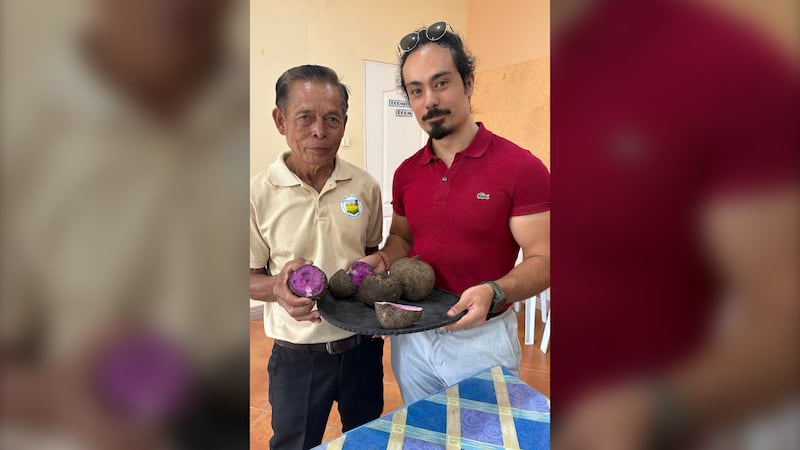
One project partner, Maria Wilvenna Añora, cofounder of agricultural tech startup AtoANI Agriventures Inc., said she started receiving emails asking for hundreds of kilograms of ube per month last year. However, Filipino farmers have been skeptical of international customers.
“At first, they’re not interested, because they will always say, ‘Oh we’ve been there. We’re frustrated so we don’t want to listen to you,” said Ellen Grace Zosa-Gallares, another consultant on the initiative. “There is promotion to plant and grow, but by the time the harvest season comes, the promised market that the government was talking about is so difficult for the farmers to reach.”
Unexpected challenge
In 2024, Camelle Morta Singh, a 31-year-old law student in the coastal province of Pangasinan, started growing ube for her family. As she expanded into commercial farming, she said the biggest hurdle had been covering the cost of land, labor and equipment.
Now, her most concerning challenge is the war in Iran.
The conflict has shut off oil and natural gas supplies from the Middle East, which account for more than half of Asia’s energy imports. The shortage is particularly acute in the Philippines, which has declared a national state of energy emergency and risks running out of fuel.
For Singh, that means the cost for gas needed to run the irrigation system has tripled going into the hot summer season. That’s forcing her to raise the farm’s base price of raw ube to 90 pesos ($1.49) a kilogram, up by about 29% compared to before the war.
“Of course we cannot stop production. We cannot let the ube dry out. So even if the price of gas is really high, I have to make sure I buy it. It’s really important for the business,” she said.
As the supply chain has come under strain, even some locals are having a tough time getting ube.

Benguet State University’s food processing center has been turning ube into jam – known as ube halaya – since the 1980s. Johnabel Basatan, the facility manager, said customers usually purchase one or two 400-gram packs to eat at home. But more recently, businesspeople have been buying hundreds of packs at a time, cleaning out the last of the remaining stock this month.
The energy crisis has further exacerbated the shortage, due to the government implementing four-day work weeks and delayed gas supplies, she added.
“This time demand is really pressing,” she said. “People who are buying just for their home consumption cannot have any more. However, with our capacity, with the workers that we have, and the machinery that we have, we cannot extend more production.”
Meanwhile, raw ube prices have risen about 38% compared to two years ago, Basatan said, and last year the supplier was only able to deliver half her usual order, about 3,000 kilograms.
In February, she asked to buy another 6,000 kilograms. She has yet to hear back.

