The Northwest Territories must urgently diversify its mining sector beyond diamonds as the territorial economy struggles, says a policy expert.
This follows the recent closure of the Diavik mine, one of the Northwest Territories’ three major diamond operations, while another is on the brink of bankruptcy.
“That’s very dramatic for the fiscal situation of the Northwest Territories,” says Heather Exner-Pirot, senior fellow and director at the McDonald-Laurier Institute.
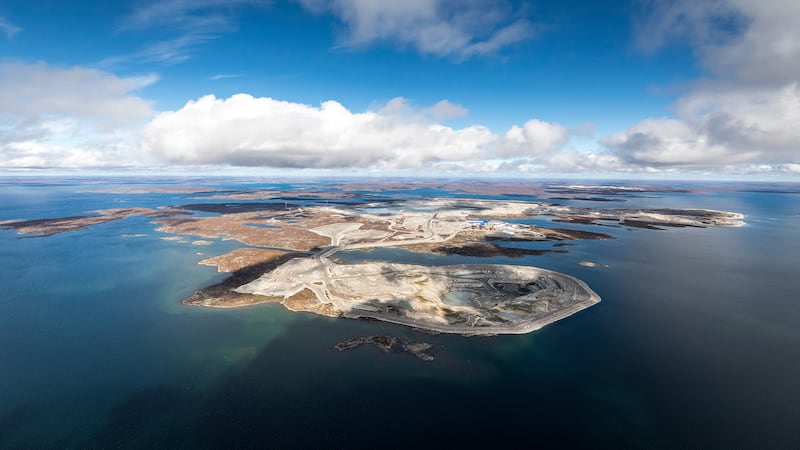
In the Northwest Territories, two operating diamond mines continue to extract diamonds, serving as key drivers of the territory’s economy. At its peak, the diamond mining sector accounted for approximately 25 per cent of the territory’s GDP, highlights Exner-Perit.
The territory’s real GDP is projected to decline to $4.0 billion in 2026, according to the Northwest Territories Budget Address.
This 3.2 per cent drop continues a downward trend from $4.2 billion in 2024 and an estimated $4.1 billion in 2025. The contraction is primarily driven by a 5.8 per cent reduction in total investment and a 4.9 per cent decline in exports, both resulting from lower diamond mine production and the announced end of oil production at Norman Wells.
Competition from lab-grown diamonds
Exner-Perit says recent competition from lab-grown alternatives has weakened the economic impact of natural diamond mining, leading to a sharp decline in global rough diamond prices.
Although many associate the diamond market with jewelry, lab-grown diamonds are widely used for industrial applications like heavy mining drills due to their extreme hardness, she says.
‘The straw that broke the camel’s back’
The Diavik mine, owned by Rio Tinto, was the first to go, shutting down production in March 2026.
Its closure shifted the federal government’s attention toward the struggling Ekati Mine, owned by Burgundy Diamond Mines, which appears to be following in the Diavik mine’s footsteps, says Exner-Pirit.
To counter the impact of actual and potential U.S. tariffs and global market pressures, the federal government provided over $200 million in loans to keep the struggling Ekati diamond mine operational.
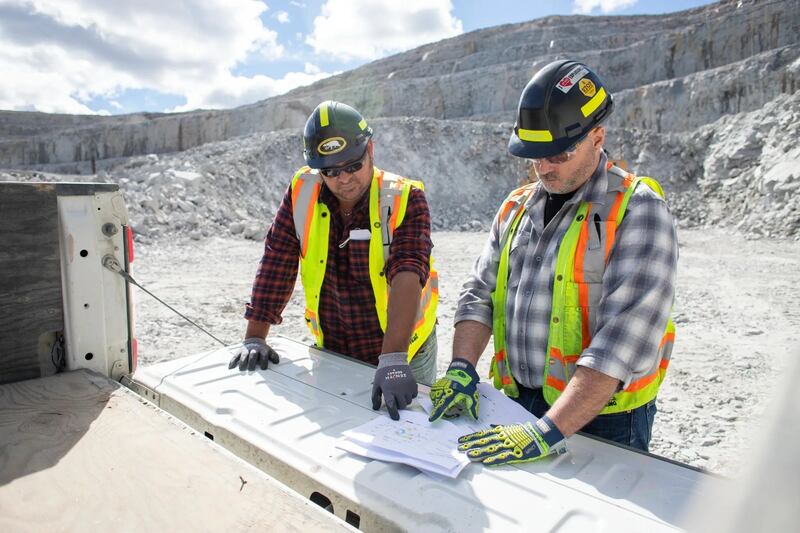
But that’s not enough, says Exner-Perit, describing U.S. tariff pressures as “the straw that broke the camel’s back ”.
“It only delayed the inevitable for a few months and probably was not the best decision they could have made,” says Exner-Perit.
Though natural diamonds still hold consumer appeal, the mining industry was already winding down, she says.

Exner-Perit says the sector’s core issue is a structural shift caused by the rapid rise of affordable, easily accessible synthetic diamonds and geopolitical trade tariffs only worsened an already struggling sector.
What does this mean for residents?
Based on current projections, the Northwest Territories faces a threat of having zero active diamond mines within the next few years, says Exner-Perit.
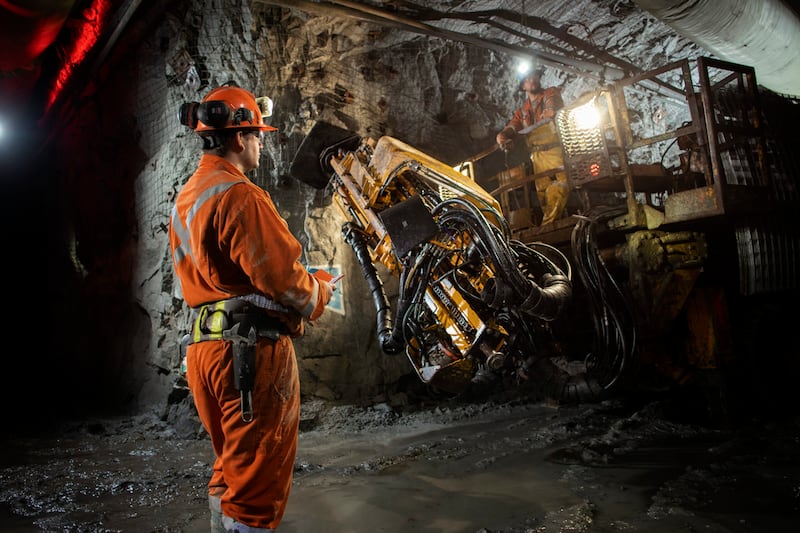
She says the sector currently provides well-paying jobs and hundreds of millions of dollars in procurement contracts to Indigenous communities and development corporations, and the lucrative royalties and tax intakes derived from the mines will be difficult to replace with current sectors such as tourism and defence spending.
How can the Northwest Territories develop its economy?
Though sectors like defence spending and mining remediation can help provide short-term economic relief, Exner-Pirot explains they are not industries that the Northwest Territories should build its economy on.
She says the most urgent task for the territory would be to reform its regulatory framework, by changing its policies and systems.
The territory currently ranks among the worst Canadian jurisdictions for policy attractiveness according to the Fraser Institute’s Annual Survey of Mining Companies.
However there is an upside, says Exner-Pirit.
She says through its recent devolution agreement, the Northwest Territories has acquired province-like powers, giving it direct control over resources, and royalty revenues.
Because of this, Exner-Pirit highlights that there is a legitimate opportunity to diversify the territory’s mining sectors with the current commodity upswing and many other lucrative natural resources such as gold, lithium, base metals, and rare earth elements embedded within the region.
“Hopefully this is a wake-up call for the Northwest territories to do the things it needs to, to become attractive for bigger miners, bigger investments in the future,” says Exner-Perit.

