
Canada’s former chief trade negotiator said Monday he doesn’t expect Ottawa to reach a tariff deal with Washington before the U.S. midterm elections.
Steve Verheul told an online business audience Monday that there could be a window when U.S. President Donald Trump and his administration are looking for a political win before American voters head to the polls in the fall.
“If that happens, there’s a possibility for it to come together,” Verheul said.
“But I think it’s more likely that the discussions will continue beyond the midterms and possibly even into next year.”
Verheul led talks for Canada during the renegotiation of the North American free trade pact during U.S. President Donald Trump’s first term. He’s now principal at the public affairs agency GT & Co.
He was speaking Monday at an event for Bank of Montreal clients charting the trade outlook ahead of July 1, when the review of the Canada-U.S.-Mexico agreement on trade, or CUSMA, formally kicks off.
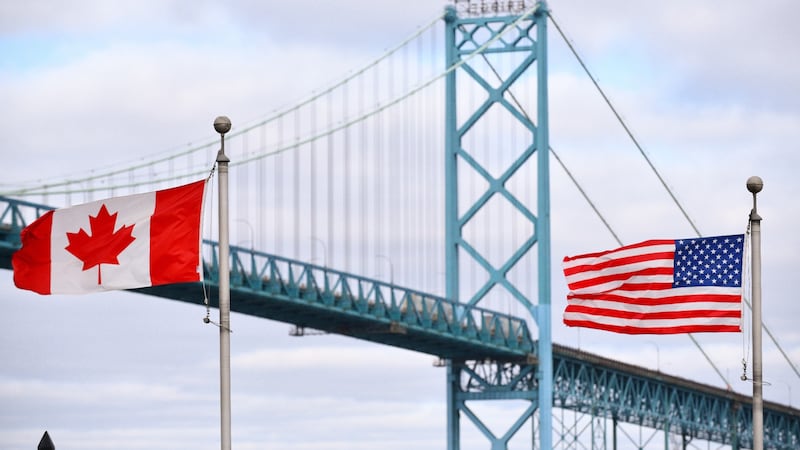
While Canada and Mexico have both signalled they’d like to see CUSMA renewed for another 16-year period, the U.S. could opt to send the deal to rolling annual reviews. Trump could also trigger a clause to exit the agreement at any point with six months’ notice.
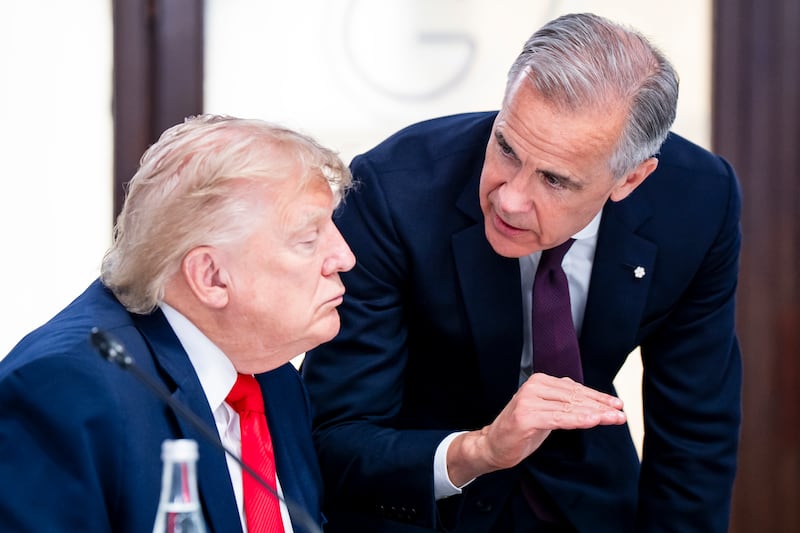
Prime Minister Mark Carney said earlier this month it’s “no secret” the U.S. president is not the biggest fan of CUSMA but stressed there are specific sectors where Canada continues to press the Trump administration to work with Ottawa.
BMO chief economist Doug Porter said he puts “a very low probability” on the United States tearing up the agreement.
Porter acknowledged there’s been basically no growth in the economy over the past year, as U.S. tariffs have tanked Canadian exports, but he would not consider Canada to be in a recession.
BMO’s forecast, which sees the economy struggling to grow in 2026 before rebounding in 2027, assumes the U.S. tariff stance remains broadly unchanged over the coming year.
While Trump has mused openly about walking away from CUSMA, Verheul noted there’s broad support among the U.S. public, businesses, senators and members of Congress for renewing the trade pact.
He also said CUSMA still shields most Canadian exports from U.S. tariffs, which is a good sign the United States sees value in keeping it in play.
What’s more important for Canada is addressing steep U.S. sectoral tariffs on steel, aluminum, autos and some other commodities, he said.
Those tariffs are holding back manufacturing in the United States as well as in Canada, Verheul noted. He said he expects some eventual easing in tariff pressures there, but for now, he believes uncertainty will persist.
“I think we’ll likely see some kind of adjustment over time but it may be a bumpy road until we get there,” he said.
Verheul said he doesn’t think “anything close to a good deal” for Canada has been put on the table so far, and he questioned the value of tariff deals that other countries have cut with Trump.
“Those agreements are unlikely to stand the test of time over a period because they’re not particularly solid agreements,” he said.
Verheul and Porter both pointed out that, after a year of Trump’s tariff agenda, the United States is really the only country leaning heavily on protectionism, while other countries — Canada among them — continue to diversify their trade relationships to reduce American dependence.
These shifts have opened up opportunities for many countries — none more so than China, Verheul argued.
“China is starting to make significant advances in world trade and the U.S. is starting to fall a bit behind,” he said.
This report by The Canadian Press was first published June 29, 2026
Craig Lord, The Canadian Press

