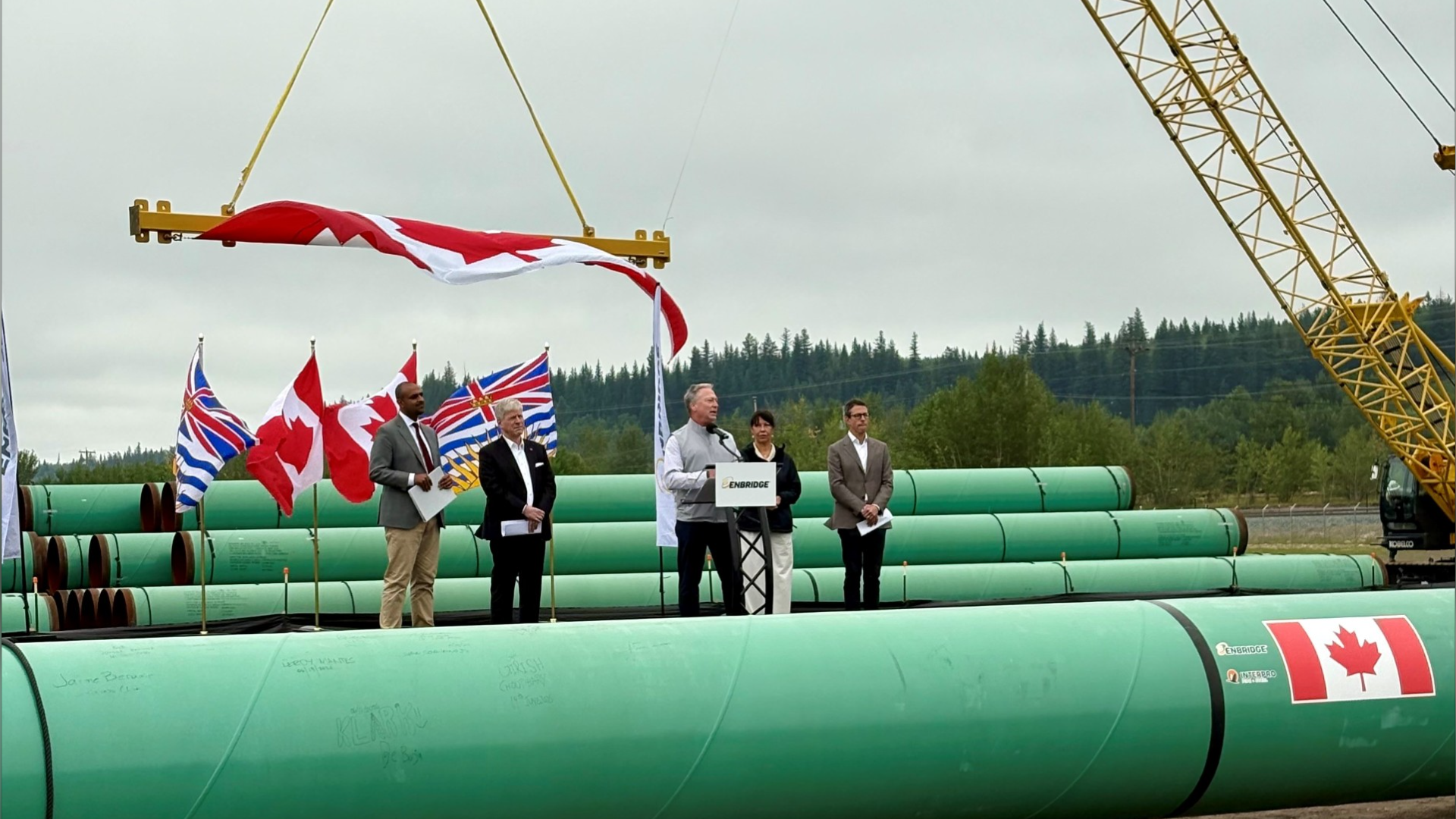
Canadian pipeline operator Enbridge has postponed the 250,000-barrel-per-day second phase of its Mainline crude pipeline network, it said on Friday, partly because Canadian oil producers have not committed to significant output increases.
The Mainline pipeline is Canada’s largest crude oil export pipeline and can already move 3 million barrels per day of crude from Western Canada to markets in Eastern Canada and the U.S. Midwest.
The second phase would have increased exports of Canadian crude to U.S. refineries.
But Enbridge CEO Greg Ebel said the company will focus first on its 100,000 bpd Flanagan South Expansion and its 50,000 bpd Southern Access Extension, which are smaller projects in scope.
They will add capacity to two secondary pipelines that connect to the Mainline in Illinois and transport crude to multiple U.S. refining centers and the Gulf Coast.
Enbridge is soliciting contracted volumes for the two pipelines through commercial open season processes.
Growing Canadian oil output
Canadian oil production is growing and hit a record high of 5.1 million bpd on average last year.
Expectations of further growth have in recent months spurred multiple proposals for additional export pipeline projects, including by South Bow and Bridger Pipeline to revive parts of the former Keystone XL project.
Enbridge has already committed to a first-phase Mainline expansion project, which would add 150,000 bpd of capacity and be placed into service by 2027. The company had previously projected the second phase could be in-service as early as 2028.
Ebel said Canada has a generational opportunity to expand its oil output as a result of federal government policy changes over the past year and the rollback of some environmental rules.
He also said that although agreements between the federal government and Alberta aimed at accelerating oil sands growth could have a major impact, most of the proposed changes remain non-binding and have yet to be enshrined into law.
Enbridge does not expect Canadian oil sands companies to meaningfully boost production until there is more policy and regulatory certainty, said Colin Gruending, the company’s president of liquids pipelines.
“Nor do we expect producers to be making binding FID-able commitments to new pipelines until then,” Gruending said, referring to final investment decisions.
He said Enbridge may have been too quick to propose the Mainline phase two project, but that the company was confident the project will eventually be needed.
Earlier this month, Alberta and the federal government announced plans for a potential 1 million bpd oil pipeline to Canada’s British Columbia coast, but no decisions have been made to go ahead with either that project or the South Bow-Bridger proposal.
(Reporting by Amanda Stephenson in Calgary; Editing by Rod Nickel and Barbara Lewis)

