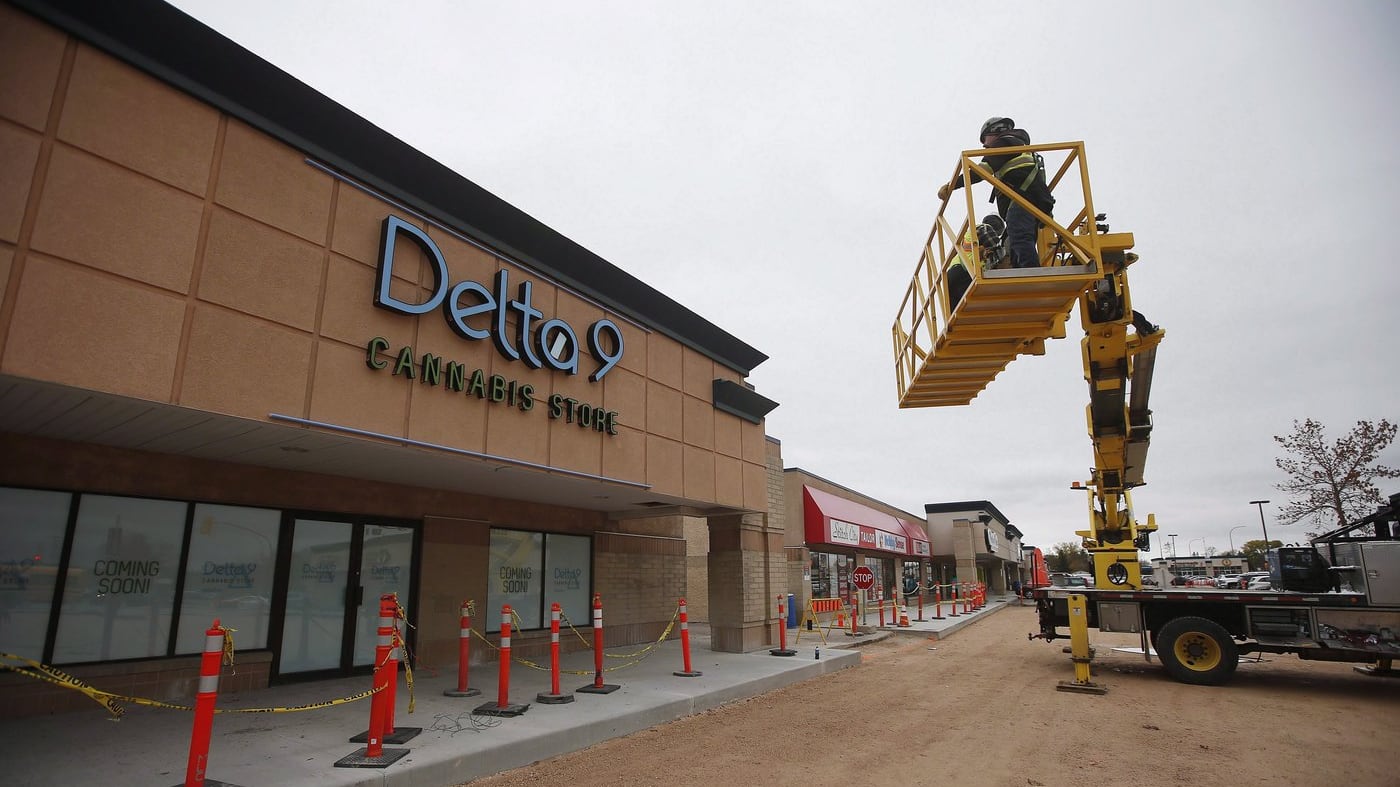
WINNIPEG – Manitoba is considering new cannabis-store safety measures that would allow retailers to remove window coverings and could require a minimum number of employees to work during higher-risk hours.
The proposed amendments to the Liquor, Gaming and Cannabis Control Act were introduced by the provincial government earlier this week as part of an effort to address safety concerns at cannabis stores.
Under the proposed legislation, the Liquor, Gaming and Cannabis Authority of Manitoba (LGCA) would have the power to establish mandatory minimum staffing levels during certain hours, ensuring workers are not alone when the risk of violence is higher.
The province is also proposing to remove the requirement for cannabis retailers to cover their storefront windows.
Justice Minister Matt Wiebe said the change would improve visibility from outside the store and help ensure workers are not hidden from public view.
“We’re still mandating that the cannabis product will not be visible, because we want to protect kids,” Wiebe said.
“We’re finding that balance where we don’t want cannabis displayed in window fronts. We don’t want kids riding by and seeing cannabis and being enticed into trying a product that’s not appropriate for them, but at the same time, we have to prioritize worker safety.”
The proposed changes come after a Winnipeg cannabis store employee was sexually assaulted during a robbery in May, prompting renewed calls from labour groups for stronger workplace safety measures.
This followed the release of a survey by the United Food and Commercial Workers (UFCW) Local 832, which found that only eight per cent of cannabis store workers felt safe at work at all times.
The survey prompted the union to call on the province to legislate new safety measures, including a ban on working alone, controlled entries, removing window coverings and mandated closing times.
Other provinces, including Ontario, eliminated similar rules around window coverings to address safety concerns.
“Our union welcomes these first steps,” said UFCW Local 832 secretary-treasurer Marie Buchan.
“Cannabis workers told us their top priority for safer workplaces was ensuring that no one is required to work alone, and we look forward to the LGCA’s implementation of the mandatory minimums and to being part of the consultation process.”
Advocates concerned about impact on small businesses
While labour advocates have welcomed the proposed changes, others in the industry say mandatory staffing requirements could put significant pressure on small, independent retailers.
“Many family-owned and independently operated stores simply cannot absorb the added labour costs the way large corporate chains can,” said Canadian cannabis advocate Steven Stairs.
“If passed, these changes risk creating an uneven playing field by placing a heavier financial burden on small businesses while giving larger retailers a competitive advantage. That is not good public policy.”
John Arbuthnot, vice-president of commercial growth at FIKA Cannabis shares those same concerns.
He says he wants further consultation with industry stakeholders to understand the government’s intent.
“Our fear is the impact on small business, especially in the cannabis industry, could be drastic, when it comes to the difference between even one or two staff on,” Arbuthnot said.
“But obviously open to a robust round of government consultation in terms of next steps for that aspect of the bill.”
He believes many smaller shops in Manitoba will be impacted by the move.
“You look at the industry in Manitoba; you obviously have high volume shops. You also have a lot of smaller independent shops that realistically cannot take on a second staff member, and still be profitable,” Arbuthnot said.
Stairs hopes the province will consider staffing requirements on a case-by-case basis, taking the circumstances of individual retailers into account.
“We want to encourage small, independent retailers to be here in this province, and for local tax dollars to be going to local employees and retail owners,” Stairs said.
“We don’t necessarily want every store to be owned by a corporation from another country or another province. So I think this is a step towards diminishing the power of independent local retailers.”

