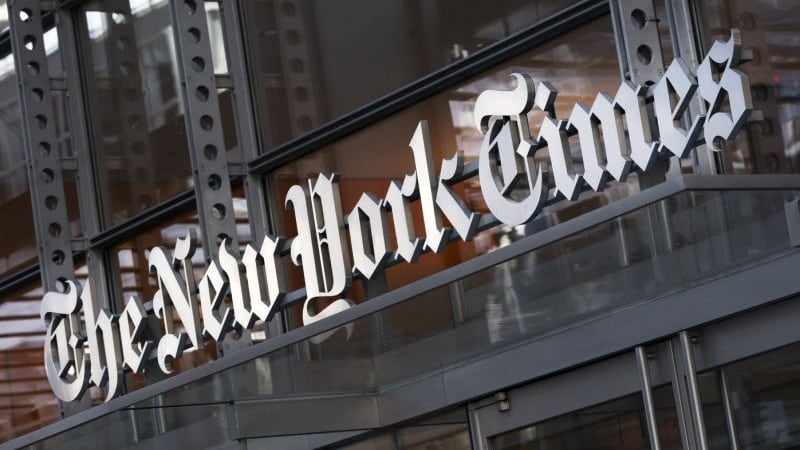
NEW YORK — NEW YORK -- The New York Times, the Daily News and other media outlets are asking a federal judge to impose sanctions on OpenAI, escalating a fight over artificial intelligence and copyright that could shape the future of a struggling news industry.
The newspapers allege the ChatGPT maker is hiding evidence important to what could be a landmark copyright infringement trial over how OpenAI and its business partner, Microsoft, built their AI technologies using millions of news articles. At issue is whether AI chatbots are unfairly competing as an information source, siphoning off web traffic without doing the journalistic work involved in gathering the news.
A filing Thursday in a Manhattan federal courthouse alleges OpenAI “chose obstruction” over releasing datasets and ChatGPT logs that could show how the AI system used copyrighted news content. The plaintiffs are asking the judge to penalize the company for “discovery misconduct” that could distort evidence, saying the recent deposition of an OpenAI employee contradicts the company’s earlier claims
New York Daily News attorney Steven Lieberman said OpenAI has been “making misrepresentations” for two years about its ability to search for copyrighted content in its AI training datasets and logs.
“This motion asks the court to punish OpenAI for hiding and destroying evidence showing how ChatGPT was trained on stolen journalism,” said Lieberman, who represents the Daily News and seven of its sister papers.
OpenAI has described its limitations in sharing ChatGPT logs as a measure to protect user privacy.
“As the Times’ case weakens and they’ve been forced to drop claims against us, they’re persisting with their efforts to invade the privacy of people who have nothing to do with this case, including by making these blatantly false allegations,” said a statement Thursday from OpenAI spokesperson Drew Pusateri. “We’ll continue defending our users’ privacy and the long-established principles of fair use.”
The New York Times sued OpenAI and Microsoft in late 2023, about a year after ChatGPT’s debut sparked a commercial AI boom and began changing the way people search for information online. The threat to news publications became even more apparent when Google in 2024 introduced AI-generated summaries at the top of online search results, cutting off the advertising dollars that come when people click a link to the information’s original source.
The Times has since been joined by other news organizations, including MediaNews Group-owned newspapers the Daily News and the Chicago Tribune, digital media publisher Ziff Davis and the nonprofit Center for Investigative Reporting.
OpenAI and other tech companies have argued the process of training their AI systems on digitized books, online articles and other writings found on the internet is protected by the “fair use” doctrine of U.S. copyright law. It’s a theory being tested in dozens of lawsuits as visual artists, novelists, music record labels and other creative industries take AI companies to court, with mixed results.
In the case involving the biggest copyright settlement so far, OpenAI rival Anthropic agreed to pay book authors $1.5 billion for training its chatbot Claude on their pirated works -- an amount that represents a small fraction of Anthropic’s $965 billion market valuation as it prepares to become publicly traded.
The New York Times’ arguments are different from those brought by book authors. In its original lawsuit and an amended complaint filed last month, it focused on the unfair competition of companies that “seek to free-ride on The Times’s massive investment in its journalism by using it to build substitutive products without permission or payment.”
The Times has already spent more than $28 million on fighting AI companies in court, according to filings with financial regulators that disclose its litigation costs. The costs include another lawsuit the newspaper filed last year against AI company Perplexity. Among the sanctions sought by the newspapers Thursday are attorney fees that would pay for the efforts to secure “improperly withheld” evidence.
The mounting costs come as a growing number of media organizations have signed licensing deals with OpenAI and other AI companies such as Google and Facebook parent Meta that typically pay the outlet a fee to be able to train AI systems on their news feeds or archives. The Associated Press was the first to announce such a deal with OpenAI in 2023.
___
Matt O’brien And Jocelyn Noveck, The Associated Press
O’Brien reported from Providence, Rhode Island.

