A Canadian graphite company is ready to take on China in the global market, and just got a step closer with a hefty federal funding boost as Canada ramps up its critical mineral strategy.
Earlier this week, Nouveau Monde Graphite (NMG) secured a $459 million financing package from the Canada Infrastructure Bank and Export Development Canada to support the construction and commissioning of its Phase-2 Matawinie Mine in Quebec.
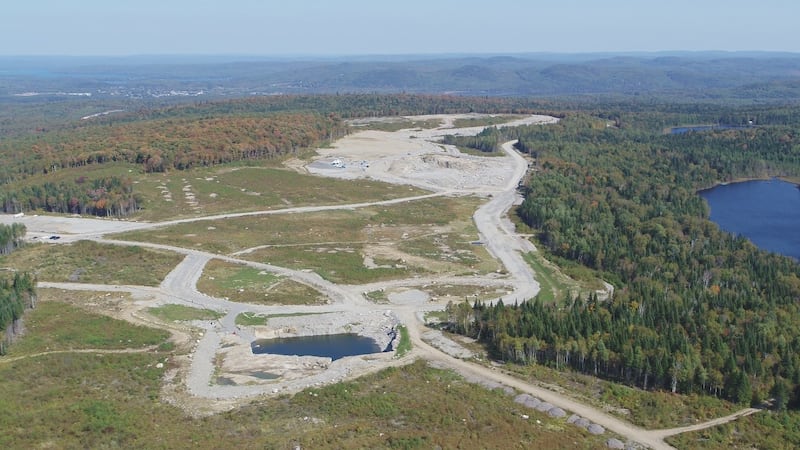
Matawinie Mine is projected to become the largest graphite mine in the G7 once it is operational. It will also be the first in Canada to mine and refine graphite into battery-grade material on a large scale.
“We are super competitive against China and against any other mining project in Africa or any other countries,” says Eric Desaulniers, founder and president of NMG.
Desaulniers says the project’s cost structure and long-term offtake agreements position it to compete with China, which dominates the world’s critical mineral processing.
He says about 75 per cent of the project’s future production from the Matawinie Mine has already been committed through offtake agreements. The company has major customers like Panasonic Energy committed to a quarter of the production for lithium-ion batteries, as well as Traxxas in Texas for refractory bricks.
About 20 other agreements, including Canada’s defence sector, are covered by an offtake agreement with the federal government and G7 countries for 30,000 tonnes of production, says Desaulniers.
“So with those in hand, we cover all different aspects, all different markets to have a top line that is secured to investors at US$1,334,” says Desaulniers, adding that the company’s cost projection is about US$419.
Cost and location advantage
Desaulniers says the project’s location in Quebec gives it an advantage, with access to low-cost, clean energy and nearby industrial infrastructure.

“Two hours drive from that mining project, there’s a large industrial complex like the big anchor industrial park, where we have one of the cheapest and cleanest electricity sources in the world,” he says.
“We can be a good partner for all the different allied countries. You need diversification from China, but without significant cost increase.”
A different kind of competition
Competing with China is more than price, explains Max Yerrill, a critical minerals analyst at BMO Capital Markets
He says while many Chinese producers sell products at or below cost due to heavy local government subsidies, the market is being split into two systems.
“We are seeing a bifurcation of prices between China and the rest of the world, where prices outside China trade at a significant premium to the price in China,” Yerrill says.
He says Western buyers are looking to secure supply outside of China due to supply security, environmental concerns regarding production, and tariff restrictions.
“Additionally, trade restrictions and tariffs create a ‘segmented-market’, where the competitive price for material is different inside and outside of China,” says Yerill.
He says this dynamic is playing out across critical minerals as countries try to build domestic supply chains and Nouveau Monde’s agreements help position it within that market.
Last November, Prime Minister Mark Carney’s government added the project to the Major Projects Office fast-track list to accelerate Canada’s critical mineral development.
The Canada Growth Fund also invested US$25 million in the company as part of a US$50 million private placement alongside Investissement Québec to support early-stage development.
Nearing construction
The company is now working toward a final investment decision after securing debt financing, with equity still to be finalized, says Desaulniers.
He says the project is largely de-risked.
“We have 80 per cent of detail engineering done on the project. Over 50 per cent of the capex contracts are now signed,” says Desaulniers, adding that construction could begin as early as May if the remaining financing is secured.

