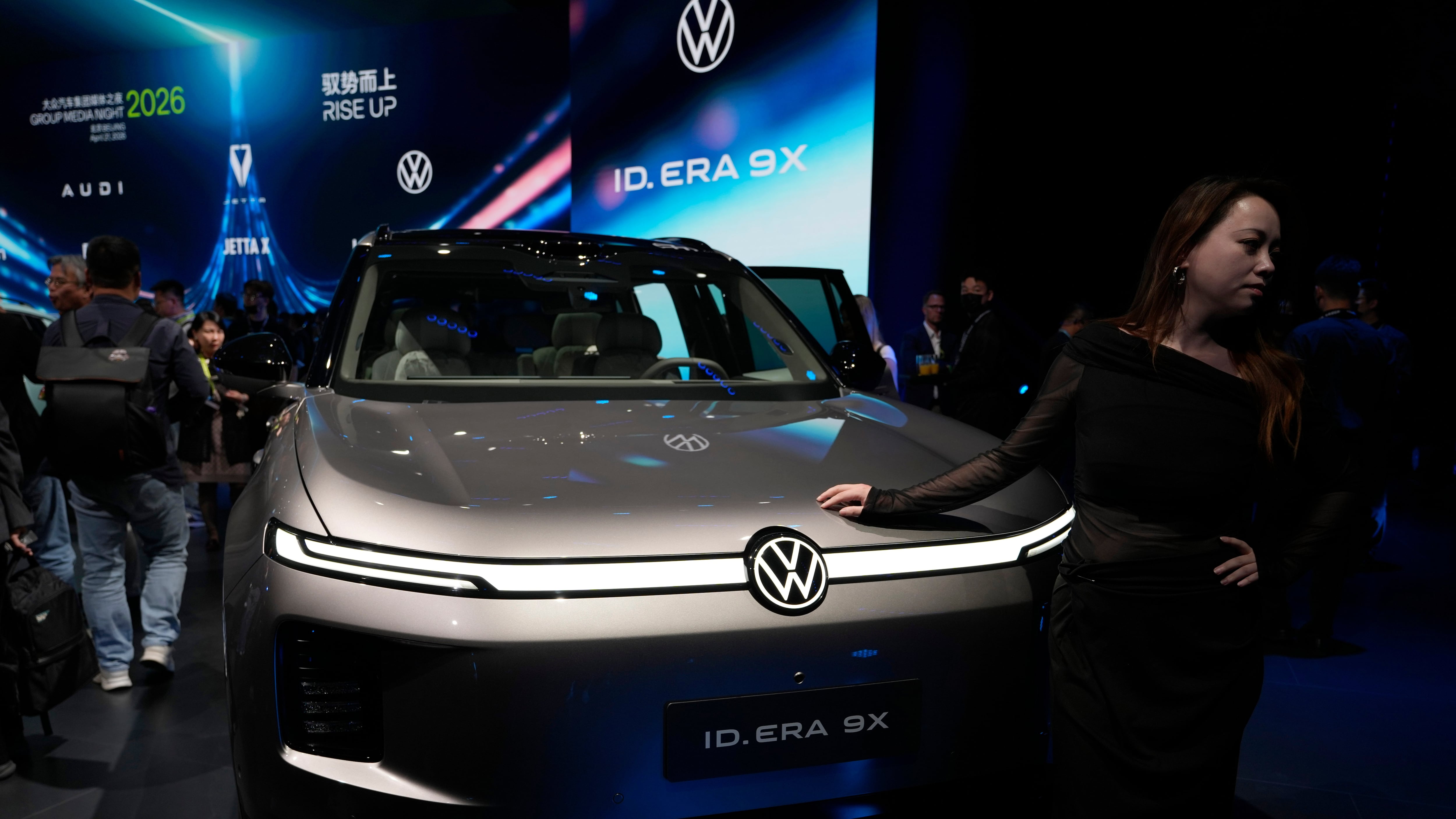
FRANKFURT, Germany -- Volkswagen’s future is at risk without further cost cuts, the ailing German auto giant warned Thursday after profits plunged more than feared as headwinds mount.
Europe’s biggest carmaker is struggling with Chinese competition, U.S. tariffs and patchy demand for electric vehicles, and already has plans to axe 50,000 jobs across all its brands in Germany by 2030.
But, following the release of results showing a near 30-per-cent drop in quarterly profits, chief financial officer Arno Antlitz said that “cost reductions planned so far are not enough.”
“We need to fundamentally change our business model and achieve structural, sustainable improvements -- in all areas and at all levels. If we fail to do that, we will jeopardise our future.”
Volkswagen, whose 10 brands range from Audi to Seat and Skoda, would have to adjust its capacity and “work on further optimizing costs at our plants,” he said.
Chinese automakers were not just competing on their home turf but also gaining market share in Europe, he warned.
Carmakers like BYD have emerged as fierce rivals to Volkswagen in China, traditionally a key source of profits for the German manufacturer, particularly when it comes to EVs.
‘Pull all the levers’
Antlitz also said that U.S. President Donald Trump’s tariffs, introduced a year ago, were burdening the group with an extra four billion euros in costs annually.
From January to March, Volkswagen’s net profit slid 28 per cent to 1.56 billion euros (US$1.8 billion) and revenues dropped to 76 billion euros, worse than analyst forecasts.
Volkswagen delivered just over two million vehicles in the period, down four percent from a year earlier.
Overall deliveries slid 15 per cent in China, with deliveries of EVs down 64 per cent. Deliveries were down 13 per cent in North America.
The group is forecasting sales to grow between zero and three per cent in 2026, and for its core profit margin to come in between four and 5.5 per cent.
Possible impacts of the war in the Middle East were not included in the forecasts, as they cannot be reliably assessed, Volkswagen said.
The woes of Volkswagen, one of Germany’s best known companies, reflect a broader malaise in Europe’s biggest economy, particularly among its traditional manufacturers.
The company’s annual profits slid to their lowest level in almost a decade in 2025.
Speaking to reporters, Volkswagen CEO Oliver Blume said the firm was looking at defence production as well as making Chinese-designed cars at its German plants as ways of using up spare capacity and cutting costs.
“We have still a long way to go to be cost competitive and obviously we have to pull all the levers of productivity,” he said.
“Now, the Chinese are coming to Europe, also building factories which are highly efficient, and we cannot compete with underutilized plants.”
By Sam Reeves, AFP

