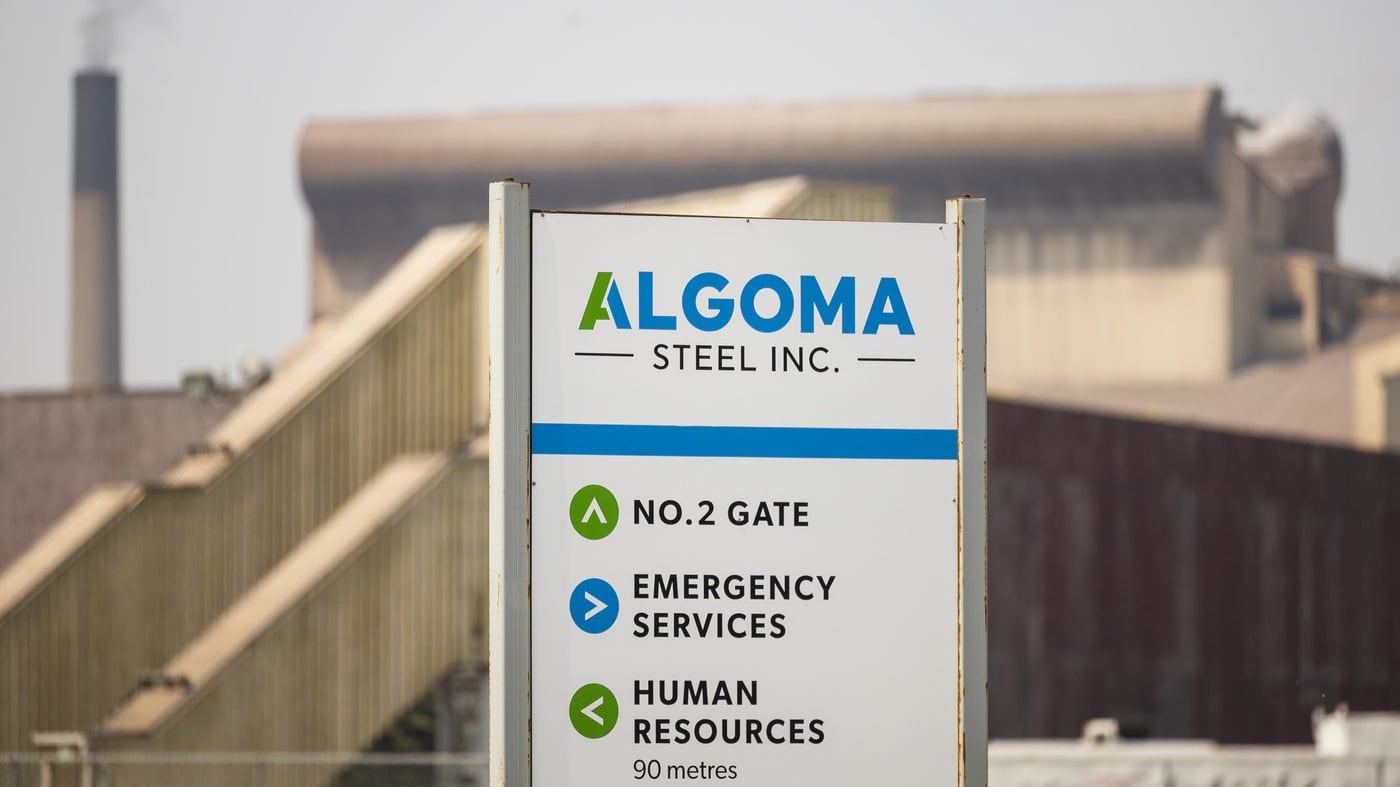
Algoma Steel in Sault Ste. Marie, Ont., reported a second-quarter loss of $96 million this week, as 50 per cent tariffs on steel into the United States continue to impact the steelmaker’s bottom line.
U.S. President Donald Trump’s trade war with Canada and other countries forced Algoma to accelerate its transition to electric arc furnace (EAF) steelmaking, leading to 1,000 layoffs in March of this year.

“Comparisons between Q2 2026 and Q2 2025 were significantly impacted by the transition from legacy blast furnace operations to the company’s EAF platform,” Algoma said in a news release announcing its latest results.
The company said the 50 per cent tariff “fundamentally altered and permanently disrupted the company’s historical cross-border business model, effectively foreclosing its traditional access to the U.S. market.”
The $96 million net loss compared to its net loss of $110.6 million in Q2 of 2025. Direct tariff costs were $18.7 million, compared to $64.1 million in 2025.
Record steel plate sales
“The second quarter demonstrated the resilience of our transformed business against a stubbornly challenging industry backdrop,” Algoma CEO Rajat Marwah said in the news release.
“We delivered a second consecutive quarter of record plate sales, our first EAF unit continued to ramp up as expected, and transition costs declined meaningfully from the first quarter.”
Marwah said Algoma is almost through the most difficult transition in its history, with EAF-related costs expected to decline.
“While the 50 per cent U.S. Section 232 tariffs continue to effectively foreclose our traditional access to the U.S. market, our pivot to a Canada-centric, plate-first strategy is working,” he said.
“As Canada’s only producer of discrete plate, we are uniquely positioned to serve growing infrastructure, construction, and defence demand, and the recent rise in steel prices is encouraging.”
“We are grateful for the continued support of the federal and provincial governments as we complete this transition and build a stronger, more sustainable Canadian steel industry,” Marwah added.

