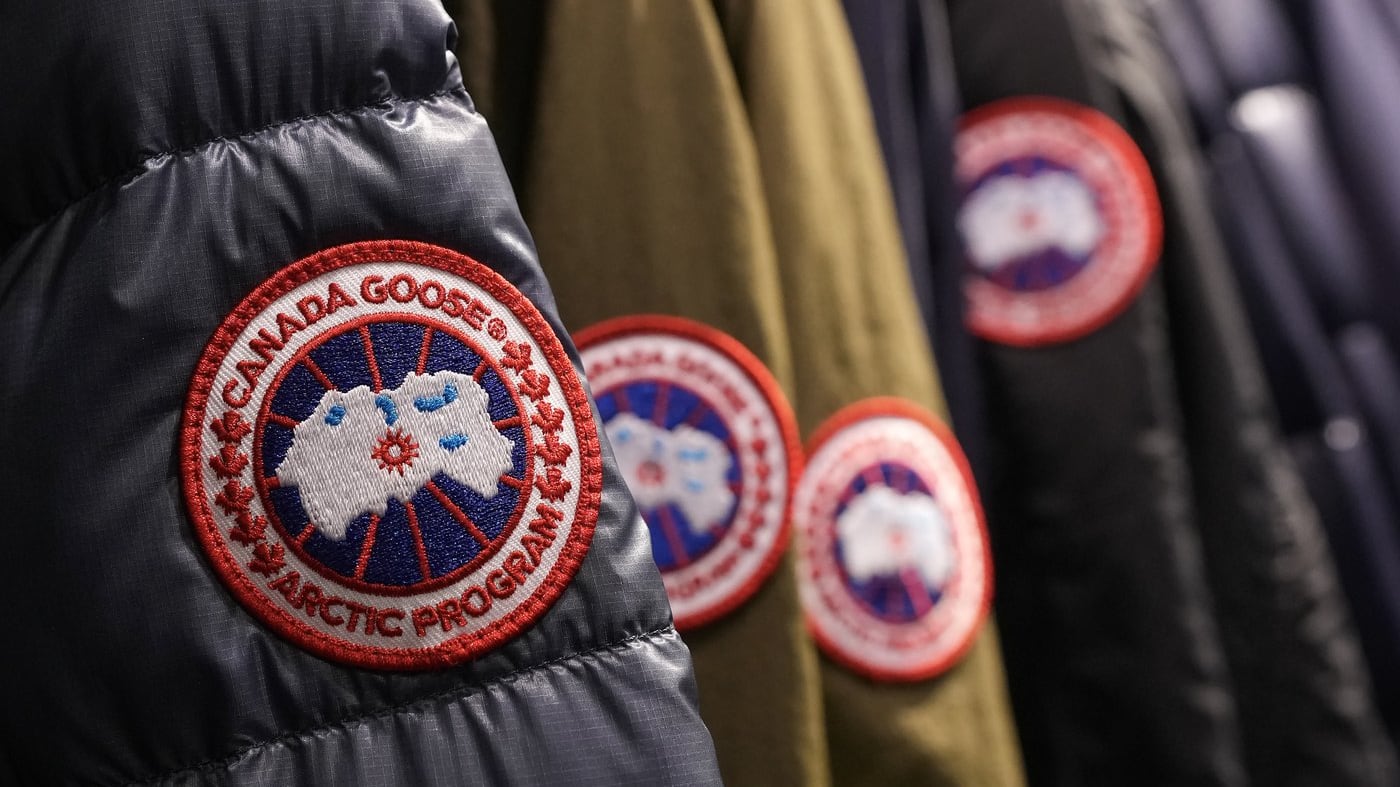
Canada Goose Holdings Inc. isn’t bracing for much of a financial impact if U.S. President Donald Trump makes good on his latest tariff threats.
The Toronto-based luxury parka maker said Thursday that some of its products would be affected by the 50 per cent duties the U.S. wants to start applying to imports, including some jackets, T-shirts, sweaters and mittens, next month.
If the tariffs move ahead and Canada Goose does nothing to mitigate the impacts, chief financial officer Neil Bowden thinks they could shave less than two percentage points off its fiscal 2027 operating margins.
However, the threat of the tariffs wasn’t enough to convince him to change Canada Goose’s outlook for the remainder of the year.
His company is sticking with previous predictions it made, placing its likely revenue increase for fiscal 2027 in the low-single digits. Its fiscal 2026 ended with revenue up about 12 per cent from 2025 to more than $1.5 billion.
Bowden said the 2027 outlook assumes the tariff environment will be a lot like last year. Since Trump has been in office, he has teased duties but often chickened out when it came time to implement them.
While the situation remains “fluid,” Bowden was confident his company could handle whatever materializes this time.
“We are actively evaluating mitigation measures and believe we have a range of options available to help minimize potential impact,” he told analysts on a Thursday call.
The confidence in the previous guidance struck BNP Paribas Equity Research senior analyst Laurent Vasilescu as “interesting.”
In a note to investors, he pointed out most of the company’s products are made in Canada, so the tariffs will have a material impact on the business as a whole but especially on its U.S. profitability.
Bowden’s remarks came after Canada Goose reported a first-quarter loss attributable to shareholders of $90.8 million.
The loss amounted to 93 cents per diluted share for the quarter ended June 28, compared with a loss of $125.2 million or $1.29 per diluted share a year earlier.
Revenue totalled $118.9 million for the quarter, up from $107.8 million.
Direct-to-consumer revenue reached $84.8 million for the quarter, up from $78.1 million, while wholesale revenue amounted to $29.8 million, up from $17.9 million. Other revenue came in at $4.3 million, down from $11.8 million a year earlier.
On an adjusted basis, the loss was 89 cents per diluted share in its latest quarter, compared with an adjusted loss of 91 cents per diluted share a year earlier.
The quarter spanned a period when CEO Dani Reiss conceded customer traffic among some pockets of stores was “lower than we would have liked.”
He put the blame on a “soft macro environment,” but said he was feeling encouraged because more customers had flocked to the brand lately and e-commerce traffic has grown.
While most people associate the company with its pricy down-filled parkas, Reiss said apparel, rain gear and windwear accounted for nearly 40 per cent of Canada Goose’s first-quarter revenue.
“To put that in perspective, these categories generated as much revenue this quarter as our entire company did in the first quarter eight years ago,” he said.
“That is a remarkable illustration of how Canada Goose has evolved.”
The trio of categories made up just five per cent of the company’s business in fiscal 2022. This year, they’re about 15 per cent of its total revenue and according to Reiss, not cannibalizing its star product. Down-filled outerwear also saw growth in sales in the latest quarter, he said.
This report by The Canadian Press was first published July 30, 2026.
This is a corrected story. A previous version misattributed some statements to CEO Dani Reiss. In fact, they were said by chief financial officer Neil Bowden.

