Telesat says it’s on its way to compete with Elon Musk’s Starlink with a multi-billion dollar satellite investment and deal with the Canadian government.
The Ottawa-based satellite operator is investing more than $7 billion to build and launch Telesat Lightspeed, which is an advanced global-low Earth orbit high-speed broadband satellite network.
The investment was possible after the company signed a $2.7 billion contract with the federal government, the largest government deal in company history, according to the company’s president and CEO Daniel Goldberg.
“Absolute home run for the Canadian Armed Forces, big home run for Canadian industry, and will be a great outcome for our customers all over the world,” Goldberg told BNN Bloomberg.
He says he company is expanding its satellite constellation by 44 per cent, from 156 to 225 satellites, to support national defence and security, with commercial service launching in early 2028.
Good time for the space market
Goldberg says the satellites are hitting the market at a great time.
“These geopolitical shifts that all of us have witnessed over the last 18 months are creating massive demand opportunities for Telusat,” he says.
“We fully expect (the federal contract) will be followed by other contracts with other sovereign users who need this capability to meet all of their requirements.”
He expects the company’s defence customers to eventually account for almost half of the revenue generated by the Lightspeed constellation.
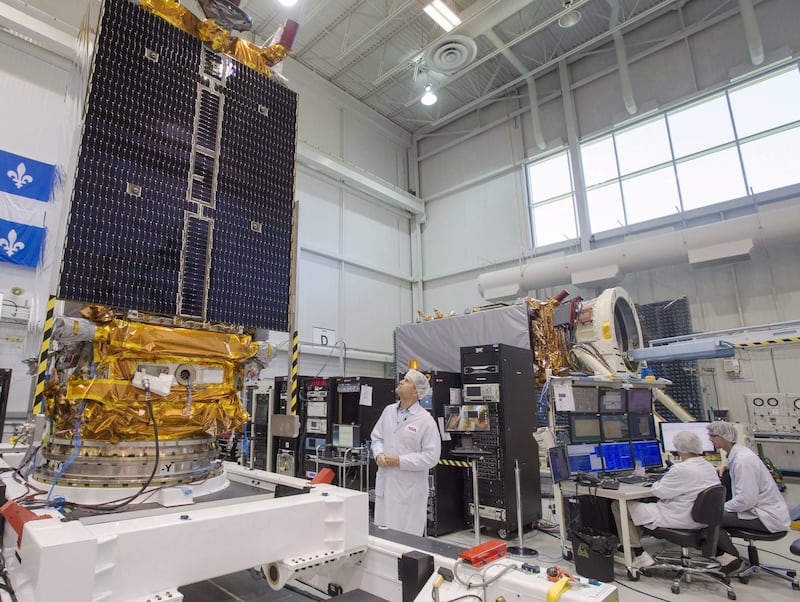
The company is also working with Canadian space technology company MDA Space, which will manufacture the satellites.
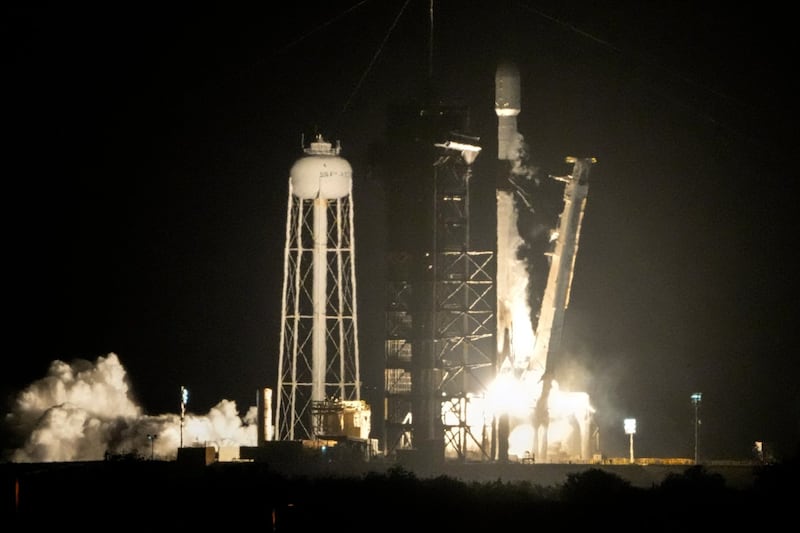
On the other hand, Telesat has contracted SpaceX roughly US$1 billion to launch all of those satellites. SpaceX will act as the launch provider for its own direct competitor, using its Falcon 9 rockets to deploy Telesat’s Lightspeed constellation into orbit starting in 2026.
“Telesat is SpaceX’s largest customer after the U.S. government,” says Goldberg.
A shrinking legacy business
The company’s expansion comes as its existing satellite business continues to decline, which Goldberg says was “fully expected and fully consistent” with the guidance the company gave at the beginning of the year.
The company reported revenue of $79 million in its second quarter, down 25 per cent from the same period last year.
Goldberg says the drop was expected as the company moves away from its legacy geostationary satellite business and ramps investment in Lightspeed.
“It’s very predictable, and again, we guided the market pretty much consistent with what we’ve seen,” says Goldberg, adding that the recent investments will bring the company into the same markets with Starlink.
Telesat invested $337 million in Lightspeed during the first six months of the year and raised its 2026 spending forecast for the program following the expansion to 225 satellites, from $1.3 billion and $1.5 billion.
“We’ve added some features to the constellation, the spectrum that it operates on, the way that traffic can be routed on the constellation that we think are unique and are, and I know that they’re of great interest to defence users,” says Goldberg.
Maturing debt in December
Goldberg says the company’s current cash resources are not sufficient to pay off its $1.7 billion debt which it set to mature in December.
“That’s the kind of disclosure that we’ve made in our financial statements, and our focus is on working with the existing lenders, reaching a consensual outcome that’s fair to them, that’s fair to all of our stakeholders. So that’s really what we’re focused on,” says Goldberg.
Taking on Starlink
Goldberg says the company already has more than $5 billion in customer commitments for Lightspeed.
He expects the global satellite market to eventually support several major providers.
“Right now it’s really just Starlink that’s out there in the market. Next up will be Telesat. Amazon is also coming into this market,” says Goldberg.
Starlink, which is a satellite network subsidiary of Space X, generated over US$11 billion in revenue in 2025, and is reported to exceed over US$15.5 billion in 2026.
Goldberg says he expects the size of the global satellite market to hit over US$350 billion, with users wanting multiple providers.
“I think if we execute well, and we’re going to execute well, we’re gonna drive huge value in our business,” says Goldberg.

