


Some telecommunications analysts are casting doubt that a proposed merger between Quebecor Inc. and Telus Corp. would be able to make it to the finish line.
Quebecor revealed Monday it is eyeing a $31-billion takeover of Telus in a cash-and-stock deal, but Telus said it sees “serious concerns” with the offer. Topping the list: how it would survive regulatory scrutiny.
The Vancouver-based telecom giant has not accepted the proposal and is continuing to review the bid. Quebecor president and CEO Pierre Karl Péladeau said he and Telus counterpart Victor Dodig are slated to meet next Monday to discuss next steps.
Some who keep a close watch on Canada’s telecom sector say the offer was unexpected. RBC analyst Drew McReynolds called it a “major surprise,” but said he believes there is a “low probability” of the companies joining forces.
“Under the current regulatory environment, the required government approvals of a Quebecor-Telus combination without material remedies appears to us to be a non-starter, while such a combination alongside material remedies would naturally bring into question the combination’s underlying strategic rationale,” McReynolds said in a note.
He added that if regulatory conditions were to shift, that could open up other strategic options for Telus seen as equally or more attractive and with lower risk.
Desjardins analyst Jerome Dubreuil estimated there’s a 25 per cent chance of a potential transaction closing, and called it a “swing for the fences” move on Quebecor’s part.
“We were surprised by Quebecor’s offer to buy Telus, but we see a compelling long-term strategic rationale for the Québec-based cableco, with the transaction potentially transforming the industry’s small disruptor into a scaled national telecom player,” he said in a note.
Dubreuil said Telus’ board will have to weigh what he called an “attractive” offer against significant regulatory risks and the prospect of selling to a highly valued competitor while its own shares are depressed.
“We like the destination for Quebecor, but the road there looks challenging, with Telus likely demanding meaningful deal-certainty protections.”
Quebecor made a non-binding proposal to Telus on June 26 to serve as the basis for negotiations and then submitted an “enhanced proposal” on Nov. 9.
A potential agreement would likely prompt reviews by the Competition Bureau, the CRTC and Innovation, Science and Economic Development Canada. Industry Minister Mélanie Joly said in a Monday statement that the transaction will be “rigorously reviewed” and that the government “will not predetermine the outcomes.”
Sovereignty versus competition
In an interview on Monday, Péladeau pitched the merger as a way to save cash by combining networks, spectrum and operations, which would boost investment capacity. He said a stronger company would be better positioned to protect “sovereignty” in the Canadian telecom sector as foreign competitors like Elon Musk’s Starlink gain market share.
“Telecom assets are one of the most critical assets for a country. This is where all your information runs, this is where AI also is moving and this is how the data centres are connected,” Péladeau said.
“Do you want this to be Canadian, or do you want this to be owned by foreigners or other interests?”
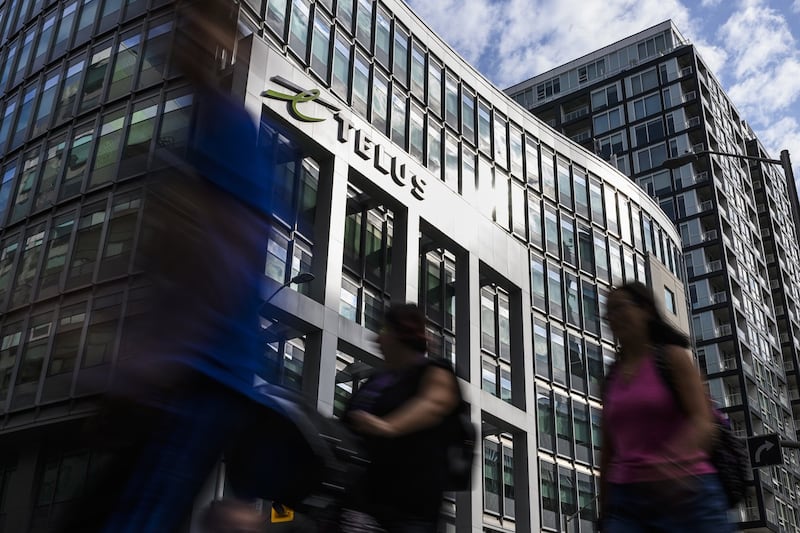
But regulatory reviews will also centre around the implications for competition within the domestic telecom industry.
Péladeau has touted Quebecor as a fourth national carrier since his company acquired Freedom Mobile in 2023, as part of a deal associated with the larger takeover of Shaw by Rogers Communications Inc.
The Canadian Anti-Monopoly Project said Quebecor’s arguments around the merits of a potential transaction should be weighed against the risk of bringing Canada’s national wireless market “back to a three-company oligopoly.” It urged the CRTC, ISED and Competition Bureau to oppose the acquisition and “prevent further concentration” in the sector.
“Canadians dealt with a three-player market for a very long time and to go back to that would be a disaster,” said the group’s executive director Keldon Bester in an interview.
He said Canadians have seen progress on wireless pricing in the three years since the Rogers-Shaw and Freedom deals. Quebecor noted that wireless prices have dropped 35.4 per cent since 2023, citing data from Statistics Canada, and Bester said there are also more affordable options now for international roaming plans.
His worry, however, is that those improvements will amount to a “sugar high” bound to wear off.
“Canadians benefited, but I’m very concerned that that’s going to end up being a temporary state of affairs.”
Cori Ferguson, executive director of the Consumers Council of Canada, said larger providers — and fewer of them — is “a recipe for poor service and higher prices for consumers.”
“The Quebecor proposal will create the largest mobile telecommunications company in Canada, bigger than Rogers and Bell, and will reduce the number of national competitors in this sector,” Ferguson said in a statement.
“It also flies in the face of what government regulators and policymakers have been trying to achieve in the past decade, which is more competition and greater choice for consumers, with lower prices and better service for consumers.”
Divestments could be key: analyst
The takeover would also cut the number of national wireless networks from three to two, given the long-standing network sharing agreement between Telus and Bell, said Scotiabank analyst Maher Yaghi. He said fewer networks run counter to the government’s stated push for resilience and sovereignty.
Yaghi pointed out other concerns that could sink a deal as it undergoes probing from Ottawa and regulators.

That includes the fact Quebecor has long benefited from the CRTC’s framework for wireless wholesale access, which allows telecoms to offer cellphone service through rival carriers’ networks. The rules are meant to increase cellphone competition by giving regional carriers a presence in regions they did not previously serve, with requirements to build their own networks in those areas within seven years.
“Bidding for Telus now effectively signals that a third independent facilities-based network won’t be finished. We think that creates an image problem with the regulator,” Yaghi said in a note.
“If Quebecor is not able to close this deal, we wonder how it will then convince the CRTC to extend the 2030 deadline for (wholesale) access given that the company has now signalled that it possesses a significant capital cushion by bidding on Telus.”
Yaghi said Quebecor would carry the legal burden of proving a deal doesn’t substantially lessen competition, with the companies’ combined wireless shares reaching roughly 30 to 50 per cent of the market in many provinces.
“If Quebecor is not ready to let go of Freedom Mobile, spectrum, and divest of (three to four million subscribers), we believe this deal has a low chance of going through.”
---
Sammy Hudes, The Canadian Press
This report by The Canadian Press was first published Nov. 17, 2026.

