TORONTO - Skilled Trade College of Canada student Devin Forbes says he never would’ve been able to afford his tuition without receiving a scholarship funded by the private sector.
“My family wasn’t always financially stable, (so) when it came to going to university or college, it wasn’t really financially in the cards for someone like me,” said Forbes.
The federal government’s spring economic update released earlier this week is aiming to help students like Forbes fill a gaping hole in a sector desperate for skilled trades workers.
This week, Ottawa announced $6 billion over five years to recruit, train and hire up to 100,000 new, red-sealed skilled trades workers by 2031.
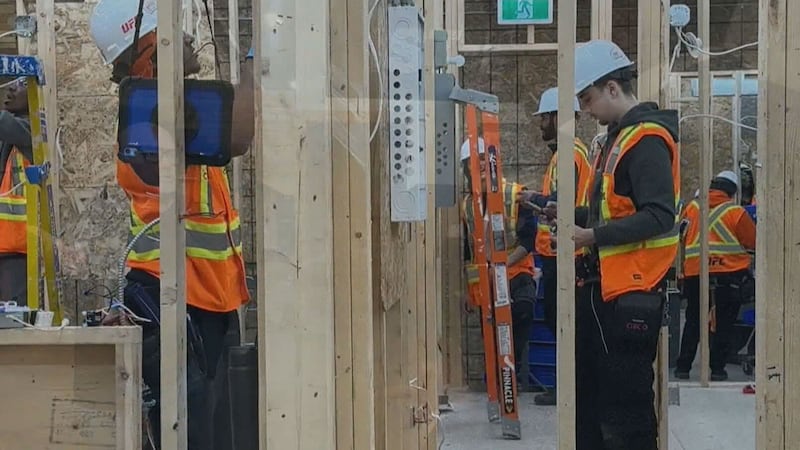
Currently, students hoping to obtain a scholarship to attend a Skilled Trades College of Canada campus have received funding from RONA, CIBC and the Ultimate Fighting Championship.
Yes, even the UFC provides scholarships to young Canadians hoping to attend the Skilled Trade College of Canada each year.
While Ottawa hasn’t outlined in detail how it’s going to spend nearly $6 billion over the next five years to recruit new skilled trade workers, at face value, it’s a big step in the right direction, according to Ralph Cerasuolo, founder and CEO of Skilled Trade College.
“The funding announcement tells me the government is listening and they’re answering the call that there’s a legitimate problem … there aren’t nearly enough skilled trades workers to build the roads, bridges and communities across the country and the continent,” said Cerasuolo.
Build Force Canada has estimated a potential labour shortage of 385,000 workers in the construction trades by 2034, with 20 per cent of the current workforce expected to retire over the next decade.
“The ratio of tradespeople who leave the workforce vs those who enter is seven to one,” claimed Cerasuolo, who adds that it’s a compounding problem that’s growing worse year over year.

Forbes, who wants to be an HVAC specialist after he graduates and completes his apprenticeship, says he hopes to be part of the solution, working to fill the skilled trades employment gap.
“A lot of people feel stuck sometimes, and I feel like the trades is the way out. A lot of people don’t realize that (the trades) can be your future,” said Forbes, who adds that “the number of things that I learn each day … when I wake, I know I’m doing better today than I did yesterday.”
The reduction in the number of immigrants and new Canadians allowed into the country is also playing a part in the labour shortage, says Cerasuolo.
“A lot of immigrants arrive, and they go and work in the labour market. We’re a young country, we have an abundance of space, we need the right immigrants to be allowed in and directed into the skilled trades and other professions that need help,” he said.
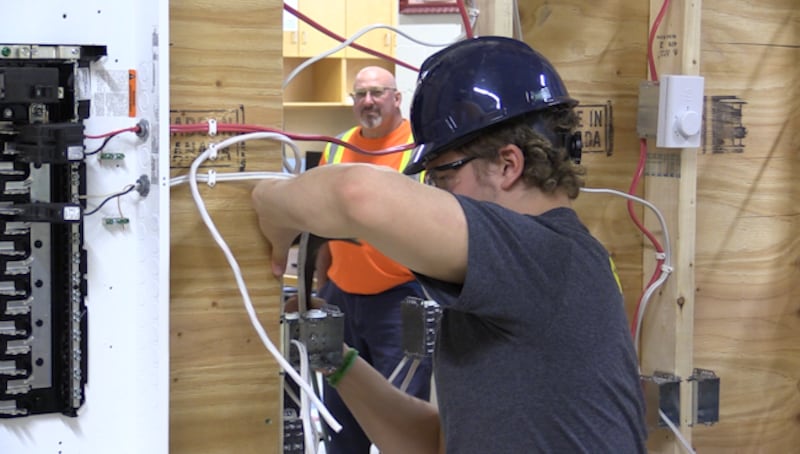
When it comes to nation building and fortifying Canada’s economy, Cerasuolo also believes a robust skilled trades sector is essential to building a new future across the country.
“You can’t have one without the other. Construction is such a crucial category in our world, if you’re not driving that to be bigger, you’re going to have a continuing problem,” added Cerasuolo.
Another important component of filling the labour shortage gap, according to Cerasuolo, is helping young Canadians understand that skilled trades are a highly respected, professional career path, vital to Canada’s future.
“We need to take a page out of Europe,” he said. “(Over) there, the trades are revered, the trades are viewed on equal level with other professional careers like lawyers, doctors and accountants.”
With files from CTV News’ Kristen Yu

