NEW YORK — Shoppers stepped up their spending in May and surpassed expectations as temperatures warmed and gasoline prices cooled.
Retail sales rose 0.9 per cent, up from a revised 0.4 per cent gain in April, according to new U.S. Commerce Department data released Wednesday. Sales got a boost from generous government tax refunds in both April and May, though economists say that cash cushion is starting to fade.
Excluding sales at gas stations, retail sales in May rose 0.7 per cent.
Spending was broad-based. Business at clothing, accessory and furniture stores all posted increases. Online sales rose 1.5 per cent.
There were a few weak spots. Electronics and appliance stores and department stores both registered slight declines.
The data released Wednesday offers only a snapshot of consumer spending and doesn’t include activities like travel and hotel stays. The lone services category – restaurants – registered a 0.1 per cent decline.
But the so-called control group—which excludes food services, autos, building materials and gas station sales and is used to calculate economic growth—rose 0.7 per cent. That suggests solid spending, economists said.
Consumers are the engine of the American economy, driving most of the nation’s economic growth. And the latest retail sales report underscores that spending has remained resilient so far this year despite rising prices. Solid increases in hiring have also buoyed spending, economists said.
“The stronger-than-forecast and broad-based gains in May retail sales show that consumers continued to spend strongly despite higher gasoline prices in the month,” Nationwide Chief Economist Kathy Bostjancic writes. “The large tax refunds and overall tax reductions for households this year and the recent strengthening in employment growth helped buffer the negative drag from higher gasoline prices.”
Rising gas prices pushed inflation to its highest level in three years, U.S. data showed last week, with consumer prices rising 4.2 per cent in May, compared with last year. On a monthly basis, prices rose 0.5 per cent last month, after big gains of 0.6 per cent in April and 0.9 per cent in March.
There is a tentative deal to end the Iran war and reopen the Strait of Hormuz, but even after oil starts flowing again from the Middle East it could take awhile for the supply crunch to ease.
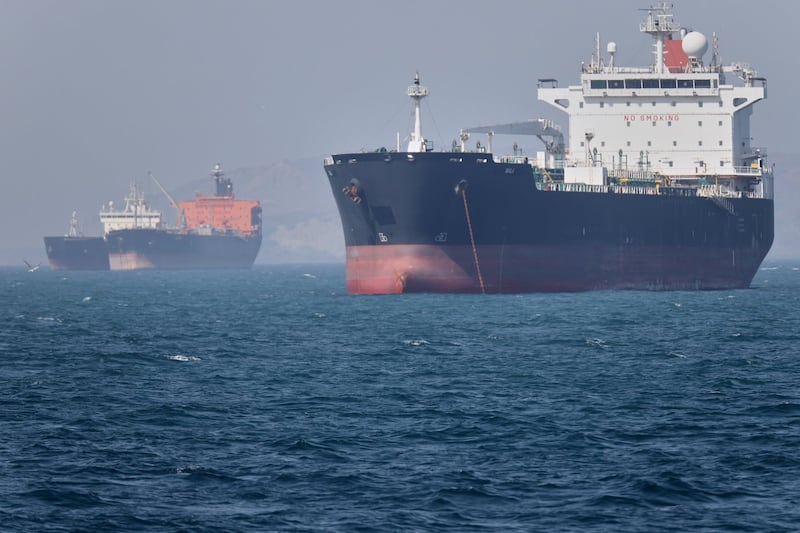
Gas prices fell about a penny overnight to US$4.02, down 11 per cent from a month ago, according to motor club AAA. The national average for a gallon of gasoline has not been below $4 since March, according to AAA.
“While the deal is encouraging, our industry is still holding its breath,” said Steve Lamar, the CEO of trade group American Apparel & Footwear Association. ”Our question now is, will this agreement be strong enough for our global industry to begin recovering?”
Lamar noted that unplanned costs continue to squeeze profit margins, with companies facing higher expenses for ocean freight, air cargo and packaging. He said that even under the best-case scenario, it will take time to stabilize.
The spike in gas prices this year due to the Iran war may alter some behavior, peace deal or not.
Even as gas prices continue to retreat, analysts say some shoppers will stick to habits they picked up as prices soared, like filling up the car at big box stores where they can get discounts.
Visits to gas stations operated by big box chains like BJ’s, Costco and Sam’s Club, which offer discounts to members, began to accelerate in early March, aligning with a sharp rise in fuel prices, said R.J. Hottovy, the head of analytical research at Placer.ai, which tracks people’s movements based on cellphone usage.
Anne D’innocenzio, The Associated Press

