The Bank of Canada has unveiled a new version of the $20 bill, which is set to be put in circulation in February 2027.
Unlike previous horizontal incarnations of the currency, the new $20 bill’s design layout is vertical.
It is the first banknote in Canada to feature King Charles III.
The design of the bill began shortly after the King’s coronation in May 2023.
It will be replacing that of his late mother, Queen Elizabeth II, whose face has graced 18 different banknotes in the country since 1935.
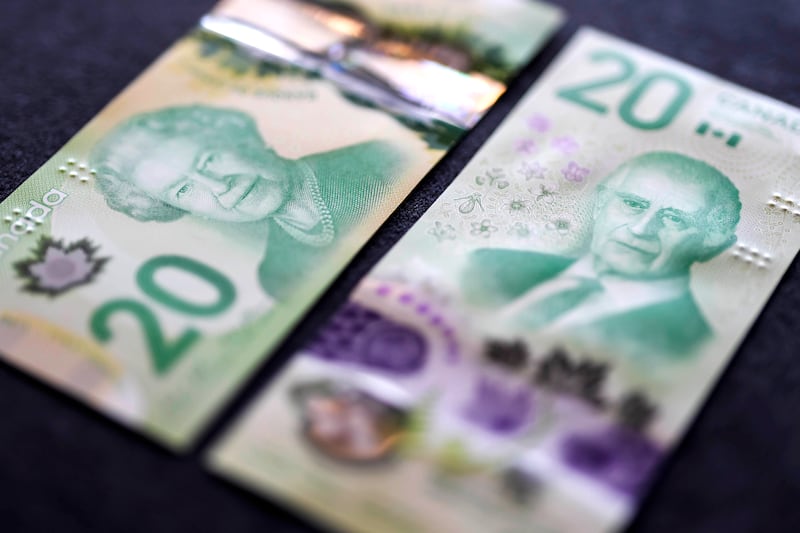
In marking the historic occasion, Gov. Gen. Louise Arbour noted that the late Queen’s image became one of the “most recognizable on our currency for generations of Canadians.”
“Today, this tradition continues with his Majesty King Charles III, who is appearing on a Canadian bank note for the first time,” Arbour said.
On the other side of the bill is an image of the Canadian National Vimy Memorial, which is located on the site of the 1917 Battle of Vimy Ridge in France.
Bank of Canada (BOC) Governor Tiff Macklem called the battle “a symbol of Canadian sovereignty on the world stage.”
“The Battle of Vimy ridge is widely viewed as a coming-of-age moment in Canada’s development as a nation during the First World War,” Macklem said during the unveiling.
“Our troops successfully captured a strategically important position that previous Allied armies had failed to take.”
The names of 11,285 Canadian soldiers were engraved on the memorial.
Macklem also revealed a personal connection, telling an audience of invited guests that his grandfather and namesake, Lt. Tiff Macklem, served as a liaison officer during the Battle of Vimy Ridge.

“He would have had to navigate a maze of trenches and tunnels filled with troops and ammunition – as well as causalities and prisoners of war,” he said. “All this took place while artillery bombarded enemy lines. Fortunately, as evidenced by my standing here before you, my grandfather returned home to Canada.”
The updated polymer banknote boasts advanced security features and innovative 3D-design.
A purple security strip, when tilted, makes some of the images on the banknote appear to move, like a maple leaf that pulses to a darker shade of purple, and a band that spins around a poppy petals.
A bubble on the bill looks 3D and magnifies the pattern of 20s inside of it, while the background pattern of 20s changes into maple leaves.
The bill’s tactile features include raised ink on the King’s portrait, the large number 20 and the word “CANADA.”
“Canada’s 13 provinces and territories are represented by their floral emblems. The stems and leaves connecting the flowers are based on those found in the Books of Remembrance housed on Parliament Hill,” according to the Bank of Canada.
Indigenous representation
The bank’s new bill also features four plants with cultural relevancy to the country’s Indigenous populations, such as wild strawberries, western red cedar, braided sweetgrass and Arctic cotton.
Elder Verna McGregor of the Kitigan Zibi Anishinabeg First Nation says that it’s important for Indigenous culture to be reflected in a product of everyday use. She points out that the strawberries symbolize reconciliation and that the Arctic cotton represent the Inuit, while sweetgrass reflects the First Nations in southern Canada.
“For us, we were functional. Our art was functional. It was in our clothing,” said McGregor as she held up the bill. “So now, this is a modern form of functionality.”
The artistic technology embedded in the changing holograms fight counterfeiting, but the BOC has also tested the durability of its materials. The bill has been literally put through a washer and dryer, as well as boiled and doused in chemicals.
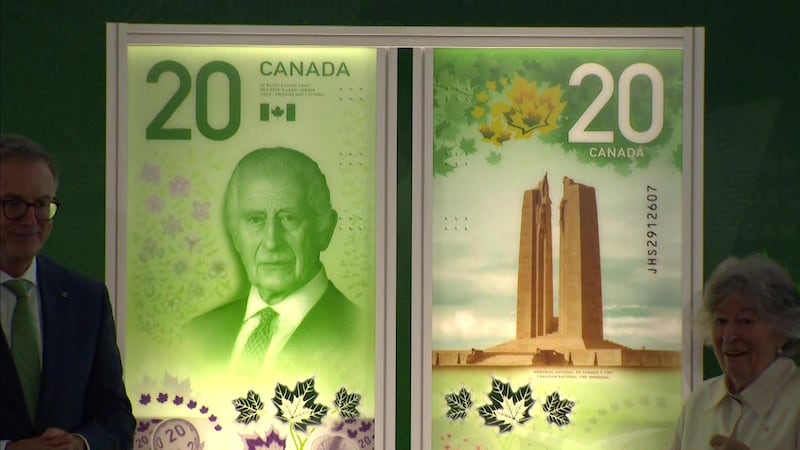
Referencing the trade war with the United States, Wayne Long, the secretary of state for the Canada Revenue Agency and Financial Institutions, said in his official remarks that the symbols in our wallets are small, but “powerful reminders of who we are as a nation and what we value.”
“The rules-based international order and trading relationships that long supported Canada’s prosperity are changing. Our economic sovereignty faces new threats,” Long said.
“But as we meet these challenges, Canadians can be confident in the strength of our institutions, the ingenuity of our workers and the determination of our businesses to compete and succeed in every great region of our country.”
With files from The Canadian Press.

