HALIFAX — Some Nova Scotia public servants with scientific expertise say they are being muzzled and pressured to weaken environmental assessments of onshore wind development projects, according to a survey conducted by the provincial auditor general.
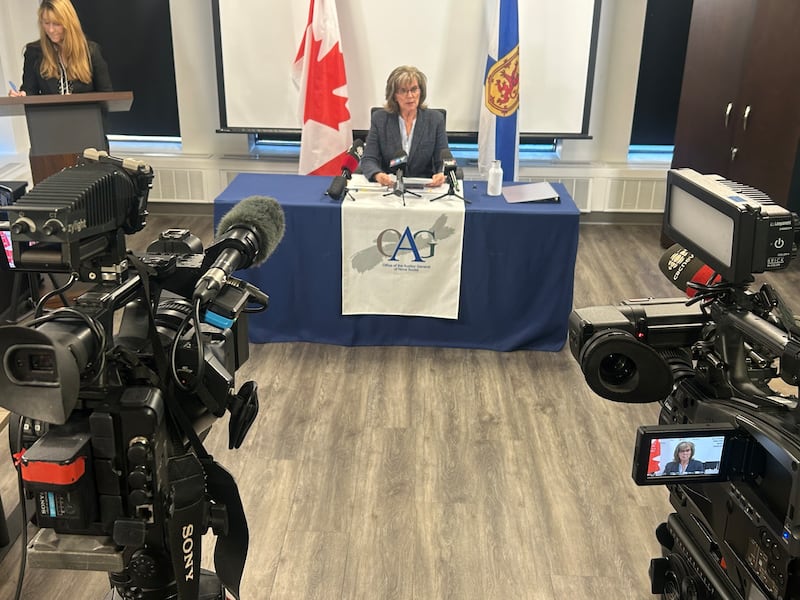
Nova Scotia Auditor General Kim Adair released the findings on Tuesday as part of an audit that urged the government to strengthen how it does environmental assessments of new projects.
Governments conduct environmental assessments so that scientists and other experts can evaluate impacts of industrial activity and determine whether or how to proceed to mitigate those impacts.
But Adair’s new audit included details of a survey of public servants who accused the government of suppressing the advice of its own subject matter experts during these reviews.
“For example, individual respondents reported feeling ‘muzzled,’ being ‘directed’ not to suggest terms and conditions, or being pressured to ‘alter or soften’ their comments,” said the report.
The auditor general’s office said it sent the survey to 136 people working on environmental assessments in government and that 38 people who had worked on assessments of onshore wind projects since 2023 responded.
The audit also noted how public servants had flagged risks in some projects that were not mentioned in government approvals of those projects.
“For example, in one project, government reviewers identified risks to the endangered wood turtle and lichen habitats that were not addressed by the project owner,” Adair wrote in the audit. “In another, reviewers raised concerns that the project owner had overlooked increased wildfire risk. We found no corresponding terms and conditions in the approval which would address these risks raised by the subject matter experts.”
Adair made 13 recommendations to improve the environmental assessment process and compliance monitoring after a project is approved. Her report said the provincial Environment Department agreed with all of the recommendations.
“It’s concerning when we hear things from government reviewers that they’re being muzzled, or they’re being discouraged from putting their concerns forward. That was kind of a common theme as we carried out our work, so it’s very concerning,” Adair said during a news conference Tuesday.
Minister of Environment Tim Halman defended the province’s environmental approvals saying “decisions are made with rigor, and grounded in a lens of science, facts and evidence” in an emailed statement Tuesday.
He did not directly address questions related to the alleged muzzling of government reviewers, but said reviewers do “incredible and important work” to ensure he is making informed decisions.
The auditor general’s report said Nova Scotia’s environmental assessment process is generally consistent with other provinces.
Adair said a number of concerns raised in this new report were flagged last time her office reviewed this process in 2017, and those issues were addressed by the time her office followed up in 2020.
That’s no longer the case, she said.
“This audit identifies that they have backtracked, or have regressed. And I find that very concerning,” she said.
Adair said it’s important to ensure environmental oversight is effective, given that Nova Scotia is relying on onshore wind energy to reach its renewable energy targets by 2030.
There are more than 300 commercial wind turbines operating in Nova Scotia. As of 2025, these turbines generated about 17 per cent of the province’s total electricity production. Those wind farms are owned by Nova Scotia Power, community organizations and independent energy producers.
The auditor general said once a project is approved, the department does not appropriately monitor it to determine if it is complying with terms aimed at managing environmental risk.
The report’s 13 recommendations include strengthening environmental assessment terms and conditions by including measurable criteria with clearly defined timelines and requiring staff to record their rationale when reviewer input is not incorporated into environmental assessment terms and conditions.
As well, Adair said the department must verify the qualifications of external consultants involved in the assessments.
NDP member Lisa Lachance said Tuesday the audit is deeply concerning and makes it clear that Nova Scotians can’t trust the environmental assessment process.
“People who are the experts, our public servants, are not being allowed to do their jobs. Their advice is being ignored, muzzled,” Lachance told reporters Tuesday.
Lachance said Nova Scotians have legitimate concerns about how development of energy projects impact the province’s land, water and wildlife.
“This government wants to recklessly push forward without earning trust and doing their due diligence. I don’t think the minister of environment is doing his job when he’s not following a proper environmental assessment process,” Lachance said.
This report by The Canadian Press was first published Nov. 17, 2026.
Lyndsay Armstrong, The Canadian Press