


Oil prices surged early Thursday in a jump largely attributed to stalled talks between U.S. and Iranian negotiators.
The price of Brent crude oil briefly surged past US$126 a barrel early Thursday, compared to approximately $70 per barrel before the war started. Benchmark U.S. crude climbed 1.3 per cent to $108.28 per barrel.
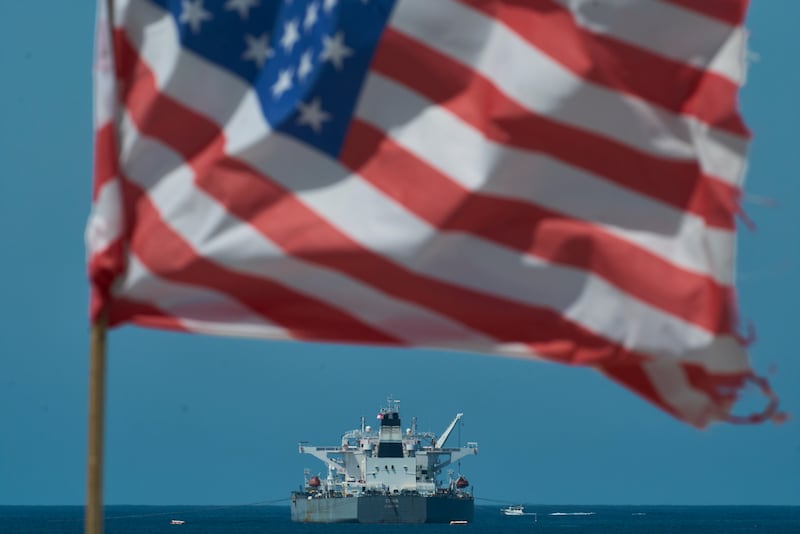
Both Iran and the U.S. have blocked the Strait of Hormuz, a critical shipping artery that in peacetime sees about 20 per cent of worldwide crude shipments. The blockade has led to sharp increases in gas prices and fears of a trickle-down effect into consumer costs in other Canadian industries.
Follow for key updates as they happen:
Canada is a major oil producer. Why are prices so high?
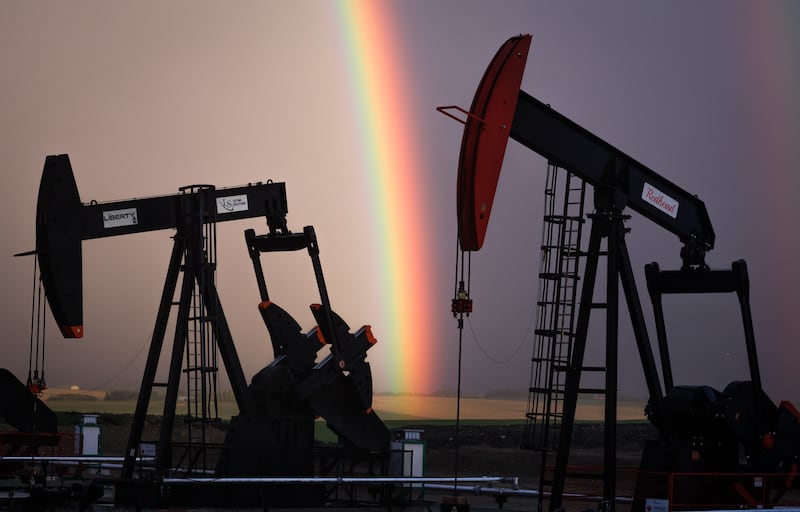
Canada is the fourth-largest oil producer in the world. It produced 5.13 million barrels of oil per day on average in 2024 and 5.19 million barrels per day in the first half of 2025, according to a snapshot released in December.
But if that’s the case, why are our fuel prices going up just like the rest of the world?
“Oil and gas are global commodities,” economist Moshe Lander explained during an interview with CTV News Channel.
Consider an oil exporter in Canada who sells to the domestic market and internationally, he said. Since every country in the world purchases oil, or some derivative, Canada’s local prices are influenced by whatever the highest price is elsewhere in the world.
And because oil is refined into so many different products, such as fuel for our cars, jets, plastics and more, all those prices stand to rise as well.
Luca Caruso-Moro, CTVNews.ca journalist
Toronto gas prices expected to rise again
Drivers in Toronto saw a four-cent jump at the pumps Thursday morning as the conflict in Iran shows no signs of ending anytime soon—and one energy analyst says prices will be even higher on Friday.
Dan McTeague, president of Canadians for Affordable Energy, predicts that the price of gas in Toronto will climb another eight cents per litre before the weekend, pushing it to an average of 190 cents per litre.
“Supply gaps can only be resolved by higher prices until this matter is resolved. It’s going to take a long time for us to get through this, even after the peace deal is hopefully reached someday,” he told Newstalk 1010’s Moore in the Morning Thursday.
Phil Tsekouras, CTVNewsToronto.ca. Read the full story here.
Markets open, oil prices retreat
Oil prices surged to their highest levels since the war began before retreating quickly.
Brent crude, the global benchmark for July delivery, spiked to US$114.70 a barrel before settling back to US$108.64 by late Thursday morning.
This volatility followed an overnight price spike triggered by fears that a conflict with Iran could close the Strait of Hormuz, potentially trapping tankers in the Persian Gulf and severing global supplies.
Meanwhile, the U.S. stock market rose steadily on the back of strong profits from technology giants Alphabet and Amazon, both of which beat analyst expectations.
These gains pushed the S&P 500 up 0.2 per cent, pushing it closer to an all-time high, while the Dow Jones Industrial Average rose 0.7 per cent and the Nasdaq gained 0.2 per cent.
In a quieter segment of the Brent market, June delivery prices briefly spiked over US$126 per barrel before retreating to around $114
Anam Khan, BNNBloomberg.ca journalist. Read the full story here.
Inflation hits 3% in Europe
Soaring oil prices from the Iran war pushed inflation higher in Europe in April, as growth continued to underperform in a worrying combination both for consumers and policymakers at the European Central Bank.
Annual inflation in the eurozone -- the 21 countries that use the shared euro currency -- rose to three per cent from 2.6 per cent in March, fueled by a 10.9 per cent increase in energy prices, the European Union statistical agency Eurostat reported Thursday. Crude oil is trading above $120 per barrel, up from around $73 before the outbreak of the war on Feb. 28.
Meanwhile, eurozone growth for the first three months of the year disappointed with a marginal increase in economic output of 0.1 per cent over the quarter before.
The Associated Press

Iran: Americans’ place in Gulf is ‘at the bottom’
Ayatollah Mojtaba Khamenei maintained his defiant tone since taking over following the killing of his father in the war’s opening airstrikes.
In a written statement read by a state television anchor, Khamenei -- who has not been seen in public since becoming supreme leader -- said the only place Americans belonged in the Persian Gulf is “at the bottom of its waters” and that a “new chapter” was being written in the region’s history.
The Associated Press
A ‘breakdown’
The U.S. has continued its blockade of Iranian ports while the Strait of Hormuz is closed, pushing oil prices higher in recent days. Reports Thursday suggesting a possible escalation by U.S. President Donald Trump doused hopes for a quick end to the conflict.
“The breakdown of talks between the U.S. and Iran, along with President Trump reportedly rejecting Iran’s proposal for a reopening of the Strait of Hormuz, has the market losing hope for any quick resumption in oil flows,” ING Bank strategists Warren Patterson and Ewa Manthey wrote in a research note.
Oil prices vary depending on the type of crude oil, where it is being traded and under what terms, for futures contracts. By some measures, Brent has hit its highest level since its peak of $147.50 per barrel in 2008 during the global financial crisis.
The Associated Press
Canadians drive less
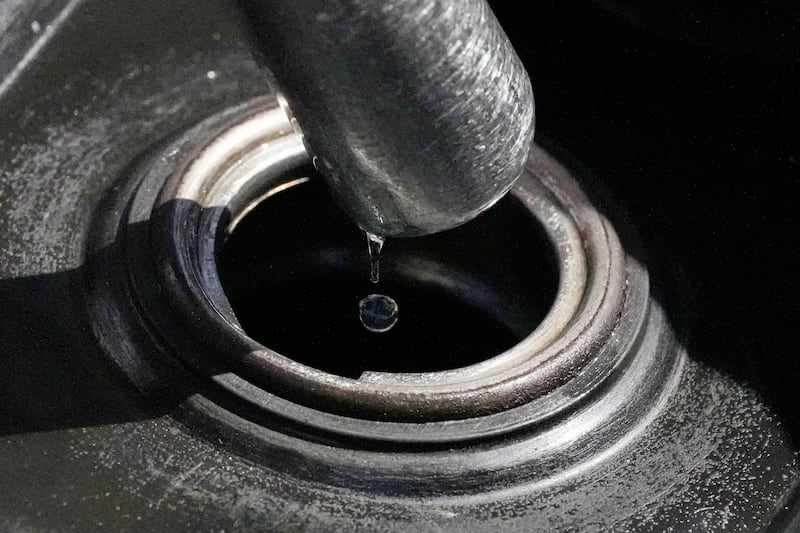
Forty per cent of Canadians are spending less time behind the wheel due to high gas prices, according to a new study from Narrative Research.
The study, which polled 1,234 Canadians 18 years or older, found 40 per cent of respondents are limiting their trips or driving less after a sharp rise in gas prices in recent weeks.
Fourteen per cent of Canadians are walking or biking more often, while 12 per cent are buying smaller amounts of gas at the pump.
“Rising gas prices driven by global events are weighing heavily on Canadians, prompting widespread concern and noticeable changes to everyday behaviour,” the study reads.
“Our latest research finds that nine in 10 Canadians are concerned about the price of gas, with half saying they are extremely concerned, underscoring how sharply fuel costs are being felt across the country.”
Sean Mott, CTVNewsAtlantic.ca. Read the full story here.
Shell goes big on Canadian gas
Shell plc has signed a $22-billion deal to acquire ARC Resources Ltd., bringing together the lead partner in Canada’s first operating liquefied natural gas project with a major producer in one of the continent’s most profitable shale regions.
Wael Sawan, chief executive of the U.K.-based global energy heavyweight, said Monday that the transaction “establishes Canada as a heartland for Shell,” which had divested its once hefty footprint in the oilsands.
“We are accessing uniquely positioned assets and welcoming colleagues that bring deep expertise which, combined with Shell’s strong basin level performance, provides a compelling proposition for shareholders.”
ARC Resources is focused on the Montney, a shale formation that stretches through parts of northeastern British Columbia and northwestern Alberta.
The Canadian Press. Read the full story here.

