Canadians concerned about a growing Ebola outbreak in Central Africa should focus on efforts to contain the virus at its source, says infectious diseases specialist Dr. Isaac Bogoch.
The comments come as Canada requires travellers who have recently been in the Democratic Republic of Congo, Uganda or South Sudan to undergo a 21-day quarantine upon arrival. The measures follow a worsening outbreak in the region and at least 246 deaths in the Democratic Republic of Congo.
- READ MORE: New travel and immigration measures in place to prevent Ebola cases from spreading to Canada
In an interview with CTV News Channel, Bogoch said the outbreak presents significant challenges and is unlikely to be brought under control quickly.
Outbreak likely to be prolonged
“It’s going to be challenging,” Bogoch said, pointing to security concerns in Central Africa.
“The security in that part of the Democratic Republic of Congo really hampers public health responses,” he said.
Bogoch also said the Ebola strain responsible for the outbreak is particularly difficult to manage because there are no vaccines or therapeutics available for it.
The situation is further complicated by cases reported outside the DRC.
“We know that there’s cases not just in the Democratic Republic of Congo, but also in Uganda,” Bogoch said. “When you have an international outbreak like this, it just poses additional challenges to the global coordination efforts.”
He warned the outbreak could continue for some time.
“This is going to be, sadly, a bit of a long one before it gets under control,” he said, noting that a previous Ebola outbreak of similar scale in eastern DRC took about two years to resolve.
Quarantine measure designed to reduce risk
Bogoch said Canada’s new quarantine requirements should not be interpreted as a travel ban.
“Foreign nationals can absolutely travel to Canada from those areas and Canadians can travel to those areas and return,” he said. “I think this is more of a policy to reduce the risk that’s already low of importing a case of Ebola.”

Bogoch added that the likelihood of imported cases remains very small, but measures that add additional layers of protection can help limit transmission if a case does arrive.
Supporting affected countries benefits Canada
While quarantine measures may lower risk at home, Bogoch said the most effective strategy is helping affected countries contain the outbreak.
“The way that this gets under control is if we really pour resources into the impacted areas and support the countries impacted and also support the global efforts to quell this epidemic,” he said.
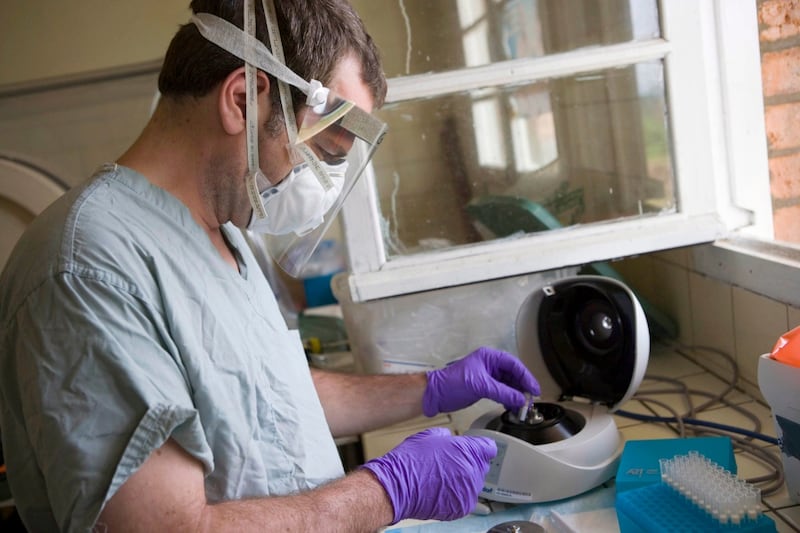
Canada has committed about $8 million toward international response efforts, including support for frontline workers, personal protective equipment and logistics.
Bogoch said such assistance is important for humanitarian reasons and public health reasons alike.
“It’s the moral thing to do, it’s the ethical thing to do, because our friends and neighbours on the other side of the world are in trouble,” he said.
“It will shorten the duration of the outbreak. It will mitigate the severity of the outbreak and that, in part, will reduce the risk of exported cases to Canada and other parts of the world.”
Measles a greater concern ahead of World Cup
With the FIFA World Cup set to begin in less than two weeks, Bogoch said public health officials are also preparing for the challenges that come with large international gatherings.
“There’s a whole science on infectious diseases transmitted from mass gathering events,” he said.
Although Ebola has attracted global attention, Bogoch said it is not the disease Canadian public health officials are most concerned about.
“The number one risk is measles introduction,” he said, noting that Canada recorded roughly 5,000 measles cases last year and more than 1,000 cases so far this year, with most infections acquired within the country.
Bogoch said international events can increase the risk of disease transmission because of the large number of people gathering in close quarters.
“There certainly can be imported infections and more disease transmission when you have a ton of people in close proximity with each other over a short period of time,” he said.

