


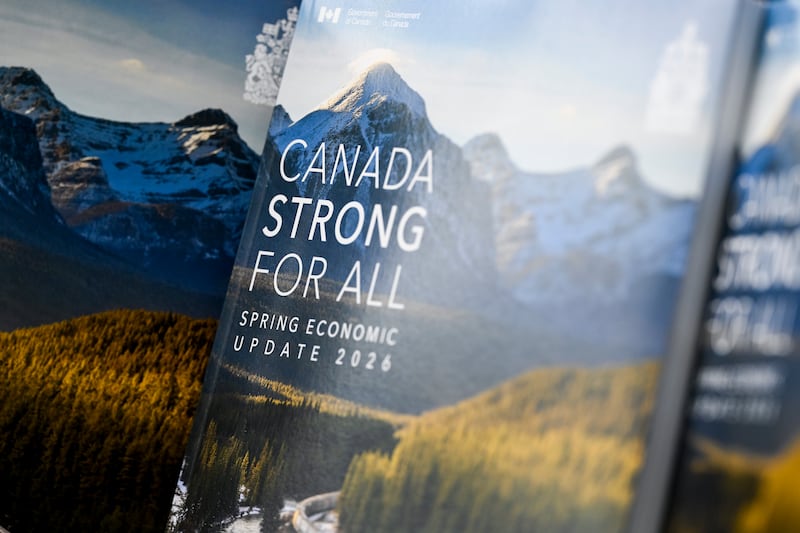
OTTAWA - While emphasizing the “resilience” of Canada’s economy, the federal government’s newly tabled spring economic update includes few new line items geared toward Canadians’ pocketbooks.
“I think ordinary Canadians who are looking for pocketbook savings will be disappointed with this spring economic update,” said Fred O’Riordan, the national leader for tax policy at EY, in an interview with CTV News.
Despite the inflation rate hovering around the Bank of Canada’s target two per cent figure for nearly two years, two key areas on the affordability front — fuel and groceries — are seeing major spikes.
Pointing to a “rapidly changing and increasingly fragmented world,” the spring economic update repeats the Liberals’ oft-touted intention to focus on what Canada “can control.”
For example, it highlights new affordability measures the government has announced since the November budget, namely eliminating the fuel excise tax and extending the groceries and essentials benefit. And, it restates the pre-promised streamlining of access to the Canada Disability Benefit and the Canada Student Loan Forgiveness Program, but the overall package offers little new beyond that.
Still, from skills training to sports funding, pension changes and employment insurance extensions for some, there are a few measures included in the document geared toward increasing affordability.
CTV News has reviewed the 167-page spring economic update. Here are some of the line items that could impact the average Canadian.
Spending billions on skills training
The spring economic update lays out the government’s plan — dubbed Team Canada Strong — to spend $5.9 billion over five years to recruit, train and hire between 80,000 and 100,000 new Red Seal skilled trades workers by 2030-31.
Despite an entrenched trade war with the U.S., overall unemployment in Canada is holding steady. But, there is a gap across generational lines, with youth unemployment more than double the national average.
In the November budget, the Liberal government announced new funding for its summer jobs program, among other measures. Now, the spring economic update’s skills training measures are the largest line item when it comes to new spending.
“Team Canada Strong will provide a simple and seamless way to learn about and enter into the trades and link up with employers,” the spring economic update states. “Young people will start with paid, job ready placements that lead directly into registered apprenticeships—earning income, gaining experience, and contributing immediately to major housing, infrastructure, and defence projects.”
Part of the plan also includes funding for apprenticeships by way of wage subsidies for employers. It also includes income top-ups for apprentices and one-time bonuses for apprentices obtaining certification in a Red Seal trade.
The spring economic update lists other affordability measures for tradespeople as well, including funding to help ease labour mobility costs. The document proposes, for example, to increase the limit on temporary relocation expenses that eligible tradespeople can deduct on their taxes.
Significant sports funding
The spring economic update is proposing what it’s framing as “generational investment” in Canadian sports and athletes.
Dubbing it “from playground to podium” funding, the federal government is earmarking $755 million over five years, starting in 2026-27, and $118 million ongoing, to Canadian Heritage to support Canada’s sport system to:
- “Bring more world-class sporting events to Canada;
- Help our athletes train, compete, and perform, including support for better mental health;
- And see new and existing community infrastructure … fully used and enjoyed by a new generation of athletes.”
Reducing CPP contribution rate
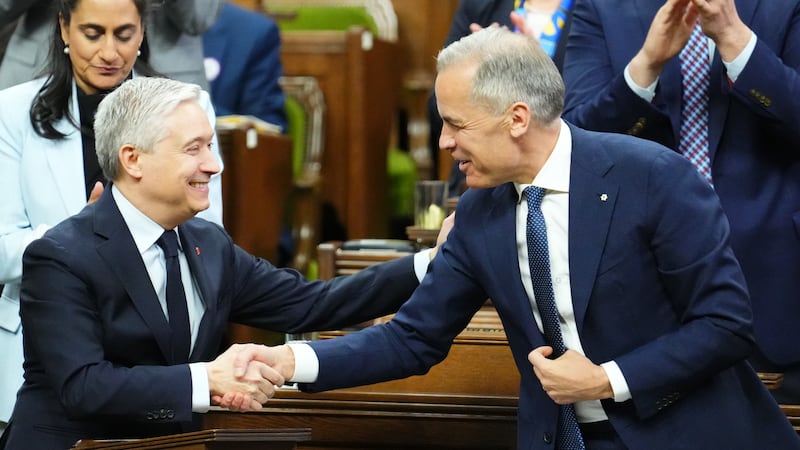
The spring economic statement also aims to keep more money in Canadians’ wallets by reducing the amount they have to contribute to the Canada Pension Plan.
Starting in January, the CPP contribution rate will be reduced from 9.9 per cent to 9.5 per cent.
According to O’Riordan, the change likely indicates the CPP fund is actuarily sound and performing well, allowing the federal government to pass along some of the surplus from it to Canadians.
“This change would maintain a prudent financial buffer to protect the CPP against future economic and demographic risks, while providing meaningful contribution relief,” the spring economic update reads.
“A 40-basis point reduction in the CPP contribution would translate into annual savings of about $133 for an employee earning $70,000 a year, with equivalent savings for their employer,” it also projects.
Clearing air travel complaints backlog
The federal government wants to change the resolution process for air travel complaints in order to reduce the backlog.
Firstly, it’s proposing to transfer responsibilities for those complaints from the Canadian Transportation Agency to the Minister of Transport, which it claims will “enhance transparency of the complaints process and enforcement of passenger rights regulations.”
The spring economic update doesn’t put a number to the current backlog, but does categorize it as “significant.”
It also states “the government’s intention to clear the backlog of air travel complaints by engaging a neutral, third-party dispute resolution organisation based on a proven model in the (United Kingdom) and the (European Union).”
“Beyond the backlog, the government also intends to develop a simpler and more effective regulatory regime, so that rules are clearer and passengers are fairly and more quickly compensated when air travel does not go as planned,” the spring economic update states.
Extending EI for some seasonal workers
The federal government is proposing to extend the employment insurance benefits for seasonal workers in some key regions in Canada.
The spending is a continuation of rules that were introduced in 2018, according to the spring economic statement, to provide up to five extra weeks of employment insurance for eligible workers in 13 specific regions.
The measure was set to expire this October, but the federal government is opting to extend it through to 2028.
Some measures for homebuyers
Another previously announced or existing measure the federal government is proposing to extend is the grace period during which homeowners are not required to start repaying their Home Buyers’ Plan withdrawals.
According to the spring economic update, the measure already applies for those who made a withdrawal to their Home Buyers’ Plan between 2022 to 2025, but the grace people will now also extend to those making their first withdrawal up to the end of 2028.
“This will provide cash flow relief of up to $4,000 (1/15 of $60,000) per individual per year for the three years over which they are not required to repay the amount into their RRSP,” the document estimates.
Health benefits to Indigenous communities
The spring economic update also allocates some new funding to Indigenous health initiatives.
Namely, it earmarks $794 million this year to support the Non-Insured Health Benefits Program, “which provides First Nations and Inuit with coverage for a range of health products and services such as medical travel, pharmaceuticals, and mental health counselling.”
With files from CTV News’ Rachel Aiello and Brennan MacDonald

