


OTTAWA -- Prime Minister Mark Carney says the Alberta referendum question on separation could become a slippery slope, if many Albertans are considering heading into a vote to send a message.
“I will make the following observation, though, about the question, and this is an observation from experience,” Carney told reporters Monday. “In these separation issues, it is often advanced that: ‘Vote for this, and it’s a free option’; ‘Vote for this, and we will strengthen your hand in future negotiation.’”
“That is a very dangerous bluff,” Carney added, before pointing to his time as governor of the Bank of England during Brexit, when the United Kingdom narrowly voted to leave the European Union.
“They’re still, 10 years later, trying to undo what people didn’t think they were voting for,” Carney also said, referencing Brexit.
- ‘Yes, I do’: Alberta Premier Smith promises not to hold later separation referendum if remain side wins October vote
- What will the Alberta separation question look like in the fall referendum?
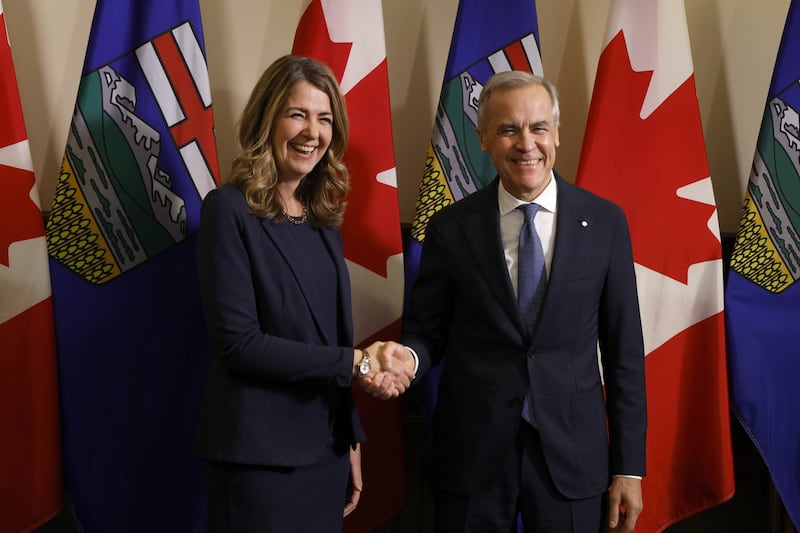
Last week, as the debate around Alberta separation continued to heat up, Premier Danielle Smith announced that a question on independence will be added to the already set Oct. 19 referendum in the province.
Rather than ask Albertans whether they want to stay a part of Canada or separate, however, the question will ask Albertans whether they want to remain a part of Canada, or launch a formal process for a later referendum on independence.
Specifically referencing the referendum question, Carney said the federal government is doing its “due diligence” by looking at whether it’s consistent with the Clarity Act — a federal law passed in 2000 that established the legal conditions under which a province can negotiate secession from Canada.
When asked how he sees his role in the Alberta separation debate, Carney said he’ll be “campaigning for Canadian unity,” and repeated his oft-touted line that his role as prime minister is to support “co-operative federalism.”
Carney also pointed to the economic and social benefits of remaining in Canada, for Alberta.
In an interview with CTV Question Period this week, Smith promised that if the remain side of October’s referendum wins, she will “listen to the will of the people,” and not hold another later referendum on independence.
While Smith has explicitly said she wants Alberta to stay within Canada, she has faced criticism for enabling the referendum to go forward in the first place, namely by changing the law to make it easier for petitioners to trigger one.
In a statement to CTV News on Monday, Smith said she agrees with the prime minister that Alberta should remain a province of Canada, and she’ll be campaigning for that leading up to the October referendum.
“I would also remind all Canadians that we should not dismiss the legitimate grievances of Albertans,” Smith also wrote, adding the decision is up to voters in the province, not in Ottawa, and pointing to the hundreds of thousands of people who signed petitions on either side of the issue.
“Instead, we should focus on addressing these issues, restoring hope in Canada, and demonstrating that our country can work and is working.”
Smith also said she looks forward to “continuing to work” with Carney.
Opposition weighs in
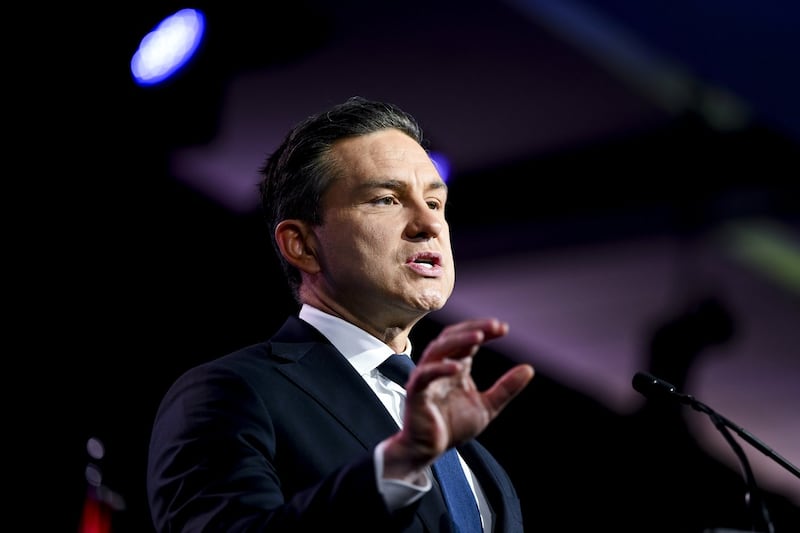
Speaking to reporters last week, Conservative Leader Pierre Poilievre — who represents an Alberta riding in the House of Commons — said he and his caucus will be in Alberta campaigning for the province to stay.
“I’m a strong Canadian federalist, a proud Albertan, and a proud Canadian,” he said. “I want a strong Alberta within a united Canada, and all Conservatives will be campaigning for Canadian unity in Alberta.”
Conservative MP Michelle Rempel Garner, who also represents an Alberta riding, accused Carney of “wagging his finger” and using a tone that was irresponsible by comparing the Alberta separation movement to Brexit.
“What we need to do right now is that the Liberals need to project hope, not fear, and to do that, they have to start addressing some of the deep and real frustrations of the people of my province,” she said. “I want to be very clear: some of the most patriotic Canadians I know are frustrated Albertans.”
Bloc Quebecois MP Christine Normandin, meanwhile, said it is not up to the federal government to weigh in on Alberta’s referendum question. She said it is up to those voting — Albertans only — who should have a say.

