
Canada’s high-speed rail project could include a stop in Kingston, Ont., according to the federal transport minister.
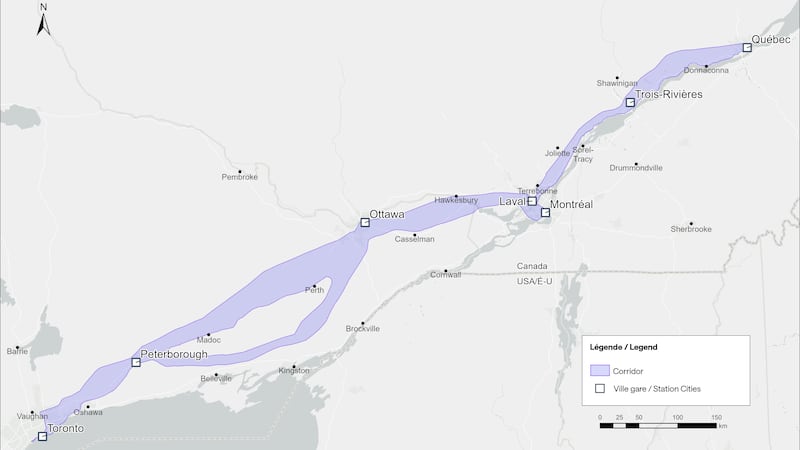
Steven MacKinnon was in Kingston on Monday to announce an update on the controversial Alto project, which would build a high-speed rail corridor between Toronto and Quebec City, with stops in Peterborough, Ottawa, Montreal, Laval, and Trois-Rivieres.

“I have asked Alto to further assess an alignment option that could include Kingston as a potential stop as we continue advancing this transformative project for communities across the Toronto–Québec City corridor," MacKinnon said in a statement released on Alto’s website Monday morning.
Alto said on its website that a proposed stop in Kingston is subject to technical feasibility and project requirements.
“This is an important next step toward building a faster, cleaner and more connected rail network for Canadians,” MacKinnon said.
The mayors of Kingston and South Frontenac urged the government to consider a stop in Kingston, adding the line should run along the Highway 401 corridor in eastern Ontario.
Kingston is approximately 180 kilometres from Peterborough, the first planned stop heading east from Toronto, and about 200 km from Ottawa via Highways 401 and 416.
Alto’s 134-page “What We Heard” report, which was released Monday alongside MacKinnon’s announcement, found that many residents of Kingston expressed a desire to have a high-speed rail stop in the city.
“Although a station is not currently proposed in Kingston, municipal, stakeholder, resident and community support has emerged for the project, contingent on the inclusion of a Kingston station. The existing VIA Rail station was a suggested location for a Kingston HSR station,” the report says.
“Participants emphasized that the southern corridor, specifically through Kingston and Belleville with a station in Kingston, could serve a larger population than the northern route.”
Proponents of a stop in Kingston also noted the city is underserved by air travel options and that Kingston’s Via Rail station is the fourth-busiest station in Canada.
Alto noted that many residents along the potential southern corridor between Peterborough and Ottawa still oppose the project, but running it closer to Kingston could alleviate some concerns.
“While there was criticism of the project, many participants in the South corridor expressed conditional support for Alto if it were to include a station in the Kingston area, where there is already a VIA Rail station,” the Alto report says. “They argue there is enough demand in this city to support ridership. If the alignment were to move to Kingston, it would also avoid many communities that are currently in the South corridor.”
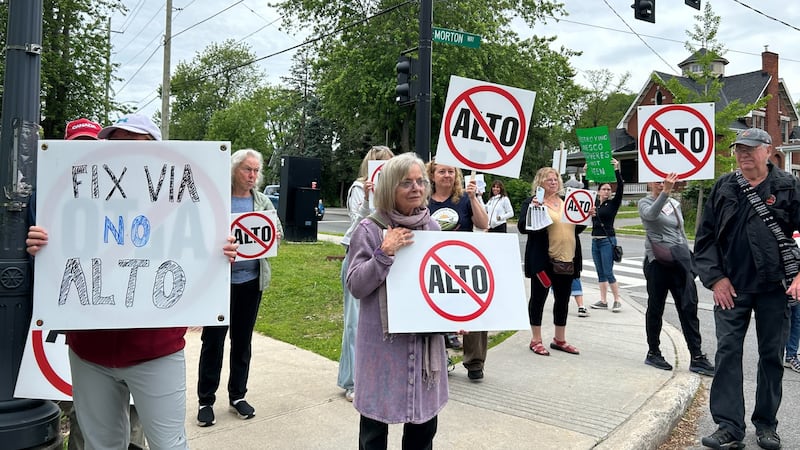
Opponents along the south corridor were concerned about potential community fragmentation and a perceived divide between rural and urban interests, Alto said.
Construction on the first leg of the project isn’t slated to begin until 2029, and it would connect Ottawa and Montreal at first.
Alto says the project would create 50,000 jobs during construction and add roughly $24.5 billion annually to Canada’s GDP. The train would “cut travel times between cities in half” compared to current train trips, travelling at speeds of 300 km/h or more, and will offer more frequent departures between major cities like Toronto, Ottawa, Montreal and Quebec City.
The project, which is estimated to cost between $60 billion and $90 billion, has faced staunch opposition from farmers, landowners, and rural politicians along the two proposed corridors in Ontario. The Parti Québécois has promised to withdraw Quebec from the project if they form government this fall.
Public consultation trends toward approval
Alto released its “What We Heard” report on Monday, outlining the results of more than two dozen open houses across the corridor, 24,000 online surveys, and more messages regarding the project.
Overall, a majority of respondents to the online survey said the project would have a very positive (45.1 per cent) or somewhat positive (10 per cent) effect on the region. Thirty-five per cent of respondents said it would have a very negative effect, while 6.2 said it would be somewhat negative.
There was a similar breakdown to the question about being in favour of the project, with 58.8 per cent of respondents saying they were either very much in favour (48.4 per cent) or somewhat in favour (10.4 per cent). Thirty-five per cent of respondents to the online survey were not at all in favour of the project and 5.3 per cent were somewhat not in favour.
“The likeness in the breakdown of the responses between the first two survey questions demonstrates that there is a wide range of opinions, as some are in favour and see benefits, while others are not in favour and have concerns,” the report says.
Respondents listed shorter travel times, improvement of regional connectivity and mobility, and more convenient travel as the top three positive benefits the line would have. The top three negative effects were fragmentation of land and natural habitats, the cost to build the line, and changes to the landscape, including deforestation. Eleven per cent of respondents said the line would have no positive impacts, while just 2.3 per cent said there would not be any negative effects.
Alto says the majority of respondents to the online survey said they would take high-speed rail at least one to three times per year, while a “significant portion” said they would never use it. The report, however, does not include any figures on these responses, in particular.
Alto also received 2,155 responses to exit surveys completed after the 26 open houses it hosted during the first public consultation period.
According to the report, 54 per cent of respondents who filled out exit surveys strongly supported the project, while 14 per cent somewhat supported it. Eighteen per cent were strongly opposed and five per cent were somewhat opposed.
Most open house attendees did not submit an exit survey. Alto says 10,280 people attended the 26 open houses, but only 21.5 per cent completed the survey.

