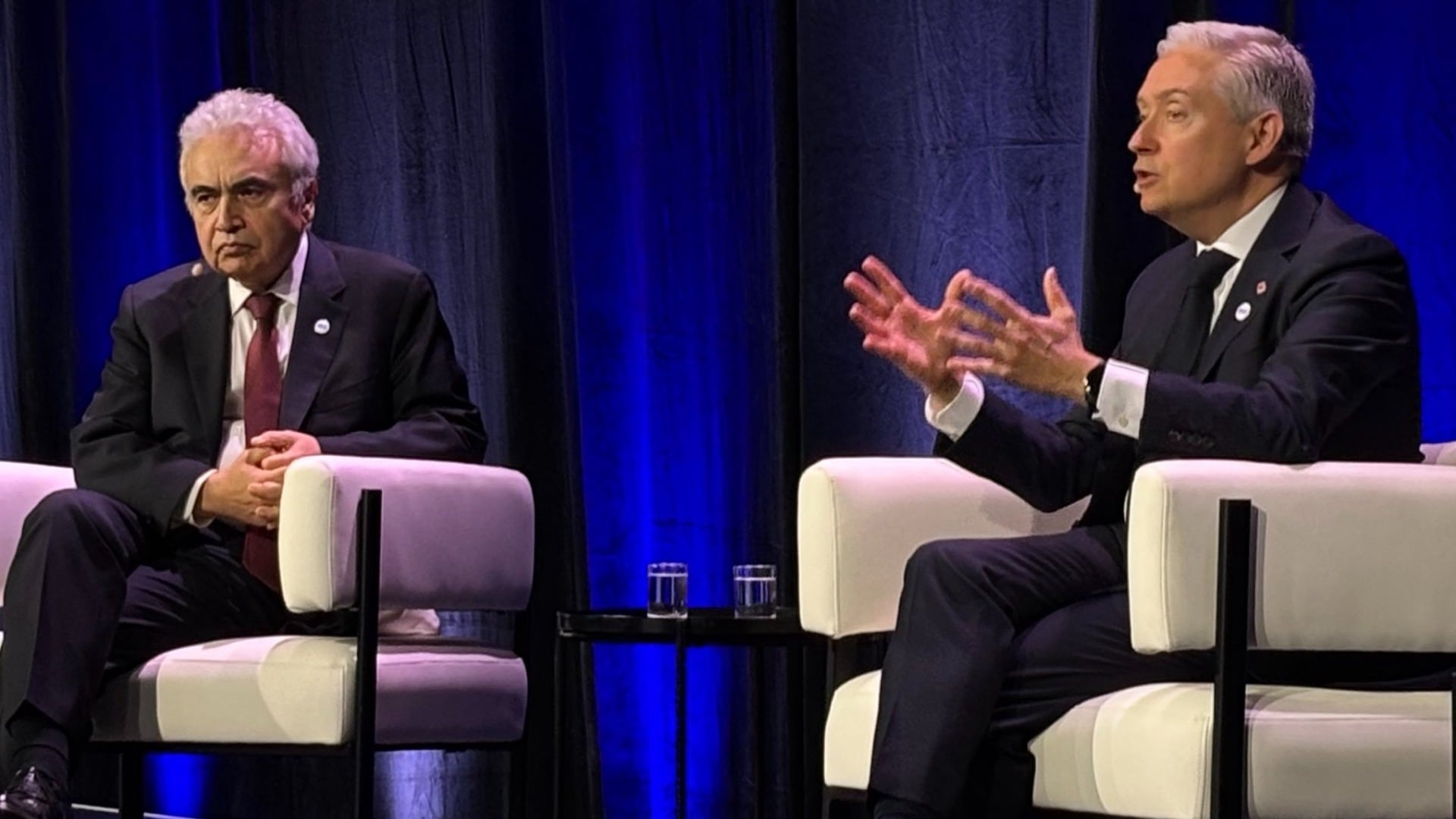
OTTAWA – The Head of the International Energy Agency said the current geopolitical moment presents a “once in a lifetime opportunity” for Canada to be a “real energy export superpower,” but it needs to move quickly.
In a fireside conversation with finance minister François-Philippe Champagne on Monday, Fatih Birol said trust and predictability should be at the centre of Canada’s export strategy, given the impact the closure of the Strait of Hormuz has had on the world and the resulting desire for stable energy sources.
Birol said countries are generally willing to pay more for energy that doesn’t “create any geopolitical threat,” and Canada has “huge potential.”
This is Birol’s second visit to Canada in six weeks. He made similar comments about Canada’s potential and its need to move quickly, at a fireside chat with Natural Resources Minister Tim Hodgson in Ottawa in May. Birol also met with Prime Minister Mark Carney during the same visit.
Since then, Birol said, he’s met with many governments and knows many nations have reached out to Canada interested in its energy industry, with “more and more” countries to come. Champagne echoed that.
“Even those who produce in the Middle East, believe it or not, are calling us, they’re saying now, why don’t we produce in your country, so that we can even out in terms of the risk,” Champagne said.
Champagne also talked about playing a “key role” for Europe and for the Asia-Pacific region, noting Japan and South Korea specifically.
He referenced an understanding that even if the Strait of Hormuz issue is resolved, there are concerns a similar crisis could happen down the line, if not there, then in another strait’s “choke point” elsewhere in the world.
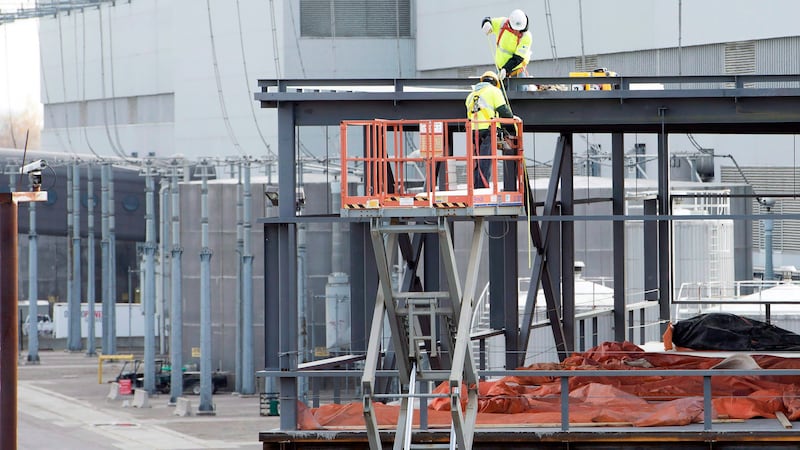
Demand for electricity, nuclear
Much of the conversation, as part of the IEA’s 11th Annual Global Conference on Energy Efficiency in Montreal, centred around nuclear and electricity in terms of key energy sources.
Birol said he’s been referencing the “age of electricity” for the past two and a half years, saying while global energy demand is growing, the global demand for electricity is growing three times faster.
“People often say demography is destiny. I would put it to you that energy is destiny,” said Champagne, adding that electricity, in particular, is becoming key as “everyone is trying to decarbonize.”
In addition to citing how Canada is “one of the few countries” that can certify a nuclear reactor, and “will be” the first in the G7 to have small modular reactors (SMRs), Champagne also talked about the idea of selling Canada’s nuclear industry as a service.
“We can bring our technology and our know-how into countries. Think about Eastern Europe, think about a number of countries who have looked at the CANDU (Canada deuterium uranium) reactors,” Champagne said, citing “enormous opportunities” for Canada to play a “key role.”

AI, air conditioners drive energy demand
Birol said one of the new drivers of electricity demand are data centres for artificial intelligence. He noted that is “very important” for Canada, which has seen a lot of interest.
According to Birol, a medium-sized data centre uses the same amount of electricity as a town with 100,000 households. He spoke about the “not medium, but huge” data centres being built around the world, which need electricity 24/7.
Across Canada, there has been a push for more data centres, mentioned as part of the federal government’s new AI strategy, as well as pushback in part about energy demands.
“Whoever wins the AI race wins the geopolitical upper hand,” said Birol, adding tech companies will choose countries with access to plentiful, cheap electricity 24/7.
Canada has committed to doubling its electricity grid by 2050.
Birol believes the race for AI data centres will push the development of more SMRs fast.
“You are coming first Canada, but other countries of course, are in the race,” he said.
Birol also shared that despite all the attention AI data centres have been getting, they are not the single biggest driver of global electricity consumption.
“You will be surprised… it is the exponential increase of sales of air conditioners in the world.”
Birol said as a growing number of nations see an increase in household income and face rising temperatures, they are buying more air conditioners. He said currently 18 per cent of households in Indonesia have air conditioners, 20 per cent in India and five per cent in Nigeria, but those numbers are increasing.
He said the difficulty with countries like Indonesia or India is that powering the same air conditioner requires three times the amount of electricity than required in Japan, due to a lack of “norms or standards or regulations.”
He said the IEA is working to identify best practices and set an example for countries to adopt policies for things like air conditioners and refrigerators.
“If you have the right air conditioner, you have to build less power plants there, and have the same comfort,” Birol said.
In response, Champagne talked about the difference heat pumps are making and said the government has been “incentivizing Canadians to switch to more efficient” ways to heat and cool their homes.

