


OTTAWA – Alberta Premier Danielle Smith is expected to announce the next steps in her push for a new oil pipeline to Canada’s west coast on Thursday.
As part of the energy memorandum of understanding (MOU) signed between Alberta and the federal government late last year, the province had until July 1 to submit its proposal for a new pipeline to the Major Projects Office (MPO).
In a statement to CTV News on Monday, Smith’s press secretary Samuel Blackett said the premier “will have a major announcement on July 2 to share new details about the Government of Alberta’s submission to the Major Projects Office for a new one-million-barrel-per-day pipeline to Canada’s west coast.”
As part of the MOU, Smith and Prime Minister Mark Carney announced in May they reached a deal to push back the date for an effective industrial carbon price of $130 a tonne by a decade to 2040.
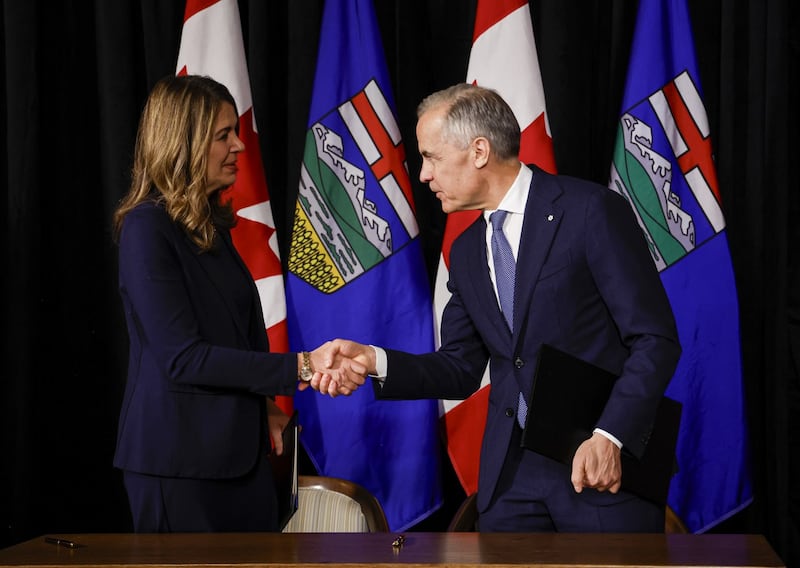
During that same update, the federal government said it will work towards designating the pipeline as a project of national interest by Oct. 1, 2026, with a date of Sept. 1, 2027, for potential construction approval. A provincial government official also said they’d like to see the new pipeline up and running by “no later” than 2033-34.
But there remains no clear private sector investor to pay for it. So far, Alberta has acted as the proponent for the project.
When asked if Alberta expects to have a private sector proponent by the July 1 deadline, a provincial official said in a May briefing to reporters to “stay tuned” and that “work continues.”
Smith, meanwhile, has said she is open to a southern route — or one that runs along the Trans Mountain Expansion Project — for a potential pipeline that would transport oil from her province to the west coast.
In an interview with CTV Question Period in May, Smith said she and the federal government are looking at five potential routes for a pipeline.
The issue has been a point of contention between Alberta and British Columbia for months, with B.C. Premier David Eby opposed to a route that would lead to the northwest coast, because it would require lifting a maritime tanker ban.
With files from CTV News’ Abigail Bimman and Spencer Van Dyk

