OTTAWA – In a week that saw Toyota announce it’s moving some production from Mexico to the U.S., and a new KPMG survey finding four in 10 Canadian manufacturers have moved operations to the U.S. or are planning to do so, an international trade lawyer expects bigger manufacturing moves like Toyota’s on the horizon for Canada.
On Monday, Toyota said it will build a new US$3.6B plant in San Antonio, Texas, and move some production of its Tacoma pickup truck out of its Mexico plant over a four-year period.
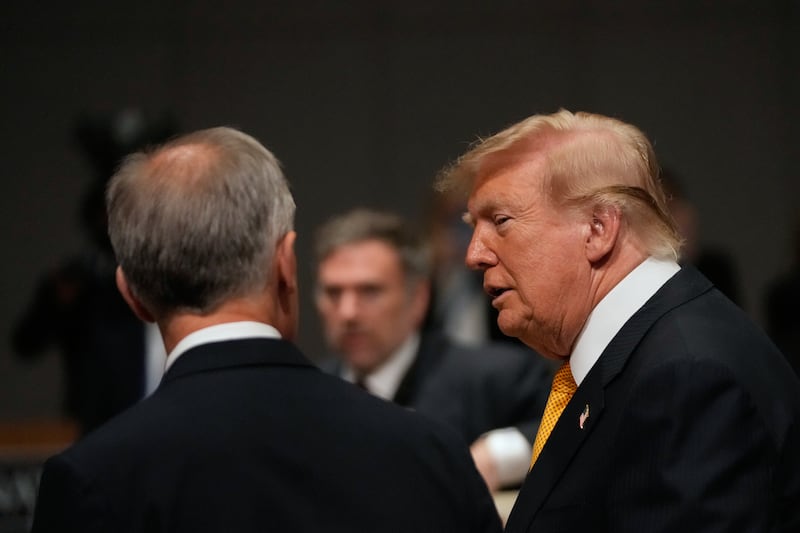
U.S. President Donald Trump credited his country’s tariffs for the move, musing that it will be the largest car plant in the world.
“They’re moving into the United States, and again, they’re doing that to avoid paying the tariff, because if you build your product here [in the U.S.] you pay no tariff,” Trump said Wednesday from Ankara, Turkiye.
International trade lawyer William Pellerin says the tariffs are very much a factor for Canadian companies figuring out next steps, and he expects more big moves to the U.S.
“The danger is that every time the company is going to say, ‘Well, I’m way less exposed to U.S. tariffs if I’m actually on that side of the border,’ and so that’s part of the decision-making process that Canadian companies have to make,” he said.
Pellerin says any major moves in the automotive industry won’t happen in the short term due to government backing and commitments.
“For sure it will happen in the wood product space. We’re seeing that with our clients right now,” he told CTV News. “A lot of small towns will go from having an important manufacturer to nothing.”
Dennis Darby of Canadian Manufacturers and Exporters says Toyota’s move is “certainly troubling,” though he adds he’s not surprised, given companies need to work around tariffs.
“It’s not something that we want to see, but it is a reality,” he told CTV News.
One in four Canadian manufacturers have either moved their operation to the U.S. or are planning to do so, according to a new survey from KPMG Canada.
“Canadian companies are no longer in the wait and see mode,” KPMG Canada Partner and National Leader of Industrial Markets Anamika Gadia told CTV News. She said while the first year of U.S.-imposed tariffs was all about survival, the conversation has moved to endurance.
1 in 10 plan to move headquarters south
On July 1, the United States refused to renew the Canada-U.S.-Mexico free trade deal (CUSMA).
“Canadian companies may be thinking of redeploying that capital that they would have otherwise invested in Canada into the U.S. as part of a longer-term plan, rather than just being in fight mode and reacting to the trade and tariff uncertainty,” Gadia said.
Twenty-nine per cent of respondents have already moved some, or all of their production, with another 13 per cent planning to do so.
The survey of 275 manufacturers found 57 per cent of them have already paused, cut back or cancelled capital investment projects. And 61 per cent say their business can’t survive without access to the American market.
Eleven per cent of manufacturers plan to move their headquarters to the U.S. in the next five years.
Gadia points out while 11 per cent may not seem like a lot, Canadian manufacturers make up more than 10 per cent of our country’s gross domestic product (GDP).
“That is a very significant number, and it sends a clear message – that Canadian manufacturers are looking for more stability in terms of the competitive outlook of manufacturing in Canada and looking for the government to take action in certain areas,” Gadia said.
Those areas include lower corporate taxes, cheaper cost of living for Canadian employees and better access to cheaper energy, she said.
Manitoba’s PhiBer Manufacturing is also not surprised. The farm equipment company tells CTV News Winnipeg they will have to consider moving south if challenges don’t improve. Those include both trade war uncertainty, and Canadian red tape and regulations.
“Market uncertainty has been one of our bigger ones, all the tariff rhetoric and not knowing what to do for prices, how they’re going to be impacting us. That’s definitely been a challenge,” said CEO Derek Friesen.
“This has been home for us, you know, we love our people and our communities,” Friesen said of the two-generation Crystal City company.
“But if this current climate with government and stuff like that continues, at some point we’ll have to consider going south for those customers just to service them better.”
Most manufacturers support CUSMA
The Canadian Manufacturers & Exporters conducted their own national survey of members with similar results to KPMG: if tariffs stick around, 43 per cent of manufacturers said they would shift production, investment, or sourcing to the U.S. – with 36 per cent saying they would have to cut jobs, hours or shifts, as well as delay or cancel Canadian investments.
Not surprisingly, nine in 10 manufacturers support extending CUSMA, while 74 per cent of those impacted by metal tariffs reporting significant or moderate negative impacts, including job cuts (25 per cent), production cuts (33 per cent) and reduced margins (55 per cent).
“We’ve had almost 100 per cent of manufacturers say, the only way to ensure long-term stability and growth is to get some kind of level of certainty with the U.S. in terms of these tariffs,” Darby told CTV News.
“It is the worst of all worlds when you have a situation where you can’t really predict the future is going to be.”
Darby is also a member of the federal government’s Advisory Committee on Canada-U.S. Economic Relations.
He said a lot hangs on the ability of people like Canada-U.S. Trade Minister Dominic LeBlanc and Prime Minister Mark Carney to be “convincing” to the U.S. about the benefit of Canadian offerings – and, added it’s important to make sure that the voices of U.S. businesses are also being heard in Washington.
With the U.S. rejecting a full renewal of CUSMA, he anticipates attention will now turn to “side agreements” on things the U.S. wants to pursue, rather than an attempt to strengthen the full deal.
“Right now, it’s a bit more piecemeal than probably we’d hoped, but you can’t stand down, you got to keep at it,” Darby said about the process.
With files from CTV News’ Jeff Keele

