OTTAWA - First Nations leaders and an opposition MP are denouncing the Carney government’s new proposed clean water legislation, which drops wording in a previous version that would have explicitly recognized First Nations’ right to clean drinking water.
Speaking on a panel at the Assembly of First Nations annual general assembly in Ottawa, NDP MP Leah Gazan and Conservative MP Billy Morin picked the bill apart alongside Anishinabek Nation Grand Council Chief Linda Debassige and Newfoundland Regional Chief Brendan Mitchell.
Indigenous Services Minister Mandy Gull-Masty reintroduced legislation this summer that seeks to ensure First Nations have reliable access to clean drinking water in their communities.
While the legislation is largely in line with a bill that failed to pass under the government of Prime Minister Justin Trudeau, it leaves out language in the previous bill that would have immediately recognized First Nations’ right to clean drinking water. Instead, it says the government will work toward the “progressive realization” of that right.
A resolution proposed at the AFN assembly by Chief Roderick Gould Jr. of Abegweit First Nation calls on chiefs to demand that the right to clean water be included in the new bill. It has yet to be debated.
Gazan said the revised legislation hearkens back to what she called the failed policies of Prime Minister Stephen Harper’s government.
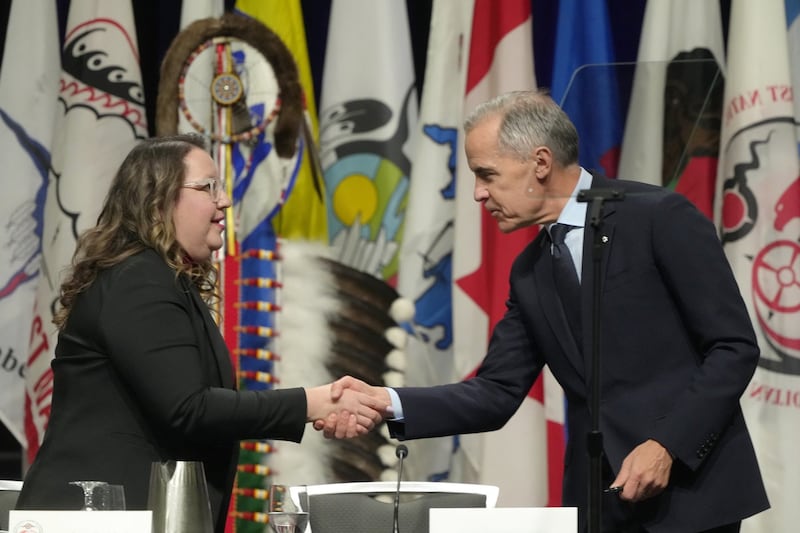
“Would the Liberal government would be so bold to tell the city of Winnipeg, Calgary or Ottawa that they were committed to progressively realize the human right to clean drinking water in the city?” Gazan said.
“We must not accept this blatant racism and discrimination as normal ... We are in a dire place, my friends.”
Debassige said while the Trudeau government “worked very hard” on reconciliation with Indigenous Peoples, Prime Minister Mark Carney’s government seems to be going in a different direction.
She called on First Nations to “ensure that we don’t allow this government to continue to displace ourselves amongst each other, to conquer and divide, because that’s when we’re the weakest.”
Morin, meanwhile, dismissed the new clean water bill as “fluff” that won’t lead to “getting things done for the communities themselves.”
Liberal MP and Parliamentary Secretary for Indigenous Services Ginette Lavack and the other leaders on the panel did not publicly respond to questions from delegates.
Exiting the assembly floor, Lavack defended the legislation. She said the government wants to work with First Nations to transfer jurisdiction and the legislation is about more than recognizing rights.
“When we talk about progressive rights, it means we are not standing still,” she said.
“It means we’re going to continue to make concerted efforts in order to help realize that right, and that we are putting ourselves forward and saying we commit to this.”
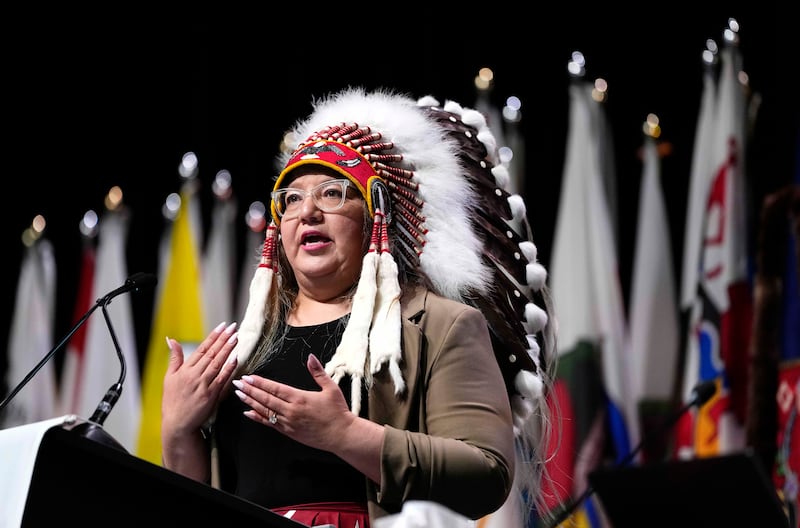
In her opening remarks to the assembly Tuesday, Assembly of First Nations National Chief Cindy Woodhouse Nepinak confirmed to chiefs that a promised meeting with Carney and premiers will take place in October.
“Securing this meeting didn’t come easy. And part of me, I’m not going to believe it until we are there,” she said.
“Chiefs are united in saying that this national meeting can’t be one and done. That means establishing an ongoing federal-provincial accountability mechanism to ensure that socioeconomic gaps are addressed through deeds and not words.”
Woodhouse Nepinak has long called for First Nations to be included in meetings between prime ministers and provincial and territorial leaders. Often the leaders of national Indigenous organizations, including the AFN, are invited to participate in a side meeting before or after the prime minister and premiers meet themselves.
But a larger gathering involving the chiefs of individual First Nations has not happened. Chiefs are still debating what they want to put on the meeting’s agenda and who will attend.
Many First Nations have expressed concerns about Carney’s major project agenda. Calls for a meeting with first ministers got louder last year when the federal and provincial governments started discussing among themselves ways to fast-track major infrastructure projects.
Woodhouse Nepinak said the meeting with Carney and the premiers will be a “big test” of Canada’s ability to reconcile economic growth with First Nations rights.
“Are the conversations going to be easy? Absolutely not,” she said. “We’re not going to solve Canada’s issues in one day.”
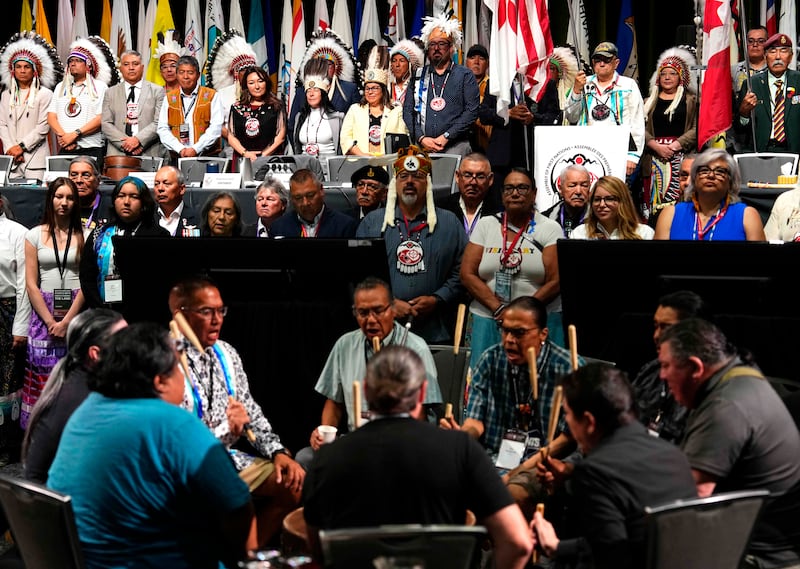
The three-day summer gathering of chiefs will include debate on 53 resolutions on various topics, including the major projects agenda, the state of First Nations child welfare, status rules in the Indian Act and calls for the Vatican to rescind a series of papal decrees.
The Assembly of First Nations is a national advocacy body that takes its direction from some 630 First Nations chiefs through special and annual general assemblies. It is not a rights-holding institution but it represents rights-holding chiefs.
Gull-Masty, Crown-Indigenous Relations Minister Rebecca Alty, Natural Resources Minister Tim Hodgson, Artificial Intelligence Minister Evan Solomon and Public Safety Minister Gary Anandasangaree are expected to attend this week’s AFN meeting.
The Assembly of First Nations is set to hold an election for national chief next year, as Woodhouse Nepinak’s three-year term is set to expire.
She said Monday she intends to seek re-election.
No other candidate has publicly declared their intention to run.
This report by The Canadian Press was first published July 14, 2026.

