The Hon. Dwight Duncan held several cabinet roles as a member of the Ontario legislature, including finance, revenue and energy. He also served as deputy premier in Dalton McGuinty’s Liberal government. He currently serves as the Chancellor of the University of Windsor and Senior Advisor Investor Relations at Bernstein, Litowitz, Berger and Grossmann (BLBG). He also sits on a variety of corporate and not-for-profit boards. This is his guest column for CTVNews.ca.
This week, some of the world’s largest investors are gathering in Toronto for Canada’s first Investment Summit.
Hosted by Prime Minister Mark Carney in partnership with CPP Investments and PSP Investments, the gathering has an ambitious objective: to help mobilize the capital required to build the next generation of the Canadian economy.
The timing could hardly be more important. Canada has never lacked ambition. Across the country there is broad agreement that we need more housing, cleaner and more reliable electricity, stronger trade corridors, modern ports and airports, improved public transit, expanded digital infrastructure, and the capacity to compete in a world increasingly shaped by artificial intelligence, advanced manufacturing and global competition.
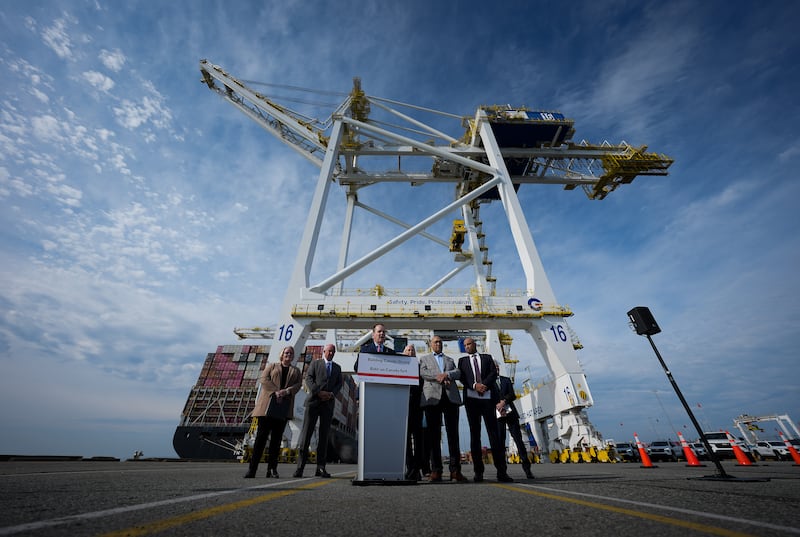
There is no shortage of plans. Nor is there much disagreement about the destination. The real question is whether Canada possesses the institutional capacity - and the collective determination - to build what our future requires.
Confidence matters. But confidence alone does not build anything. It must be expressed through institutions capable of making difficult choices, governments capable of acting together, and public policies capable of turning national ambition into investible opportunity.
For much of the past two decades, our national debate focused on whether governments should invest more in infrastructure. That debate has largely been settled. Across the political spectrum there is growing recognition that modern infrastructure is not simply public spending - it is economic strategy.
The federal government’s recent legislative and regulatory reforms reflect that understanding. Their objective is to provide greater certainty, streamline approvals, reduce unnecessary duplication and accelerate projects deemed to be in the national interest.
Those reforms deserve broad support. But legislation alone will not determine whether Canada succeeds. Implementation will.
There are two dimensions to this challenge.
The first exists within every government: finding the appropriate balance between the need to build and the legitimate consequences of building. Major projects affect communities, the environment, Indigenous rights and public finances. Those considerations cannot simply be wished away. But neither can a country allow the fear of every possible externality to make major projects virtually impossible to undertake.
The federal government’s reforms represent an attempt to rebalance that equation. That will inevitably produce disagreement - and perhaps some backlash. Nation building has always involved difficult choices.
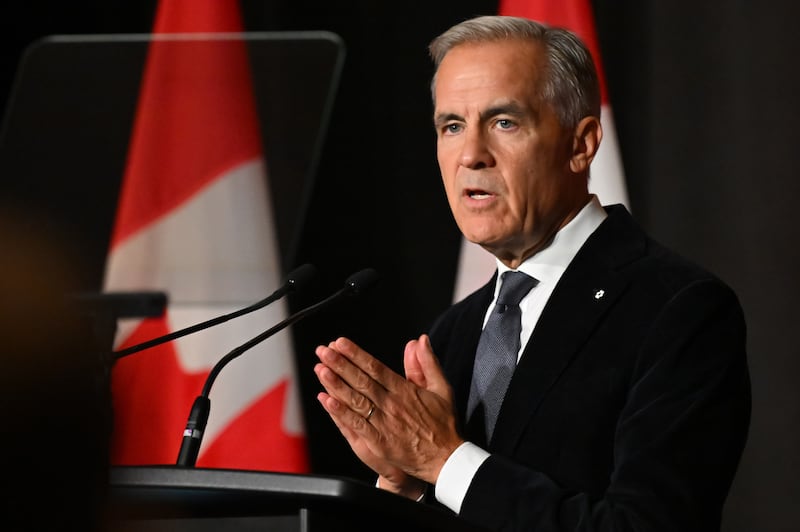
Canada’s second challenge runs between governments.
Federal, provincial and municipal governments too often approach infrastructure, energy, transportation and economic development through separate jurisdictions rather than as parts of a single national economic system. For a midsized economy spread across the world’s second-largest country, that fragmentation can be particularly costly.
The deterioration in Canada’s relationship with the United States has forced us to confront this problem with greater urgency. Has that external threat made us less balkanized? Are we more prepared than we were to look beyond provincial and regional interests and see the larger national interest?
There are encouraging signs. There are also reasons for caution. The answer will ultimately be demonstrated not by what we say about nation building, but by what we are actually prepared to build together.
The infrastructure Canada requires over the next twenty-five years is unlike anything we have attempted in generations. Artificial intelligence and advanced manufacturing will require enormous new investments in electricity generation and transmission. Housing will require roads, water, wastewater systems and transit. Trade will require efficient ports, rail corridors, airports and border crossings.
Energy policy will require continued investment in pipelines, electricity transmission, carbon capture, LNG export facilities and small modular reactors.
But increasingly, these should not be viewed as separate projects. They are parts of interconnected investment systems.
Recent work by the CPP Investments Insights Institute has influenced my thinking on this question. Its research introduces a useful concept: investibility. Investors increasingly evaluate whether markets have the regulatory frameworks, scale, revenue models, infrastructure and execution capability that allow capital to be deployed repeatedly and at scale.
The research also makes an important observation: artificial intelligence, electricity generation, transmission, critical minerals and transportation increasingly function as interconnected systems.
A data centre is not simply a technology project. It requires reliable electricity, transmission capacity, water, land and digital connectivity.
Advanced manufacturing depends upon energy, transportation networks, skilled labour and efficient borders.
That has caused me to think differently about the Canadian infrastructure challenge. Perhaps we have spent too much time thinking project by project.
Rather than presenting investors with a collection of individual opportunities, we should increasingly ask how related projects can be assembled into larger, investible platforms and corridors - with sufficient scale, predictable revenues and a credible pipeline of future investment.
Canada needs to think not simply project by project, but system by system.
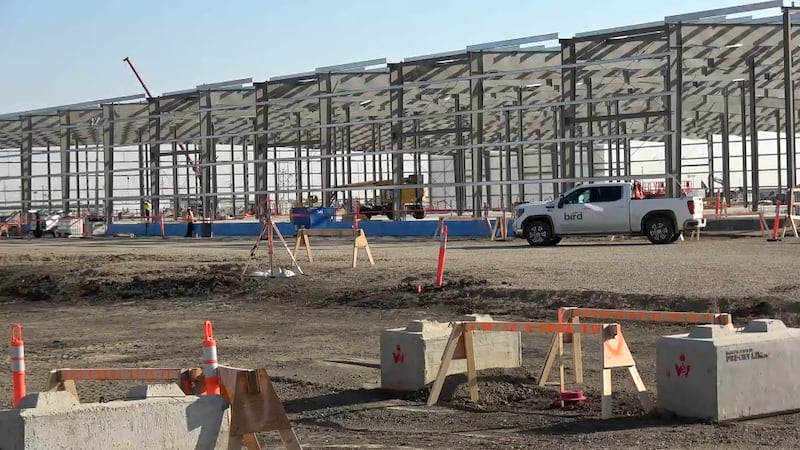
Capital will inevitably dominate much of the Investment Summit discussion. Here, I would place somewhat greater emphasis on one aspect of the CPP Investments analysis.
The report argues that global capital is abundant and that the greater constraint is the availability of investible opportunities. I accept the central point. But I would add an important qualification. The claims on global capital are expanding at an extraordinary rate.
Governments must finance deficits and refinance debt. Artificial intelligence and data centres require enormous investments in electricity generation, transmission and digital infrastructure. Defence expenditures are rising. Housing, advanced manufacturing, the energy transition and traditional infrastructure will require trillions more.
So while capital may be abundant in absolute terms, it is not unlimited - and it certainly is not captive to Canada.
Investors have choices. They can compare Canadian infrastructure with government bonds, American data centres, European defence projects, Asian infrastructure and investment opportunities virtually anywhere in the world.
CPP Investments’ research reinforces why this matters. Market opportunity is important, but so are regulatory efficiency and predictability, policy stability and openness to global capital. One of the principal reasons capital does not deploy is that the risk-adjusted return available elsewhere is more attractive.
We are not simply trying to mobilize capital. We are competing for it.
That competition should also cause us to examine the public-private balance more carefully.
It is often said that Canadian private capital is too cautious, particularly compared with the United States. There may be some truth in that comparison. But it is also worth asking whether Canadian governments have consistently created enough opportunities for private capital to participate in infrastructure.
Investors cannot finance opportunities that do not exist. I was reminded of this repeatedly during my time in government. Michael Nobrega, then CEO of OMERS and, in my view, one of the most forward-looking leaders in Canada’s pension sector, would often make a simple point to me: OMERS would invest more in Ontario if governments made more suitable assets available for investment.
That observation has stayed with me. It suggests that our challenge is not simply persuading Canadian institutional investors to take greater risks. Governments also have a responsibility to create a deeper pipeline of investible opportunities - with appropriate revenue models and risk allocation - and to ensure that Canadian policy attracts global capital as well.
Canada should not think of the capital available to build this country as exclusively Canadian. If we create the right regulatory environment, market opportunities and investment structures, capital from around the world can participate in Canada’s next generation of infrastructure.
The encouraging news is that Canada is not starting from behind. CPP Investments’ research suggests international investors already value Canada’s stability, openness and institutional credibility. Ninety-four percent of surveyed investors expect to maintain or increase their Canadian exposure over the next three years.
But trust alone does not cause capital to move. Investors also require scale, credible revenues, appropriate allocation of risk and a clear path to execution. A country can be trusted and still fail to attract the investment it needs.
The better question is how we design projects - and increasingly platforms of projects - that capital can finance repeatedly and at scale.
Nation building has never depended exclusively on governments. Nor has it depended exclusively on markets. It has always depended on partnership.
Governments establish the policy framework and, where appropriate, participate financially. Private investors provide capital, innovation and execution. Indigenous partnerships increasingly determine whether projects earn public confidence. Provinces control many of the policy levers essential to energy, resources and infrastructure. Municipal governments provide much of the infrastructure supporting housing and economic development. Workers build. Communities live with the results.
No government has the fiscal capacity to finance every nation-building project Canada will require over the coming decades. And Canada cannot assume private capital will automatically fill the gap.
That leaves us with perhaps the most important question facing this week’s Investment Summit: How does Canada become a preferred destination for increasingly sought-after global capital?
The answer will not be found in a single summit, a single piece of legislation or a single project. Confidence cannot be legislated. It must be earned - and demonstrated.
Nor is this confidence in one government, one leader, one industry or one province. It is our collective confidence as a country: the willingness of governments, investors, Indigenous partners, businesses, workers and communities to make difficult choices, overcome obstacles and compete for the capital required to build.
That will not always be easy, and progress will not follow a straight line. There will be projects that change, decisions that disappoint, investments that do not proceed and difficult choices about where governments should - and should not - put public resources. Building at the scale Canada requires will take time.
Confidence is demonstrated by how we respond: whether governments make timely decisions and coordinate across jurisdictions; whether investors commit patient capital; whether Indigenous partnerships are built on trust and respect; whether communities are genuinely engaged; and whether our institutions can deliver complex projects responsibly.
Canada has the tools to succeed: extraordinary natural resources, world-class engineering and technical expertise, sophisticated capital markets, respected public institutions, innovative businesses and one of the world’s most educated workforces.
We have the resources. We have the capacity. And I believe we have the will.
What we must now demonstrate is the collective confidence to put those advantages to work - and to compete successfully in a world that will not wait for us.
Our challenge is not a lack of ideas. It is translating ambition into achievement.
And perhaps that is the most important lesson in thinking about investibility. Canada does not simply need more projects. We need the systems, institutions and partnerships that allow good projects to become investible - and allow investment to occur repeatedly and at scale.
That may ultimately be the opportunity before this week’s Investment Summit: to turn Canada’s reputation for trust into a reputation for execution.
Every generation inherits the responsibility to build something that will outlast it. Our generation’s challenge is demonstrating that, in a far more complex and competitive world, Canada still possesses the institutional capacity, partnerships and collective confidence necessary to build the next generation of nation-building infrastructure.
Infrastructure is ultimately built with concrete and steel. But nation building begins with something less tangible. It begins with confidence.

