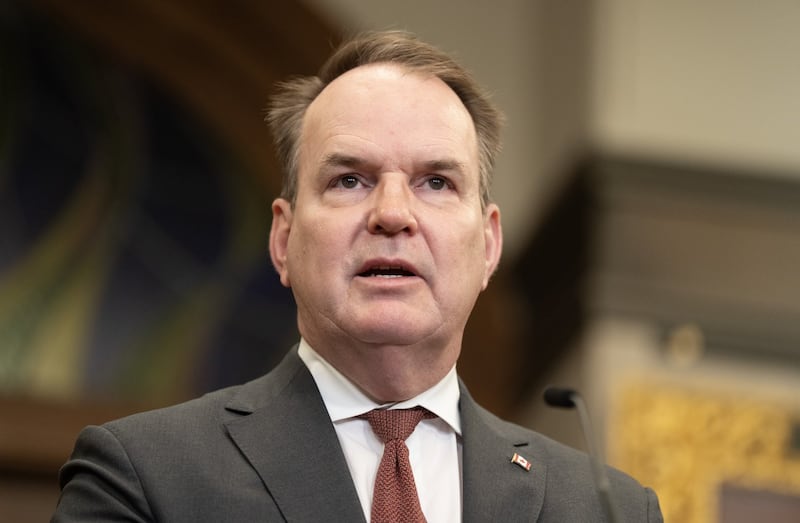
OTTAWA — Transport Minister Steven MacKinnon is promising to keep a lid on fees charged by airports under the government’s partial privatization plan, as airline executives insist the rules must be in place before investors make their bids.
However, it remains unclear if the new approach will include across-the-board caps on landing fees and other charges or whether restrictions will be imposed on a deal-by-deal basis and in a more flexible fashion.
“We will regulate through contract,” MacKinnon told reporters at an aviation conference in Ottawa on Thursday.
“Those concessions will contain price moderation, if I can call it that, or fee moderation.”
Under the plan, private entities from pension funds to First Nations would be bidding on leases to run the full gamut of airport operations, rather than just portions of the airport facility, MacKinnon added.
Prime Minister Mark Carney announced last month he wants investors to take over operations at Canada’s four largest airports — in Toronto, Montreal, Vancouver and Calgary — managing them for long-term lease periods while oversight and ownership would remain with the federal government.
However, airlines have warned that privatization in some countries has led to soaring aeronautical charges, costs that are then passed on to customers.
WestJet CEO Alexis von Hoensbroech said he’s seen “the good and the bad” of airport privatization.
“If you just privatize it and then you just let the market play out, it’s a risky game because a private investor will try to maximize the returns and an airport is a local monopoly,” he said in a sit-down interview.
“The temptation just to increase passenger fees would be really high,” he said, pointing to London’s Heathrow Airport as well as some Australian airports “where it has really gone in the wrong direction.”
The chief executive highlighted the “dual till” model in Austria, where he ran the country’s largest carrier before joining WestJet in 2021.
Under that regulatory framework, airport operations are split into two buckets: aeronautical and non-aeronautical.
For the former, which includes landing fees and passenger terminals, any fee hikes are based solely on the costs and capital investments on that side of the business, with a regulator’s approval required before charges can go up.
For non-aeronautical areas — retail, hotels, parking, real estate development — the operators have much freer reign.
“That’s why a European airport looks like a shopping centre and not like a bus station, because they invest a lot in this and that’s where they make all their money,” von Hoensbroech said.
He and other executives at the conference stressed the need for clarity on fee rules before Ottawa solicits any bids.
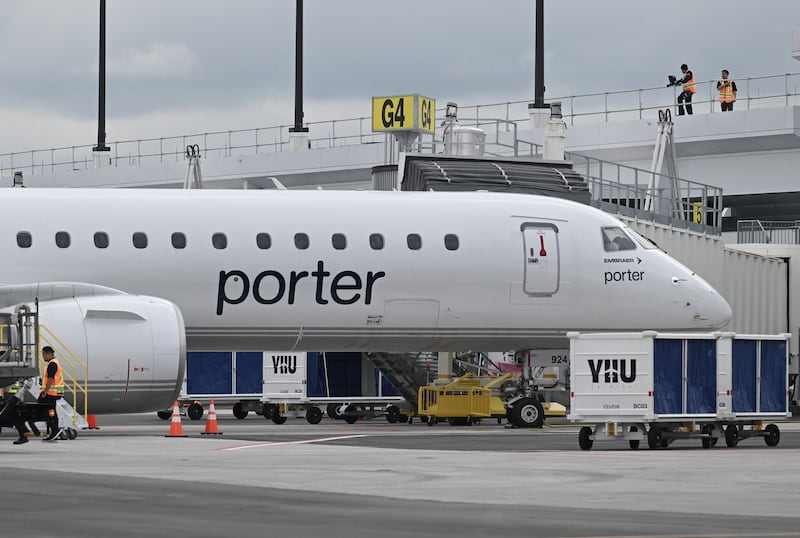
“The regulation needs to be decided before we do any tenders,” said Porter Airlines president Kevin Jackson.
A rules-first, bid-second sequence is essential to strategic planning for carriers, said Christopher Read, former director of corporate development at Air Canada.
“We need some more colour ... You need to be able to effectively plan your business out,” he said.
“The devil is in the details. The devil is in the contract structure.”
MacKinnon acknowledged the government has spoken with potential stakeholders, but said no decision has been made around which of the four airports will transition to a private investment model first.
He did not take issue with a report from the Globe and Mail that the government is in talks with the Musqueam First Nation around privatizing Vancouver International Airport.
“I certainly acknowledge that there have been fulsome discussions, as you can imagine, whether it be major projects, reconciliation writ large, or this initiative,” MacKinnon said. “We’re in constant communication with relevant First Nations.”
Examples abroad offer mixed results, with Australia frequently cited by Ottawa after the country handed control of its airports to private investors between 1997 and 2003.
The move has resulted in billions of dollars in capital investment, yielding faster baggage handling and passenger check-in processes as well as more lounges.
However, Australia’s competition watchdog says the country’s four biggest airports boosted their airline fees by $1.6 billion or 81 per cent in the decade leading up to 2015. Many of those costs would have been passed on to travellers.
Canada already hosts “one of the world’s most expensive aviation markets” due to fees and taxes, said Peter Cerdá, regional vice-president for the Americas at the International Air Transport Association.
“A third of the cost of a domestic ticket never gets seen by the airline,” added Arielle Meloul-Wechsler, Air Canada’s head of human resources.
This report by The Canadian Press was first published Oct. 8, 2026.
Christopher Reynolds, The Canadian Press

