


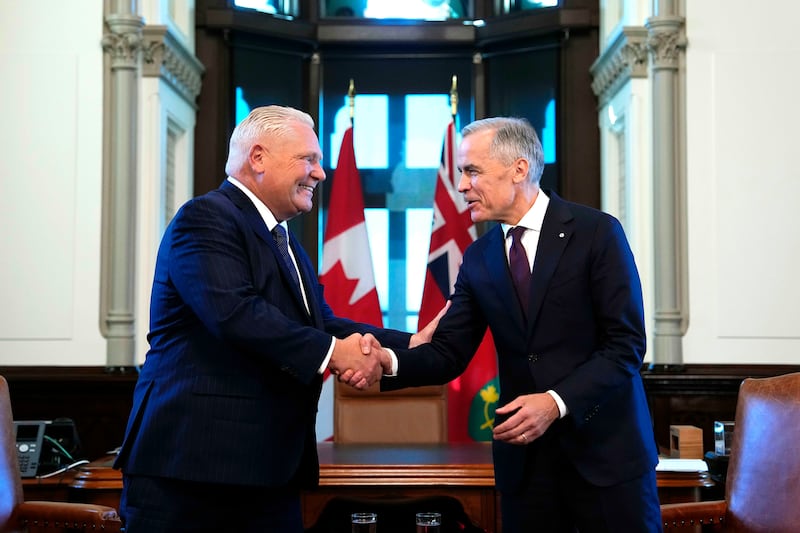
Following the sale of Stellantis’ auto assembly plant in Brampton to defence manufacturer Roshel, Ontario Premier Doug Ford is urging the federal government to ensure Chinese-made EV kits are not assembled at the plant.
In a letter obtained by CTV News dated Nov. 10, the day after the sale was announced, the premier wrote directly to the prime minister: “We cannot undermine the future of Canada and Ontario’s automotive sector by allowing the introduction of Chinese-made knock-down kits at the Stellantis Brampton facility, to which Ontario remains strongly opposed.”
“Based on our recent discussion, I welcome the federal government’s alignment with Ontario’s position.”
A Chinese EV kit is essentially an electric vehicle manufactured largely in China, then shipped to another country — such as Canada — in pieces to be assembled into a finished car.
On Tuesday, CTV News reported, based on sources, that Carney’s government has been actively and intensively involved in talks with Stellantis and Roshel that ended in the agreement to sell the Brampton plant.
The sources said the federal government did not stand in the way of the deal in those private discussions.
Multiple sources with knowledge of negotiations for the Brampton plant sale told CTV News Stellantis plans to re-lease 25 per cent of the plant from Roshel, to assemble “affordable” EVs for Canadian customers. The company would retain a portion of the workforce to do so.
Industry sources say they are concerned that means the assembling of Chinese EV kits, or even fully manufacturing the cars. The federal government has publicly opposed the former but not the latter.
The premier’s letter to the prime minister goes on to urge him to remain opposed to the kits.
“We must remain aligned in our efforts to protect and expand Ontario and Canada’s automotive footprint. Fortifying Ontario and Canada’s industrial base, including a strong and growing automotive sector, is foundational to creating and realizing generational economic opportunities.”
In addition to the prime minister, the letter was copied to Industry Minister Melanie Joly, Ontario Economic Development Minister Vic Fedeli, Unifor National President Lana Payne, and Auto Parts Manufacturer Associate President Flavio Volpe.
In a statement sent to CTV News Wednesday, the prime minister’s spokesperson Sofia Ouslis said the federal government is aligned with Ontario in its commitment to protect workers and safeguard manufacturing in Brampton.
“We are not considering any proposal to replace full vehicle manufacturing and assembly with Chinese-made kit cars,” said Ouslis. “This has been reinforced repeatedly by Minister Joly, who has emphasised that any Chinese EV investment must use Canadian parts, Canadian labour, and a Canadian supply chain.”
Thousands of jobs at stake: premier
In his letter, Ford said replacing made-in-Canada vehicles with made-in-China kit production would lead to thousands of job losses. In Brampton alone, the premier said it would cause a direct employment loss of more than 7,500 jobs that would be replaced only by a few hundred assembly positions.
Joly has said, on multiple occasions, that she opposes the knock-down kits. In April, she told reporters in Vancouver, “We can’t bring cars in a kit to Canada. Why? Because one of the big parts of our auto industry is actually linked to the fact that we have a big auto parts sector – 200,000 workers.”
The federal government, however, is open to Chinese EVs being manufactured in Canada. In June, after meeting with four Chinese car manufacturers, Joly told reporters that all the companies she met with are “willing to explore creating joint ventures in Canada in order to produce in Canada.” The minister stipulated any arrangement would have to meet specific conditions, including a localized supply chain and Canadian control of the joint venture.
International Trade Minister Maninder Sidhu visited one of those Chinese automakers, Chery, and posted online that he had done so “to discuss their upcoming models and hear about their plans to introduce affordable EVs to Canadians.”
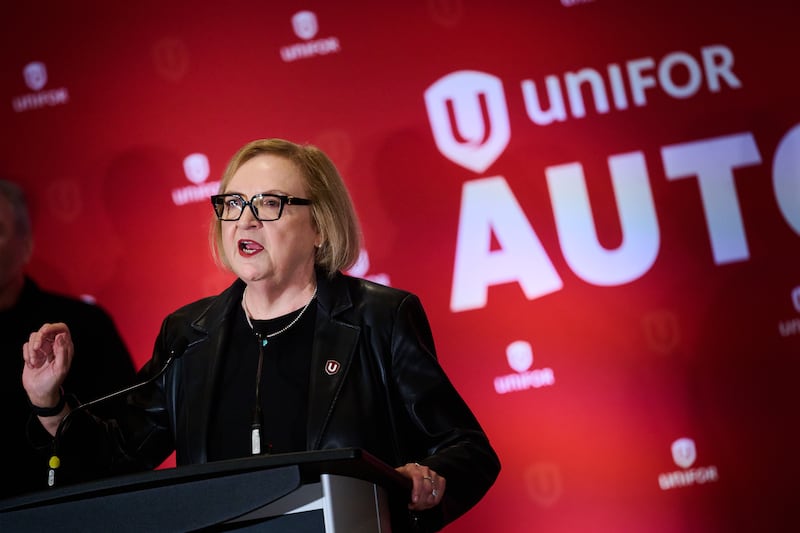
His comments were criticized by Unifor National President Lana Payne.
“Thousands of autoworkers are fighting to save their jobs, including in Minister Sidhu’s own riding of Brampton,” she wrote. “Anyone who understands the auto industry knows the problem China poses to 100000s of jobs here in Canada and across [North America] and to the entire manufacturing industry.”
Unifor is opposed to the sale of the Stellantis Brampton plant. Payne accused Stellantis of betraying its employees, “with an underhanded deal to sell the plant and walk away from its commitments to our members.”
A meeting between the union, Joly and Stellantis is scheduled for Thursday in Toronto.
In a statement to CTV News, Volpe wrote “the Premier has always understood that the industrial strength of the Ontario auto sector comes from Canadian companies that make up the supply chain. He knows that the Chinese kit proposals are a direct threat to the viability of hundreds of Canadian companies and their 100,000 workers. We appreciate that.”

