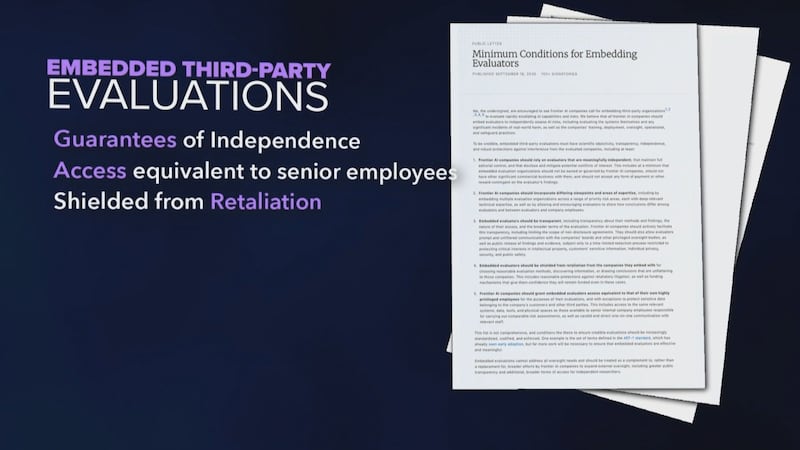
TORONTO – More than 100 leading artificial intelligence experts, including Toronto’s Geoffrey Hinton, the so-called “Godfather of AI,” have signed a public letter calling for more independent oversight of the world’s most advanced AI companies.
Several of those companies, including Anthropic and OpenAI, have already pledged to let third-party evaluators work inside them. The AI Evaluator Forum, a coalition of groups that test AI systems for safety, organized the letter and wants such experts in every frontier AI company.
The letter says they would review AI systems and any incidents of real-world harm, along with how the companies train, deploy and oversee their models, as well as how they run their safeguards.
David Duvenaud, a former alignment evaluations team lead at Anthropic and an associate professor at the University of Toronto, signed the letter. He said the companies should not be “grading their own homework” on catastrophic risks, and that evaluators must be independent auditors, so there is no question of a conflict of interest.
“They have to be protected from retaliation,” he said. “They have to be given deep access to what’s happening, and then they also basically have to not be politically captured.”
Asked about recent reports of AI agents escaping containment and breaking into computer systems, Duvenaud said he is moderately worried.
“OpenAI did not actually disclose all the different loss-of-control incidents that happened already,” he said.
“They really are scared of loss-of-control risks, and they all really would prefer a world where there is some standard regulatory oversight of the whole industry.”
Still, he said the absolute risk is low for now.
Mark Daley, the chief AI officer at Western University, said bringing in third-party evaluators is common in industries where safety truly matters.
“If someone’s building a product, we don’t trust them to certify their own product,” he said. “We look to a third-party expert who has no incentive to bend the truth either direction, and that’s sort of a principle of engineering safety.”
Daley said the letter sends a powerful message about the importance of verification.
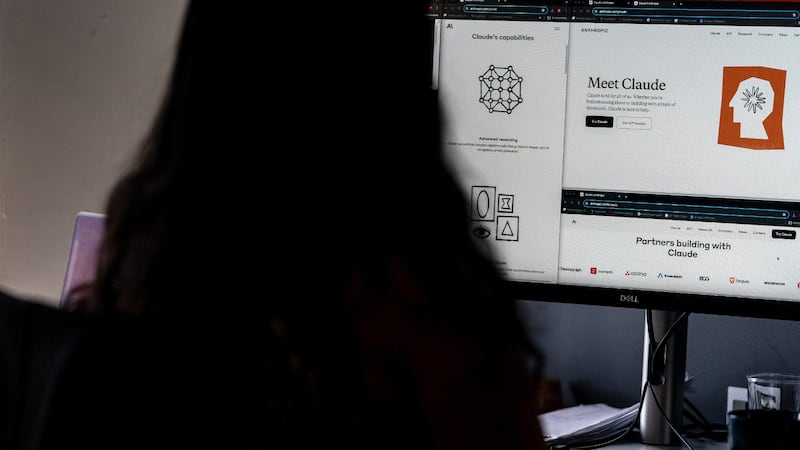
It comes as Anthropic reported that its AI chatbot, Claude, is playing a growing role in developing its own future models. The company says Claude now leads 26 per cent of its AI research and development work, up from under one per cent in February.
“It’s a step towards recursive self-improvement,” Daley said. “That’s where you get to the point where an AI model builds its successor without any human intervention.”
He believes AI systems will be fully capable of creating new versions of themselves sometime in 2027.
“I think a fairly reasonable estimate, given the current pace of change, is by next year,” he said.
“This call for third-party evaluation, so that regulators and the general public have a sense of what’s coming next, is absolutely essential.”
Daley said when it comes to regulation, what’s needed is a multilateral approach, like the one that emerged around nuclear weapons during the Cold War.
“No one was going to stop building them, but we were able to get agreements to allow weapons inspectors in, so everyone at least knew what was going on,” he said.
“So, you could do the same sort of verification thing for AI using these AI safety evaluators and make this an international treaty, and then like-minded nations and entities like the EU and Canada say you can’t sell into our market unless you abide by this treaty,” he added.
“Now there’s economic force behind it.”

