Software stocks are drawing renewed attention as AI adoption reshapes enterprise technology and heightens cybersecurity risks across industries.
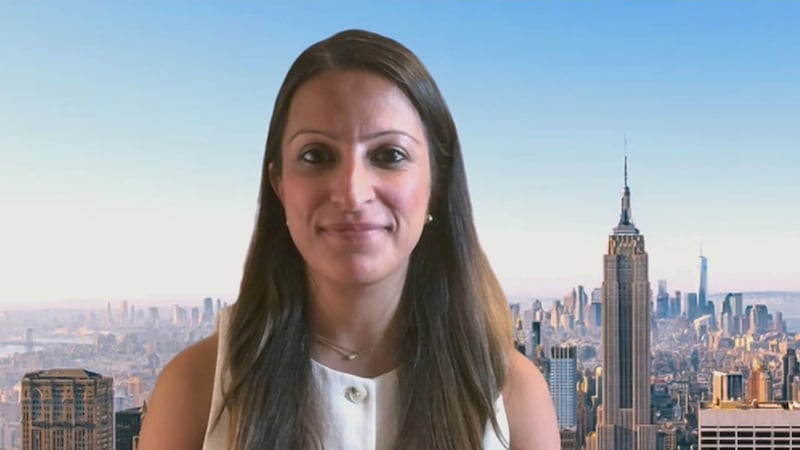
BNN Bloomberg spoke with Fatima Boolani, managing director and co-head of software equity research at Citi, about how platform scale, data protection and AI infrastructure are driving long-term opportunities in the sector.
Key Takeaways
- AI advancements are increasing both the scale and sophistication of cyber threats, reinforcing demand for cybersecurity solutions.
- Large, integrated platforms are becoming critical partners as enterprises deploy AI across core operations.
- Data growth and sprawl are raising the importance of backup, recovery and resilience capabilities.
- Observability and system monitoring are essential as AI infrastructure becomes more complex and mission-critical.
- Market weakness in software has created potential opportunities in high-quality cybersecurity names.
Read the full transcript below:
ANDREW: On Hot Picks today, we are focusing on software. Our guest has Palo Alto, the giant cybersecurity provider, as a top selection. We’re joined by Fatima Boolani, managing director and co-head of software equity research at Citi. Thanks very much indeed for joining us.
FATIMA: Thanks for having me.
ANDREW: Palo Alto, in some ways, it’s the IBM of cybersecurity. People don’t get fired for hiring them. Why? Where do you — I mean, we know cybersecurity is a growth industry. What, in particular, about Palo Alto do you think investors should focus on?
FATIMA: There are two very important reasons why we are very decidedly advocating for investors to build bigger core positions in their portfolios with respect to cybersecurity and increase their cybersecurity exposure.
The first one is the last two weeks, and more particularly the last week. We’ve seen some very important, consequential, almost tectonic plate-shifting news out of the frontier labs of the Anthropics and the OpenAIs of the world in terms of the types of cybersecurity capabilities that are now going to be available as part of the new model releases.
And so, by extension of that, we absolutely think cybersecurity is going to become more important, because the way a lot of these models can be weaponized to build attacks is going to have pretty far-reaching implications on the volume, variety and sophistication of cyberattacks that we should expect to see.
And then secondarily, the whole idea of having these very large cybersecurity companies embedded and pervasive in some of the world’s largest companies and touching pretty much broad swaths of the economy — there’s this idea of a supply chain risk. So we have to make sure that the cybersecurity companies themselves are hardened against any of these potential attacks.
And so it’s a little bit of a two-sided coin here, but in broad strokes, the other sort of emboldening point of action here is software has just been down for the count. It’s a sector that has moved very swiftly out of favour. And our view is that the cyber babies have been thrown out with the software bathwater, and that trade should reverse.
ANDREW: Palo Alto, what in particular? It’s one of the biggest players. They just have the depth, you think, to which investors should consider them?
FATIMA: Palo Alto — there are multiple ways to win here. They have been very astute about the types of acquisitions and M&A that they have undertaken. More specifically, the $25 billion bet that they made on CyberArk last summer. This transaction closed about two months ago.
And with the deployment of agents, agentic AI and anything AI-related into the traditional organization, they are very well positioned to be able to provide a multi-faceted framework of cyber guardrails as organizations make their way through their journey of deploying AI systems, to build AI applications, to be AI-powered effectively.
And Palo Alto is a very important conduit and partner for that journey. And I would make the exact same argument for CrowdStrike. These are big companies with multiple products touching very important points of the IT architecture, and they are hand in glove as it relates to being the guardians of how these systems are going to be built and scaled securely.
ANDREW: Rubrik, another security player — what’s distinctive about them?
FATIMA: So with respect to data being the lifeblood of an organization that will be fed into these AI systems, all of this codification of data into workflows and action — well, more data is going to be generated.
And fundamentally, what Rubrik provides for an organization is your ability to capture, manage, back up and recover this data in the event of an outage, in the event of a natural disaster and, maybe more perniciously, in the event of a cyberattack.
We just discussed at length that the attack landscape is more likely than not to become more nefarious and scary, and in a situation where an organization is suffering a cyberattack or a breach or a ransomware incident, Rubrik is a very important player in ensuring a company’s ability to get back online and back to business around these types of events.
And this is only going to be more important as more data is created, there’s more data sprawl, and the risk of having this data being exfiltrated or landing in the wrong hands becomes that much more acute.
ANDREW: We’re tight for time. Datadog — they improve observability. If you’re running a big computer system, finding out what’s going on can be a problem. You think this stock looks decent? I’m sorry, we are tight for time.
FATIMA: The very quick play here is that it’s got some cybersecurity angles. But the reality is, as these very sophisticated AI systems build and grow and scale, you have to be able to manage them and observe them in a way that you are able to ascertain the health of these systems when they go down, and be able to bring them back online as well.
And the currency of using AI being tokens — they’re also a very important player in helping organizations manage their token usage, so that their AI systems that are being built — infrastructure applications — are being done productively and cost-efficiently as well. So less of a cyber play, but still nonetheless important in the broader theme and secular trend.
ANDREW: Fatima, thank you very much indeed. Fatima Boolani, managing director and co-head of software equity research at Citi.
| DISCLOSURE | PERSONAL | FAMILY | PORTFOLIO/FUND |
|---|---|---|---|
| PANW NASDAQ | N | N | Y |
| RBRK NYSE | N | N | Y |
| DDOG NASDAQ | N | N | Y |
---
This BNN Bloomberg summary and transcript of the April 16, 2026 interview with Fatima Boolani are published with the assistance of AI. Original research, interview questions and added context was created by BNN Bloomberg journalists. An editor also reviewed this material before it was published to ensure its accuracy and adherence with BNN Bloomberg editorial policies and standards.

