Biotech stocks are regaining investor attention as improving valuations, renewed merger activity and upcoming regulatory catalysts support momentum across the sector. Companies with differentiated therapies and de-risked development strategies are increasingly attracting generalist investors back into the space.
BNN Bloomberg spoke with Laura Chico, managing director and senior biotechnology analyst at Wedbush, about opportunities in the biotech sector and her top stock ideas, including BioCryst Pharmaceuticals, Viridian Therapeutics and Solid Biosciences.
Key Takeaways
- Biotech stocks are keeping pace with the broader market as investors return to the sector after years of underperformance.
- M&A activity and improving valuations are helping drive renewed investor interest in biotech companies.
- Investors are rewarding companies using de-risking strategies to improve confidence around regulatory and clinical milestones.
- Rare disease and thyroid eye disease treatments are drawing attention because of their commercial potential and differentiated approaches.
- Gene therapy developers targeting Duchenne muscular dystrophy remain a higher-risk opportunity with potential long-term upside.
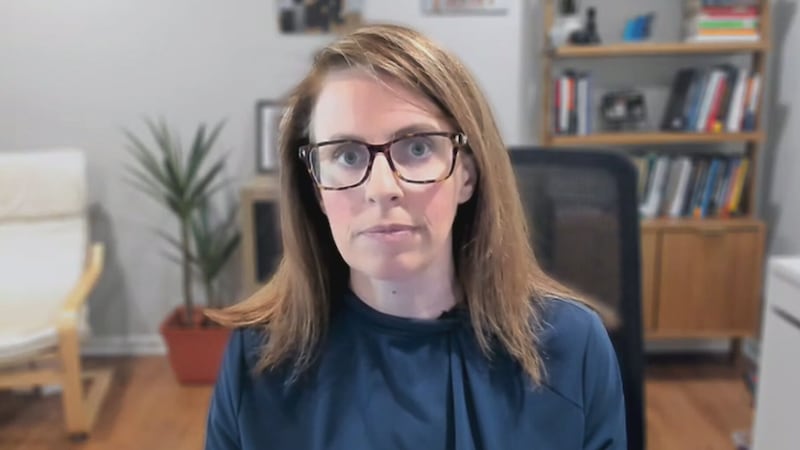
Read the full transcript below:
MATT: Well, it’s time for Hot Picks, and today we’re looking at three picks in the biotech sector. Let’s get more from Laura Chico, managing director and senior biotechnology analyst at Wedbush. Laura, thanks for being here.
LAURA: Thank you very much for having me.
MATT: Before we get into the picks themselves, Laura, let’s talk about the sector overall. We’ve been reading about biotech at least keeping pace with the S&P 500, but give me your sense of where biotech stocks stand right now, where investors are going and the overall sentiment in the sector.
LAURA: Yeah, and I think one thing that might surprise viewers — you mentioned the XBI biotech ETF is slightly ahead of the S&P 500. I think that’s particularly notable because biotech has really been out of favour with generalist investors for a number of years.
But overall, I think sector drivers are really flashing green lights. We’re seeing a convergence of attractive valuations, M&A is back for biotech, and a lot of these companies are now embedding de-risking strategies into their development campaigns. That helps give investors more confidence in upcoming catalysts. So I think it’s a really positive setup for biotech overall.
MATT: Yeah, certainly interesting as the sector gets back into favour, at least over the last little while. Let’s get into some picks, shall we? First up for you is BioCryst Pharmaceuticals. Take us through this one.
LAURA: Yeah, so BioCryst Pharmaceuticals, ticker BCRX, we’ve got a $21 target on this one. I think this is an orphan disease company focused on hereditary angioedema, or HAE for short. There are about 10,000 people in the U.S. with the condition, but the company already has a product on the market, Orladeyo, and that’s running at more than $600 million annually right now.
The stock is trading at about three times consensus revenue, while the mid-cap peer group is closer to six times. So why the disconnect? Investors are concerned about the longevity of Orladeyo’s revenue tail and how long it can persist as competitors enter the HAE space.
I think that concern is misplaced, and it’s overlooking a recent acquisition BioCryst made of Astria Therapeutics’ asset that brings in a late-stage program called navenibart, another HAE preventive agent. But this one is administered only two to four times per year.
We’re going to get Phase 3 data on that in early 2027. If the data are positive, that could dramatically change how we treat HAE and solidify BioCryst’s positioning in the space. You’ve also got another pipeline readout coming at year-end 2026 for a different program. I really like the mix of commercial and clinical catalysts here. Again, our target is $21.
MATT: Yeah, I was going to ask you about the clinical side of that as well, particularly looking ahead to 2027 and where you’ll see some of those results.
LAURA: Yeah, for navenibart, we’ll see that in the early part of 2027. That will be the first efficacy data for the program. Then the late-2026 readout is for another orphan disease called Netherton syndrome, and I would argue there’s essentially zero value assigned to that program right now.
MATT: Okay, interesting. How about Viridian Therapeutics? Another one of your top picks today. Take us through that.
LAURA: Yeah, ticker VRDN. We’ve got a $32 target on this one. This is a pre-commercial company, but that could change pretty soon. They have a PDUFA date for veligrotug, their thyroid eye disease program, on June 30.
They’ve got breakthrough therapy designation, priority review, and the commercial team is already hired. So this is essentially a launch-ready story.
What’s really exciting here is the disconnect between consensus revenue expectations and historical precedent. Tepezza is already on the market for thyroid eye disease — same mechanism as Viridian’s therapy — and Tepezza generated more than $800 million in its first four quarters after launch.
Consensus expectations right now are factoring in about $300 million for Viridian over the first eight quarters of launch. So I really like the setup here. Veligrotug targets the same disease with the same mechanism, but the Viridian program involves fewer infusions and a shorter treatment course. So it’s potentially a better mousetrap entering the market.
The stock has come under pressure more recently after some subcutaneous data came out for another program, but I think the latest data readout was more supportive and doesn’t really change anything about the veligrotug story, which is the more immediate catalyst. Again, our target here is $32.
MATT: Okay, maybe a longer-horizon idea as well. We talk about gene therapy across a lot of different areas of medicine, but Solid Biosciences, ticker SLDB — take us through that one.
LAURA: Yeah, and this is definitely more of a clinical-stage story, but what’s really exciting here is they’re working on next-generation gene therapy technology for Duchenne muscular dystrophy. This is a devastating condition that affects young boys, and currently there are somewhat limited treatment options available.
What Solid is doing differently versus first-generation therapies is its capsid technology — the delivery vehicle for the gene therapy. I think Solid’s approach is a much more muscle-targeted system, de-emphasizing the liver and emphasizing muscle tissue delivery, which is exactly where you want the drug to go.
They’ve also shown some preliminary data that look encouraging in terms of biomarkers, and safety has been uneventful, which is exactly what you want to see in this type of story.
They already have a Phase 3 study underway, and the key question is whether they’ll be able to file for accelerated approval. Bears will tell you that gene therapy can’t really win with the FDA right now, but I think Solid is taking a very methodical approach. They’ve already received positive feedback from the FDA on different aspects of the program, which is a strong strategy.
They’re going back for another FDA meeting soon to refine exactly what the agency needs to see in terms of endpoints. Beyond this, they also have another program already advancing in the clinic.
So over the next 12 months, investors are going to get a much clearer picture of the regulatory requirements for Duchenne, but they’re also going to get validation from clinical data for the second program. Our target here is $16, and I think for investors with a longer time horizon, this is a great idea.
MATT: Yeah, it’s already up 75 per cent since you first called it out back in November, so it could certainly be an interesting way to get exposure. Laura Chico, managing director and senior biotechnology analyst at Wedbush. Laura, thanks for your time today. Appreciate this.
LAURA: Thanks, Matt.
| DISCLOSURE | PERSONAL | FAMILY | PORTFOLIO/FUND |
|---|---|---|---|
| BCRX NASDAQ | N | N | Y |
| VRDN NASDAQ | N | N | Y |
| SLDB NASDAQ | N | N | Y |
---
This BNN Bloomberg summary and transcript of the May 28, 2026 interview with Laura Chico are published with the assistance of AI. Original research, interview questions and added context was created by BNN Bloomberg journalists. An editor also reviewed this material before it was published to ensure its accuracy and adherence with BNN Bloomberg editorial policies and standards.

