The next phase of artificial intelligence growth is shifting toward agentic AI, driving demand for the infrastructure, computing power and software platforms needed to deploy AI across enterprises. Investors are increasingly focusing on companies positioned to benefit from rising adoption rather than trying to predict which AI models will ultimately win.
BNN Bloomberg spoke with Michael Monaghan, partner and portfolio manager at Founder ETFs, about opportunities tied to agentic AI adoption, highlighting Dell Technologies, Oracle and Palantir Technologies as companies benefiting from growing demand for enterprise AI infrastructure and applications.
Key Takeaways
- Agentic AI adoption is creating investment opportunities across hardware, infrastructure and enterprise software rather than only among AI model developers.
- Growing demand for on-premises AI systems reflects corporate concerns around data security, privacy and regulatory compliance.
- Compute capacity, power supply and data centre infrastructure are emerging as key bottlenecks in the expansion of AI capabilities.
- Companies that can integrate and analyze fragmented enterprise data are becoming increasingly important as organizations deploy AI tools.
- Strong AI adoption is attracting institutional investor interest toward businesses with scalable infrastructure and enterprise-focused AI platforms.
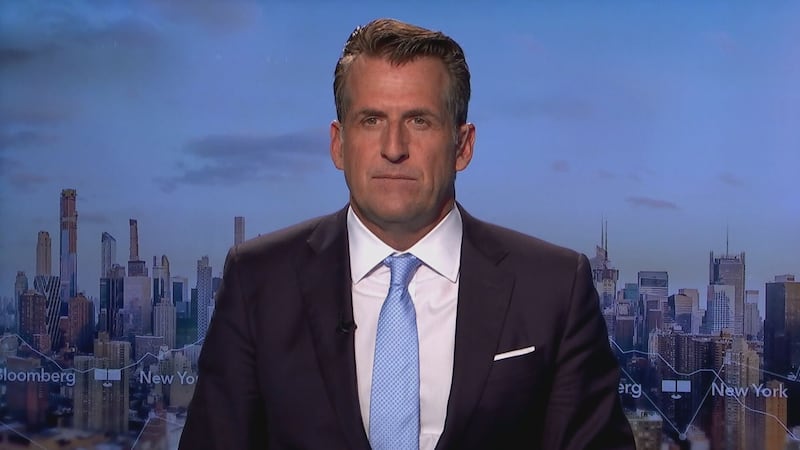
Read the full transcript below:
LINDSAY: It’s time now for Hot Picks. Today, we are looking at the tech sector. For more, let’s bring in Michael Monaghan, partner and portfolio manager at Founder ETFs. It’s great to have you join us. Thanks so much.
MICHAEL: It’s great to be here. Thanks for having me.
LINDSAY: Let’s get right to your first Hot Pick because, obviously, the tech sector is incredibly hot right now. Dell is your first pick. What is it that you like about Dell right now?
MICHAEL: Dell is the play for agentic AI moving into the corporate world. It allows you to have your own on-premises AI server to run the foundational models, protect your data and keep it safe, yet take advantage of the compute power of the foundational models.
LINDSAY: Okay, and you say all three of these picks that we’re going to go through are riding different parts of the agentic AI wave. Is that right?
MICHAEL: That’s right. We see Palantir, Dell and Oracle all riding the agentic AI wave, just in slightly different places along that wave.
LINDSAY: Before we go on to your next pick, I just want to go back to Dell. What are some of the biggest risks that you think are facing this company right now?
MICHAEL: We see growth for Dell. We don’t see a lot of near-term risks. If you look at the last quarter, the growth in their AI server business was absolutely explosive. Then, with Jensen’s announcement last night that he’s partnered to bring an Nvidia CPU to the desktop, Dell will be one of the beneficiaries of that. We don’t see a ton of risks for Dell right now. We see a tailwind from both on-premises agentic AI and the fact that we’re now beginning to run agentic workloads at the desktop, and Dell is a beneficiary of both of those.
LINDSAY: Okay, your next pick is Oracle. Tell us why you like Oracle out of all the names you could have picked.
MICHAEL: Oracle is attacking the boring but profitable side of AI infrastructure. Right now, we’re compute-constrained. The constraints are as tight as getting energy into data centres, getting the data centres energized and being able to push tokens out. This is Larry Ellison, who brings that founder mentality, the type of investment that we do. He had the vision to see that the world would be compute-constrained several years ago and started building out his AI data centre business. He’s ahead of the curve as more people want access to tokens coming out of these AI token factories. Larry really positioned himself to be there first, and that’s why we’re so bullish. The stock got punished earlier in the year, but the stock action is showing that people now understand that we’re AI compute-constrained and Larry has positioned himself to take advantage of that.
LINDSAY: Yeah, I mean, punished earlier in the year when we were talking about that whole software selloff we saw at the beginning of the year. There are obviously companies that are going to win from AI in the software sector and some that will be made redundant. I’m assuming you believe Oracle is one that’s partnering with the right companies and is going to make it through. Is that right?
MICHAEL: Yeah, we believe they’ve got several hooks. Hook number one is legacy systems that will be the trusted endpoint, storage and proof of record for existing corporate data. Number two, a lot of these large corporates, if they’re regulated — HIPAA, government data, et cetera — can’t put their data on a public cloud. Their only choice is to use their existing private cloud with Oracle or a new Oracle private cloud. They’re very well positioned to take advantage of the growth.
LINDSAY: Last Hot Pick is Palantir. You mentioned this off the top, another one riding a part of the agentic AI wave. Tell us more about why you like Palantir right now.
MICHAEL: Palantir is very well positioned. The most important thing to remember about AI is that AI still requires really good human input. If you don’t have human input, you get what is colloquially referred to as AI slop. However, if you have a highly trained human operator on the front end helping guide the AI and then reviewing the AI’s work, you magnify that human operator’s capability. With their forward-deployed engineers, that’s one of the things Palantir is doing well, along with achieving what’s been a 20- or 30-year goal of a lot of business intelligence companies, and that is to take disconnected data, whether it’s living in an ERP system or a CRM system, bring it all together and make sense of it.
Back to this theme of a trusted endpoint, Palantir then takes the AI models, connects them to the existing enterprise software within the corporation and serves as the trusted layer to bring that data out and analyze it. Then why we’re so excited: the growth here is really unprecedented. The Rule of 40 score went from 127 to 145. We think Alex will have a couple more quarters like that. Even though some retail investors have moved on to chase Micron, SanDisk and the SOX complex, we think institutional growth investors over the next quarter or two will come in. That’s why the stock traded sideways and why it’s been an opportunity for our investors and your viewers.
LINDSAY: Okay, we will leave it there. Michael Monaghan, partner and portfolio manager at Founder ETFs. Appreciate your time. Thanks so much.
| DISCLOSURE | PERSONAL | FAMILY | PORTFOLIO/FUND |
|---|---|---|---|
| DELL NYSE | Y | N | Y |
| ORCL NYSE | N | N | Y |
| PLTR NASDAQ | N | N | Y |
---
This BNN Bloomberg summary and transcript of the june 1, 2026 interview with Michael Monaghan are published with the assistance of AI. Original research, interview questions and added context was created by BNN Bloomberg journalists. An editor also reviewed this material before it was published to ensure its accuracy and adherence with BNN Bloomberg editorial policies and standards.

