Energy stocks may underperform the broader market as geopolitical tensions ease, but select companies tied to natural gas infrastructure, LNG exports and refining margins could continue to benefit from strong underlying demand trends.
BNN Bloomberg spoke with Jay Hatfield, founder, CEO and portfolio manager at Infrastructure Capital Advisors, about opportunities in the energy sector and why he prefers midstream, LNG and refining companies with limited direct exposure to commodity-price swings.
Key Takeaways
- Midstream and refining companies may provide more stability than upstream producers because they have limited direct exposure to oil-price fluctuations.
- Rising natural gas demand from power generation, including AI-related electricity needs, continues to support North American energy infrastructure assets.
- LNG export growth remains a long-term theme as global demand expands and buyers seek reliable North American supply.
- Refiners are benefiting from elevated crack spreads and tight inventories, supporting profitability even if crude prices retreat.
- Energy infrastructure stocks can offer income, lower volatility and defensive characteristics for investors seeking alternatives to bonds.
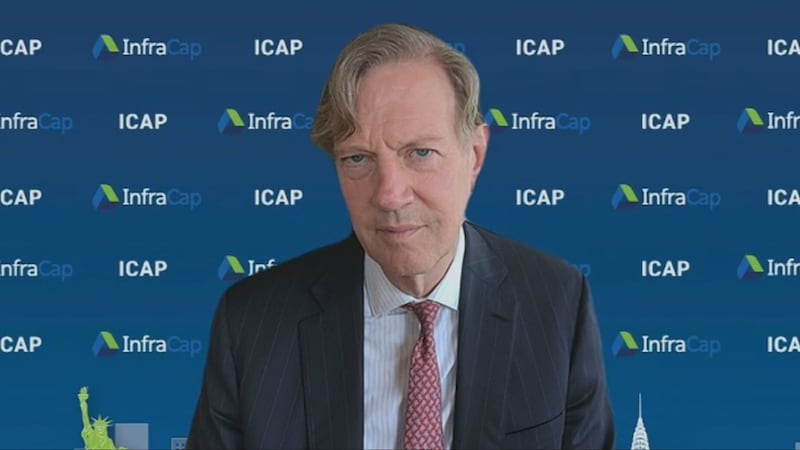
Read the full transcript below:
MATT: It’s time now for Hot Picks. Our next guest covers the energy sector. Let’s welcome in Jay Hatfield, founder, CEO and portfolio manager at Infrastructure Capital Advisors. Jay, good to see you.
JAY: Great. Thanks, Matt. Great to be on.
MATT: The energy sector is an interesting spot to be right now, given what we’re seeing with the continued end, hopefully, of the conflict in the Middle East. Let’s go through some of your picks here. Let’s start with Energy Transfer and why you like it right now.
JAY: Well, it’s worth noting that we do think this is a very defensive sector, really bond-like. It’s kind of the opposite of tech. It does well when the market’s weak.
Energy Transfer — all of our picks, actually — does not have commodity risk. Oil prices have come up 25 per cent in the last month, so Energy Transfer has minimal commodity risk. It has about a seven per cent yield and trades at about 13 times earnings. It’s a deep-value stock, and nobody’s giving them any credit for the natural gas story in North America, obviously used for power generation for AI and then the export market coming out of the Gulf.
They transport the gas down to the Gulf, so it’s a really great growth story that nobody cares about. It’s traded off with the war. A lot of that’s already priced in, which is the good news. You can see from the chart that the fact the war is ending is probably trying to find a bottom here because that was anticipated for the last month and a half.
MATT: Yeah, it’s been anticipated for a little while. It’s been back and forth for now, so we’ll see what happens with the agreement actually being signed. Ideally, we’re moving toward that, and we’re going to see some of that movement once again, some of the oil and natural gas through the Strait of Hormuz.
One of the other picks that you have today is Cheniere Energy. Take us through why you like that one today.
JAY: Yes. Cheniere is a natural gas exporter, and they’re going to benefit from the damage that was done during the war, particularly to Qatari export capacity.
Everybody now knows that you really want to source your natural gas out of North America, not necessarily the Middle East. They’re going to benefit from that safety premium, and they have great growth opportunities. They have expansion opportunities, it’s a very undervalued stock and it really didn’t trade up that much during the war. It’s come back in, so it’s very cheap.
We see substantial upside and, like all these picks, it has limited direct commodity risk.
MATT: Is there some opportunity here for long-term growth, too? It looks like there might be for this one in particular.
JAY: Oh, absolutely. As LNG demand globally continues to expand, which it will, particularly from North America, they have additional trains that they can bring on.
They’re best positioned to meet that demand because they’ve been doing this the longest and have additional capacity that they can bring on if demand increases. It’s a great long-term growth story that’s out of favour now because the war is ending.
MATT: Your third Hot Pick today is Marathon Petroleum. Take us through why you like that one.
JAY: It’s a little bit like Cheniere in that there’s been damage to refinery capacity in the Middle East. Obviously, there’s a huge supply shortage right now of refined products.
If you look at crack spreads, they’ve expanded, so they’re going to be very profitable. They also have a great position in North America, where they can access discounted crude, including crude coming from Canada.
It’s a great long-term investment. They’re going to have strong margins for the foreseeable future, and you do get dividends. In a way, they have negative commodity risk. As oil comes down, if refined products hold up on a relative basis, they actually make more money. You can make money from the spread rather than taking direct commodity risk.
MATT: Very interesting. I want to go back to something you mentioned at the beginning. You’re not expecting energy stocks to outperform the market here over the next little while.
JAY: Yes. Look, in our fund, AMZA, we have a lot of investors who have had big gains. We tell them they don’t necessarily need to bail out because these stocks are going to do fine. They may not keep up with the market.
MLPs and midstream companies are up about 20 per cent, but the way to think about them is really as a bond equivalent. Their beta, their sensitivity to the market, is about 0.5. That’s not much higher than our fixed-income funds.
You shouldn’t expect to get Marvell-like returns from stocks with a beta of two — twice the market risk — from stocks that have 0.5 market sensitivity. But you can get seven, eight or nine per cent yields, good long-term growth and an underappreciated growth story.
It’s for more conservative investors who may not want to be in pure bonds, who want to get double-digit returns but not take full market risk. It’s potentially a fit for somebody closer to retirement.
MATT: Yep, certainly makes sense. Jay Hatfield, founder, CEO and portfolio manager at Infrastructure Capital Advisors. Thanks so much for this today, Jay. Appreciate it.
| DISCLOSURE | PERSONAL | FAMILY | PORTFOLIO/FUND |
|---|---|---|---|
| ET NYSE | N | N | Y |
| LNG NYSE | N | N | Y |
| MPC NYSE | N | N | Y |
---
This BNN Bloomberg summary and transcript of the June 18, 2026 interview with Jay Hatfield are published with the assistance of AI. Original research, interview questions and added context was created by BNN Bloomberg journalists. An editor also reviewed this material before it was published to ensure its accuracy and adherence with BNN Bloomberg editorial policies and standards.

