Automakers are looking beyond vehicle sales for future growth as energy storage, luxury branding and automotive safety technology create new opportunities across the sector. Trade policy also remains an important consideration as manufacturers navigate ongoing tariff uncertainty.
BNN Bloomberg spoke with Tom Narayan, lead global autos equity analyst at RBC Capital Markets, about why he sees opportunities in General Motors, Ferrari and Autoliv, and how battery energy storage, luxury positioning and automotive safety could support long-term growth.
Key Takeaways
- General Motors’ battery energy storage ambitions could create a meaningful growth business beyond vehicle manufacturing.
- Tariff negotiations with Mexico remain an important risk for North American automakers despite improving trade conditions.
- Ferrari continues to benefit from its luxury positioning despite mixed investor reaction to its first fully electric model.
- Automotive safety content continues to increase globally, supporting long-term demand for airbags and seat belts.
- Companies with leading positions in automotive safety could benefit as regulators maintain high safety standards.
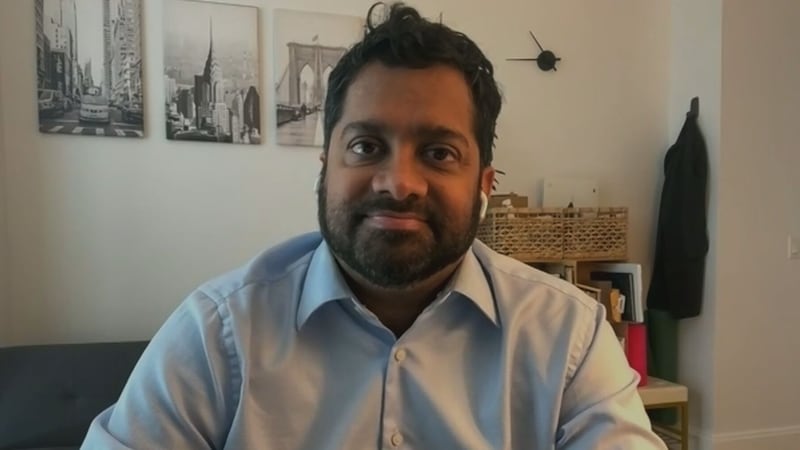
Read the full transcript below:
LINDSAY: It’s time now for Hot Picks, and today we are zeroing in on three plays in the automotive sector. Our next guest sees opportunities as major manufacturers ramp up EV investment and push into new luxury designs. So, for more on the top picks, I’m joined now by Tom Narayan, lead global autos equity analyst at RBC Capital Markets. Good morning. Thanks for joining us.
TOM: Good to see you.
LINDSAY: So, let’s get right into your picks. The first one is General Motors. Tell us why you see opportunity here.
TOM: Yeah, look, GM is one of the rare automakers that’s not really facing this real big threat from China. The Chinese OEMs are really coming into Europe. GM is not really in Europe, and you really want to be in the U.S. when it comes to autos, thanks to tariffs and trade policy, and GM has 70 per cent of the large SUV market in the U.S., which is really the best place to be in autos globally. And finally, we do think there’s an opportunity for them to get into energy storage. That’s something that’s going to power AI data centres, etc. So, we do like them for autos, and we also do like them for non-automotive end markets.
LINDSAY: Obviously, it’s been a rough road for this whole sector, really, but also for this company. What are some of the biggest headwinds that you are maybe anticipating moving forward for GM in particular?
TOM: Yeah, I mean, while I do think that protecting the U.S. from foreign competition is a positive, I do think tariffs, the resolution, especially with Mexico, may take longer than what people are hoping, and GM does have a lot of Mexico exposure, produces cars there, so there’s some headwinds there if we don’t get a deal struck with Mexico, but we do think that does ultimately happen. Outside of that, you know, look, autos is not a growth sector, right? It is in decline. Less people are buying cars. Young people don’t have driver’s licences. So, there is kind of the structural headwind longer term, but we do think if they can get into some non-automotive end markets, like I said, energy storage and the like, then maybe that could be something to absorb that downturn.
LINDSAY: Okay, next up is Ferrari. Tell us why you like this one.
TOM: Yeah, this one’s very controversial lately, especially after their Luce electric vehicle unveil, where it got a lot of negative feedback, but ultimately, you know, people who are buying the Ferrari look at it as an asset. It’s kind of like a luxury watch, a piece of jewelry on wheels. They think it appreciates in value, and I do think that still remains, even though this new electric car didn’t get the fanfare maybe they had hoped for. And we have a history of car companies releasing vehicles for a very different customer base that doesn’t necessarily dilute the brand of its core customer base. The person buying that electric car is not the same one that’s going to buy their race cars, and they do have this car, the F80, which is like a $4 million car. They’re selling 800 of them over three years. When you run the math of that car, it more than offsets any weakness you may see from this electric car. We really do think this is a company to hide in. It’s very defensive. It’s not an auto company. It’s really a luxury company.
LINDSAY: Last up is Autoliv. Tell us a little bit more about this company, and also why you like it.
TOM: So, Autoliv is a really special company. It’s relatively small. It’s not Ferrari. It’s not GM. It’s like an $8-billion market capitalization, but it has 45 per cent of all the airbags and seat belts in the world, and when you think airbags and seat belts, that’s safety and increasing content per vehicle in countries like China and the emerging markets, so there’s the secular trend. And the other thing is China. Now that’s the big fear. They penetrate those companies into Europe. Let’s say safety is something that the European regulators want to protect. They won’t allow Chinese airbags and seat belts. Companies that go into Europe, especially the Chinese ones, will probably be required to use Autoliv’s airbags. The other interesting thing is the second biggest player is far smaller, about 20 per cent market share, and they’re exiting the business, so it’s a pseudo-monopoly in a great market. Airbags and seat belts, those aren’t going anywhere.
LINDSAY: All right, we’ve got to leave it there. Tom Narayan, lead global autos equity analyst at RBC Capital Markets. Thanks for your time. Appreciate it.
TOM: You got it.
| DISCLOSURE | PERSONAL | FAMILY | PORTFOLIO/FUND |
|---|---|---|---|
| GM NYSE | N | N | Y |
| RACE NYSE | N | N | Y |
| ALV NYSE | N | N | Y |
---
This BNN Bloomberg summary and transcript of the July 3, 2026 interview with Tom Narayan are published with the assistance of AI. Original research, interview questions and added context was created by BNN Bloomberg journalists. An editor also reviewed this material before it was published to ensure its accuracy and adherence with BNN Bloomberg editorial policies and standards.

