Recent share price weakness has put several consumer businesses under scrutiny. Auto repair, specialty food and bottled water offer opportunities for those looking beyond the recent declines.
BNN Bloomberg spoke with Derek Lessard, analyst at TD Cowen, about his picks of Boyd Group Services, Premium Brands and Primo Brands, and why he believes their shares have room to recover.
Key Takeaways
- Lessard sees margin improvements, acquisition synergies and operating leverage as key earnings drivers for Boyd beyond same-store sales.
- Premium Brands’ completed capital spending program could support stronger free cash flow, while a potential distribution business sale could help reduce debt.
- Limited-time offers have added sales volatility at Premium Brands, but Lessard says underlying demand remains strong.
- Lessard believes Primo Brands’ merger integration challenges are behind it, with retail market share gains supporting its recovery prospects.
- A shift toward healthier hydration is supporting bottled water demand, with Lessard pointing to growth in both sales volumes and prices.
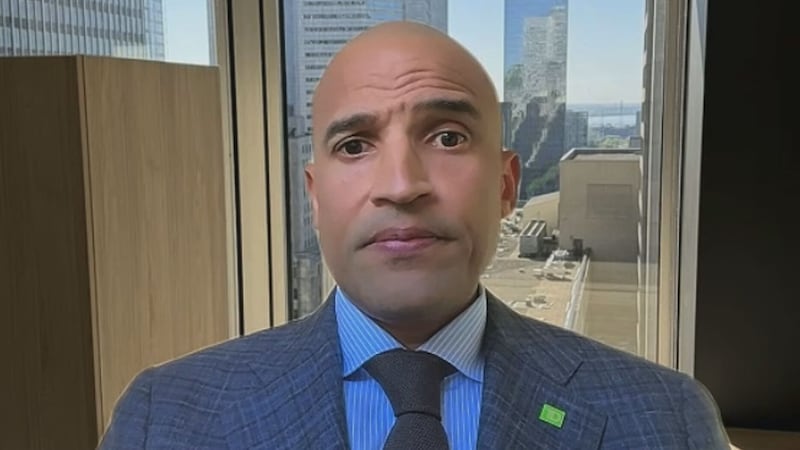
Read the full transcript below:
LINDSAY: It’s time now for Hot Picks, and today we are looking at three companies who deal in consumer products. For more, let’s bring in Derek Lessard, analyst at TD Cowen. It’s great to have you join us. Good morning.
DEREK: Thank you, Lindsay.
LINDSAY: Let’s just get right into it then. Your first pick for today is Boyd Group Services. You say it’s the largest operations of corporate-owned auto collision and glass repair centres in North America. A lot going on with this company right now. Tell us why you’re bullish on it.
DEREK: Yeah, so I think in, in what we’ve seen is that investors have been overemphasizing same-store sales, and what we want to show is that, you know, there’s other ways to skin a cat. We find that for, you know, it’s not — same-store sales is probably, is a, is a smaller driver of the EPS. Is a company that, you know, I think it’s more of a, more of a margin story at this point. You know, that’s going to be driving a lot of the, a lot of the earnings growth, and, you know, that margin opportunity is being driven by some of the, their internal projects. They made a sizable acquisition, Joe Hudson, last year, so we should see some synergies coming through there. And then you get some operating leverage. So stock’s down, you know, 50 per cent year to date. I think it’s overdone, and there’s a lot of levers that the, that the company is able to pull.
LINDSAY: I wonder what gives Boyd Services, though, an edge compared to its competitors like Driven Brands Holdings, for example.
DEREK: Yeah, a little bit different markets. Boyd itself is more in the, in the collision — is all in, in the collision repair. You know, they’re — Boyd’s participating in a, you know, that, that repair market’s expanded from roughly, you know, $34 billion to, in 2015, to $50 billion in, in — and some say upwards of $60 billion in, in 2025-2026. Look, it’s, I think those are just two different companies. Driven Brands has some other, some other businesses that it’s in, but Boyd benefits just from its size and size and scale.
LINDSAY: OK, so when it comes to food processors, food distributors, you like Premium Brands. This is your second Hot Pick for today. Tell us why.
DEREK: Absolutely. So Premium Brands, from a processor point of view, that’s — that is our top pick right now. Again, it’s a, it’s a company that has been beaten up recently. The premise on, in this company is that we were expecting for them to show a free cash flow inflection point. They did hit. They did. They did show sizable free cash flow generation in Q2. We expect that to keep going forward. They’re coming off of a massive capex spend program over the last couple of years. That’s now in the rearview mirror. All that capex was gone to — was spent around initiatives to drive sales growth, and then, and then secondly, we’d expect the margin expansion to flow through. So free cash flow has significantly inflected. We’re looking at free cash flow yields of anywhere from 10 to 12 per cent over our forecasted earnings over the next couple of years. There is some, a little bit of volatility on the sales side, but again, I think longer term, you know, I think investors are going to be rewarded by the sizable organic volume growth runway, and a second catalyst we do see coming down the road is selling off a piece of the business, their Premium Food Distribution, which we think they can generate in excess of about a billion dollars, and use that to pay down, to pay down debt and perhaps return more capital to shareholders.
LINDSAY: Because Premium Brands did lower its full-year guidance, right? I know you mentioned that. You mentioned it’s been beaten up lately, but what does demand look like for food distributors right now?
DEREK: Yeah, so that’s — I mean, that’s a great point. Look, the reason why they lowered guidance was on the back of what we call limited-time offers. You know, that’s part of the business that does add volatility. And what you want to see from the company is to convert those LTOs into longer-term SKUs. However, it does add volatility to the top line. That said, that is not reflecting any, I guess, any issues with demand. In fact, demand is extremely strong. You ship out those LTOs, and the, and the organic volume growth has been, you know, mid-single to hot to low-double-digit growth.
LINDSAY: Last up is Primo Brands. This is your third Hot Pick for today. Tell us why.
DEREK: Absolutely. Another company. It’s just been beaten up. As you, as you might be aware, they had a sizable merger with BlueTriton about two years ago. They did run into some integration challenges over the last year or so; those are firmly in, in the rearview mirror in our, in our view, and we expect, you know, for net customer adds to be coming back. The retail side of the business is extremely strong. They’re doing — they’re gaining share. They are — and from, again, from a free cash flow perspective, extremely interesting from a free cash flow perspective. This is an easy — this is a generally easy business to follow. One asset class, a lot of structural demand for bottled water, and I think it’s just a question of time and execution to get the stock and the shares moving higher.
LINDSAY: Just lastly, we don’t have a lot of time, but we are seeing consumers gravitate toward, like, electrolyte-enhanced products. Are you seeing that in your data as well?
DEREK: I mean, that, that’s — so it, that, that is a possibility, and that is possible. You know, there’s — but what we’re, what we’re seeing is, like, there is a secular, there is a secular move towards healthy hydration. Let’s put it that way. So electrolytes would fall within that category, and, you know, relative to other beverage companies out there, you know, it is one of the only categories that is growing from a, from a both, from a volume and price perspective. You know, as you know, as folks and consumers move towards healthier hydration.
LINDSAY: OK, Derek Lessard, analyst at TD Cowen, and really great to have you join us. Thanks so much.
| DISCLOSURE | PERSONAL | FAMILY | PORTFOLIO/FUND |
|---|---|---|---|
| BYD TSX | N | N | Y |
| PBH TSX | N | N | Y |
| PRMB NYSE | N | N | N |
---
This BNN Bloomberg summary and transcript of the Oct. 23, 2026 interview with Derek Lessard are published with the assistance of AI. Original research, interview questions and added context was created by BNN Bloomberg journalists. An editor also reviewed this material before it was published to ensure its accuracy and adherence with BNN Bloomberg editorial policies and standards.

