Dollarama shares are under pressure after the retailer reported weaker-than-expected comparable sales, raising concerns about near-term momentum.
BNN Bloomberg spoke with Denis Taillefer, portfolio manager at Caldwell Investment Management, who said elevated expectations heading into the quarter leave the stock vulnerable to short-term softness despite a resilient business model.
Key Takeaways
- Dollarama reported comparable sales growth of about 1.5 per cent, missing expectations of roughly 2.6 per cent.
- Customer traffic declined 1.6 per cent year over year, while higher basket sizes provided only partial offset.
- The weaker performance was partly attributed to weather-related softness, according to the company.
- Guidance came in below expectations, signalling slower growth and potential margin pressure from expansion.
- High investor expectations increase the risk of short-term share price weakness despite strong long-term fundamentals.
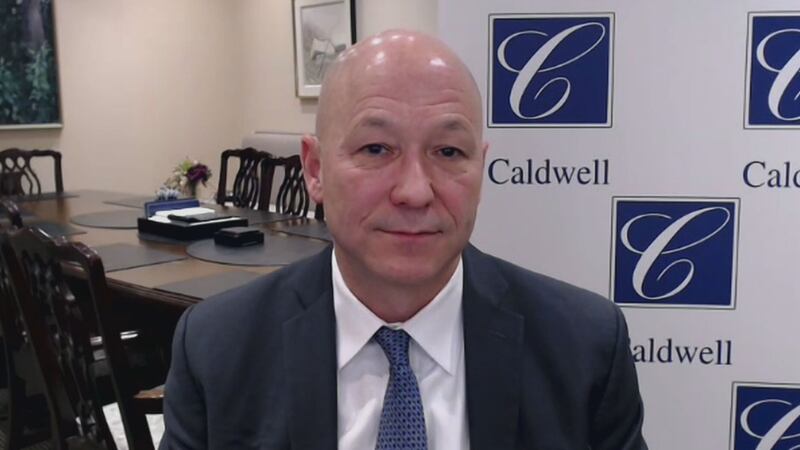
Read the full transcript below:
LINDSAY: And we are watching shares of Dollarama today after the Quebec-based dollar store chain posted revenue growth from established locations that missed estimates. Our next guest says, given the high expectations, the stock could see some softness today. Let’s get more now from Denis Taillefer, portfolio manager at Caldwell Investment Management. It’s good to have you join us. Good morning.
DENIS: Thanks for having me.
LINDSAY: What are your initial thoughts on the numbers we’re seeing from Dollarama today?
DENIS: Again, high expectations. This is a company that continuously delivers pretty strong results. Going into this quarter, expectations had been brought down a bit, knowing there would be some noise given the difference in weeks and how Halloween fell in one quarter versus another year over year. So expectations were a little lower, but the company still missed on that somewhat. Same-store sales, which is really the main metric most analysts and portfolio managers look at for these types of companies, were a little softer than expected. Having said that, the company did point to some softness in traffic due to weather, but basket size was slightly better than expected. Overall, they came in at about 1.5 per cent. I believe the expectation was about 2.6 per cent. These numbers were slightly lower than what we’ve seen in previous years. So it was, I’d say, a weak quarter for Dollarama, but not a terrible quarter by any stretch.
LINDSAY: And as you say, traffic was down by 1.6 per cent year over year, according to Dollarama. But the company is also forecasting annual sales below estimates, signalling softer demand. Is there a bigger story here in terms of consumer trends and spending as we head further into 2026, or not really?
DENIS: It’s a little hard to decipher, but we tend to like a company like Dollarama in just about any economic environment. It has a great business model. It’s a strong growth company, very well run, and a fantastic model overall. In tougher times, people tend to trade down, which should help drive more traffic into their stores. So it’s a good core investment because it can weather almost any type of economic environment. Having said that, it’s all about expectations. This company has been growing at very healthy rates over the last few years, and we’re seeing a bit of a soft patch on a go-forward basis. A lot of that likely has to do with the growth profile shifting more toward newer markets, which require additional investment. That will likely put some pressure on margins over the next few quarters. The operating leverage we’re used to seeing may be under some pressure in the near term.
LINDSAY: Let’s take a broader look at the markets. In your notes, you said you started the year with a constructive outlook, but now you’re more cautious in the near term given recent developments. What’s your take on what we’ve been seeing, especially over the past week, with this volatility?
DENIS: The last 24 hours have been very volatile, and that’s likely the environment over the next few weeks. There doesn’t seem to be any near-term resolution. It appears the U.S. miscalculated its ability to resolve this quickly. As long as this drags out, the greater the structural impact on energy costs, which will have negative implications for inflation. It will push inflationary pressures higher and create a headwind for growth. It effectively tightens financial conditions for consumers, and lower-income consumers will feel the brunt of it. The longer this goes on, the higher the risk for markets. It also makes it more difficult for central banks, because this is supply-driven inflation and they have limited ability to address that. It puts them in a tough position. Trying to fight inflation could further hurt growth, which creates more volatility. Given that markets have been trading at relatively high multiples after a strong run, this sets up the near term for some form of correction.
LINDSAY: We may already be seeing that, even in commodities like gold. Are there any other trends that stand out to you, beyond oil, given what’s happening in the Middle East?
DENIS: The commodity space is where you’re seeing the most volatility, and that will likely continue over the next few weeks until there’s some resolution. From a longer-term standpoint, we still see gold as a valid investment. We also like the fundamentals of copper. And we think the fundamentals for the energy sector are improving, because there could be structural damage to the supply side for oil and natural gas. That would lead to a higher base level of pricing going forward. So longer term, these remain attractive areas to invest in, but the near term will be very volatile.
LINDSAY: Let’s get to your stock picks. First, Hammond Power Solutions — what do you like about it?
DENIS: Hammond Power Solutions manufactures dry-type transformers. Any time you build infrastructure, data centres or EV charging networks, you need transformers to manage power. We’re seeing strong demand from data centres and EV infrastructure, so the secular tailwinds are very strong. The stock had difficulty breaking through previous highs because capacity constraints limited supply. But the company has made significant investments, including a new plant in Mexico, and that’s starting to show up in the numbers. Recent revenue growth was in the low-20 per cent range year over year, and backlog growth was very strong. They’re also investing further to expand capacity. So they’re now well positioned to meet demand, particularly from AI data centre buildouts.
LINDSAY: Your other pick is Stella-Jones, which has outperformed recently. What’s driving that?
DENIS: Stella-Jones is almost like a utility-type investment. It’s a materials company focused on railway ties and utility poles. About 70 to 90 per cent of its business is tied to maintenance and replacement cycles, which makes it relatively stable and less sensitive to the economic cycle. They also have long-term contracts with pricing mechanisms. We like the pole business because of grid modernization and hardening, which increases demand. Replacing poles often requires larger materials, which boosts growth. They’ve also made acquisitions that expand their presence in transmission infrastructure, which is a fragmented market with consolidation opportunities. So you have a stable core business with additional growth opportunities, which is attractive in a volatile environment.
LINDSAY: We’ll leave it there. Denis Taillefer, portfolio manager at Caldwell Investment Management. Thanks for your time.
---
This BNN Bloomberg summary and transcript of the March 24, 2026 interview with Denis Taillefer are published with the assistance of AI. Original research, interview questions and added context was created by BNN Bloomberg journalists. An editor also reviewed this material before it was published to ensure its accuracy and adherence with BNN Bloomberg editorial policies and standards.

