Canadians are stepping up to support one another, with online fundraising topping $1 billion over the past five years as digital giving becomes more entrenched.
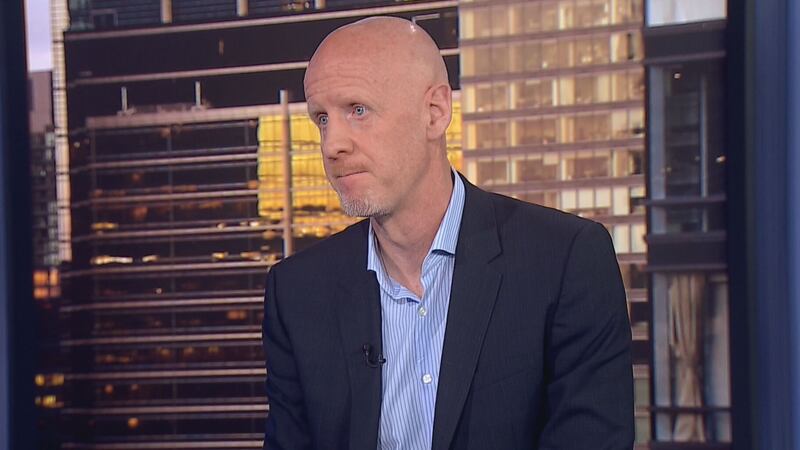
BNN Bloomberg spoke with Tim Cadogan, CEO of GoFundMe, about how Canadians are embracing online platforms, evolving donation habits and the role of technology in expanding access to support.
Key Takeaways
- Canadians are among the most active donors globally, ranking within the top countries for participation on digital fundraising platforms.
- Daily donation activity remains strong, with thousands of contributions supporting individuals, businesses and community causes.
- Periods of crisis tend to drive both higher need and increased willingness to give, reinforcing a responsive giving culture.
- Technology, including AI tools, is making it easier for individuals to launch and manage fundraising efforts.
- Trust and transparency remain critical, with platforms investing heavily in fraud detection and donor protection.
Read the full transcript below:
LINDSAY: So just how generous are Canadians? According to GoFundMe, in the last five years alone, more than $1 billion Canadian has been raised through the platform to support Canadian causes. Joining me now in studio is Tim Cadogan. He’s the CEO of GoFundMe, and he’s also one of TIME’s most influential people of 2025. Congratulations!
TIM: Thank you very much. It’s great to be here.
LINDSAY: Thanks for joining us in studio.
TIM: Celebrating generosity. It’s amazing to see what’s happening.
LINDSAY: Yeah, I mean, those are some pretty interesting numbers. GoFundMe has now been in service since 2010, which is crazy to think about, because you hear about it so much. So many people use that platform. Can you remind us how it all started?
TIM: Yeah, it started with our two co-founders thinking, wouldn’t it be great for people to help each other in all kinds of different ways? And originally, they anticipated it being people getting their friends to help them go on a trip or maybe get married. And it turned into something much more very quickly, where people have started helping each other for all kinds of things, in all aspects of their lives. And we started here in 2013. It was our first international market, and Canadians have adopted — I think we’ve up to nearly 20 per cent of Canadians have used GoFundMe, which is pretty incredible.
LINDSAY: Canada was your first international market?
TIM: Yes, it was, 2013.
LINDSAY: Why?
TIM: It was natural — it’s right next door. Yeah, there’s some real similarities in the way people interact. It made a lot of sense, and it’s been a really, really important country for us ever since.
LINDSAY: Do you know since then how much money has been raised overall?
TIM: I think it’s approaching $2 billion, but it has accelerated over the last five years. So as you mentioned, $1 billion just in the last five years. To give you a sense of that, that’s a big number. It’s hard to relate to.
LINDSAY: Yeah, it’s hard to wrap your head around it.
TIM: Over 6,000 times a day, Canadians are supporting each other on GoFundMe — 6,000 times a day.
LINDSAY: I don’t know if you have the numbers, but just in comparison to other countries, does that show just how generous Canadians are?
TIM: Canada’s really up there. It’s a top-five country. We’re in 20 countries around the world, and so really up there in terms of supporting each other.
LINDSAY: And as you say, GoFundMe is used — people use it for so many different ways to raise money for different things. Where is GoFundMe seeing the fastest growth, like personal causes, community needs or larger institutional fundraising? Is there one?
TIM: So we’re still mainly seeing individual fundraisers. So a couple of categories that have grown pretty quickly is people fundraising for their own business. So I was just with a customer yesterday, Mabel’s Fables. It’s a beloved bookstore here in Toronto, needed to move, had some extra expenses, raised $130,000 and made that move a lot easier for them. So it can be individuals for their own situation. It can be for the business they operate, or it can be for community projects. So it really crosses the gamut. It’s pretty amazing to see what people are doing.
LINDSAY: Yeah, is there some ways that the company is trying to evolve, maybe new partnerships, or how has GoFundMe evolved even since it began?
TIM: Yeah. I mean, the principal thing that we do is we try to make it easier for people to ask for help. So we’ve introduced a lot of technology. In fact, just last week, we introduced a new AI-powered coach, so that every single person who’s thinking about starting a GoFundMe can have help crafting their fundraiser, setting their goal, managing their goal, sharing — all of the steps you need, because fundraising is an unfamiliar thing for most people starting a GoFundMe. Many of them have never done a fundraiser before, and there’s actually a lot of things you need to do to make it successful. So kind of holding their hand with all of the experience that we’ve gathered, because we’ve had over US$40 billion raised since we’ve been running the platform, so taking that experience and giving it to people in a scalable way.
LINDSAY: And as you say, some people just find it difficult to ask for help, right? Most people do?
TIM: We all do, is the reality. Everywhere I’ve gone in the world, everyone I’ve spoken to is like, it was hard for me to do this, but once I did it, to see that help flowing in was so powerful. And it’s not just the money. The money is super helpful, but it’s the psychological and emotional support from friends, family and community that really lifts people up in a very powerful way.
LINDSAY: There’s so much talk these days of different companies starting to integrate AI into how they operate. How is GoFundMe integrating AI?
TIM: Yeah, so we started at the feature level. So, for example, people find it hard to decide, should I ask for $1,000, $2,000, $3,000. So as they wrote their fundraiser, they could opt into our smart goal technology, which says, hey, based on what you’re fundraising for, here’s the goal and here’s how to manage it, because you can change the goal over time. So that and other features have already been used 80 million times around the world, and then we integrated that, as I mentioned a couple of weeks ago, into a more holistic coach that holds your hand through the whole journey. But the interesting thing about AI is there is also a lot of concern about AI. Is it going to replace us? The interesting thing about what we do is helping one another is inherently human. That’s not substitutable, but the process of doing that, we can help a lot with technology. So making an ever more powerful tool allows people to understand the steps they need to take and make it a little bit easier. That’s what we’re doing. It’s working incredibly well.
LINDSAY: And maybe a way to — because obviously there’s so much good that comes out of GoFundMe, but there also have been some fraudulent accounts, some bad actors that are using the site. Are there more ways that you can help crack down on that?
TIM: Yes, so for us, earning people’s trust every day is so important because people are putting often what is the most important story of their life on the platform, and people are also putting their hard-earned money as donors. So we spend a lot of time thinking about and again using technology and all the knowledge we have gathered to spot anomalous fundraisers that don’t look quite right. We investigate all of those. We investigate every single report we get from a user that says, I’ve seen this, it doesn’t look right to me. And if there’s a problem, then we take them down. If they have raised any money, we refund. In fact, we have a global giving guarantee, which means that any donation of any amount anywhere in the world is covered. So if you have a problem, we’ve got you covered. So that allows people, as I mentioned, 6,000 people a day, you can donate with the complete confidence that your money is protected, should there be a problem. Fortunately, it’s extremely rare, but we are dealing with humans, and not everyone is always doing things properly.
LINDSAY: It’s good to know when you’re donating, you’re actually donating.
TIM: You’re protected, completely covered.
LINDSAY: It must be interesting, too, to see trends of how generous people are and when. I think about food banks, for example, can see trends of when people are able to give more and give more back to their community, and when they can’t. And I wonder if you see the same trends.
TIM: Well, we see an interesting thing, is that when a period of need goes up, the readiness of other people to help those in need goes up. Probably the best example is the pandemic. As I mentioned, I started at GoFundMe the month the pandemic happened.
LINDSAY: Good time to start.
TIM: Well, you know, a lot going on, but immense need, but also immense desire to help. And so we see both. So I mean, in moments of crisis, there are people affected by the crisis, and there are others who are like, I want to help. I want to step up right now. So we see that again and again.
LINDSAY: So interesting, so much to talk about, but we are out of time. Tim Cadogan, the CEO of GoFundMe. Appreciate you coming in studio. Thanks for joining us.
TIM: Thank you. Appreciate it.
---
This BNN Bloomberg summary and transcript of the March 25, 2026 interview with Tim Cadogan are published with the assistance of AI. Original research, interview questions and added context was created by BNN Bloomberg journalists. An editor also reviewed this material before it was published to ensure its accuracy and adherence with BNN Bloomberg editorial policies and standards.

