Metatek-Group has begun trading on the Toronto Stock Exchange after closing its initial public offering, as rising global demand for energy and critical minerals drives growth in exploration services.
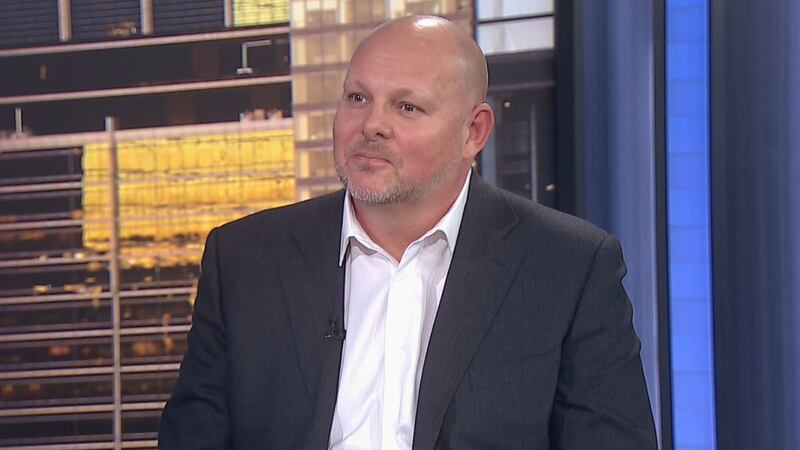
BNN Bloomberg spoke with Mark Davies, CEO of Metatek-Group Inc., about how the company plans to deploy new capital to expand capacity and address a growing backlog of projects across multiple regions.
Key Takeaways
- The IPO raised about $40 million at roughly $5 per share, below initial expectations amid geopolitical uncertainty.
- Capital will be used primarily to deploy specialized instruments, each capable of adding significant annual revenue.
- The company reports a backlog of more than $65 million US, with equipment fully booked for the next two years.
- Demand is concentrated in Africa and Southeast Asia, with expansion planned into North and South America.
- Growth is tied to increasing global focus on energy security and critical minerals, including lithium, hydrogen and geothermal resources.
Read the full transcript below:
ROGER: Well, Metatek officially closed its IPO. It aimed to raise $50 million, but ended up at $40 million, at about $5 a share. As it begins trading on the TSX, the company says the timing aligns with surging global demand in the energy sector. Here to talk further about it is Mark Davies, CEO of Metatek. And Mark, thank you very much for joining us. Congratulations on joining the TSX.
MARK: Thank you.
ROGER: Let’s talk about that. First, you were hoping for $50 million, ended up at about $40 million, $5 a share. Your thoughts on that?
MARK: We wanted to go slightly higher, but obviously, with the geopolitics at the moment, we scaled back a little bit. Still raised the capital we needed to deploy for the growth of the business. It was just the second review that was pulled back a bit.
ROGER: And where’s the capital going to be going with that?
MARK: So it’s all about instrumentation for us. So we have a huge backlog at the moment, north of $65 million US, and we need to get through that backlog. So it’s all about deploying instrumentation. So each instrument that we deploy, and that’s what the capital is for, it adds $20 million, $25 million onto our annual revenue.
ROGER: Each machine?
MARK: Correct, yeah.
ROGER: So they’re not a little handheld GPS.
MARK: No, no, they’re not. These things are about the size of a U.S. domestic fridge, go into an aircraft with a whole bunch of other instrumentation as well. So pretty big.
ROGER: And where are they off to right now? Where’s your backlog?
MARK: So most of our backlog is in Africa and Southeast Asia. That’s where we’ve been deploying them for the last four years or so. We hope with the raising of the capital, we’ll have more instruments to fetch across to North America and South America, where we already have clients waiting to get time on the instruments.
ROGER: You have clients in North America and South America waiting for time on the instrument?
MARK: Yeah, no, North America and South America waiting for time on the instruments. Instruments are fully booked for the next two years.
ROGER: And where do you hope to grow — North America with that? Or is it really you’re just kind of playing catch-up right now? You’re so busy?
MARK: Yeah, it’s all about catch-up. But we found that geographically, our first projects were in Africa, and since then, because of the demand on the instrumentation, we’ve not been able to fetch it back across to North America. So hence why we’ve come to the market now to raise the capital to order these instruments.
ROGER: And are you hoping to bring in more money in different ways over the next little while?
MARK: Well, at the moment, we focus on the short term, which is all about deploying these instruments. These instruments are pretty incredible instruments that are manufactured by Lockheed Martin. So it’s about deploying that, and then we look at other possibilities further on down the line.
ROGER: All right. And with these, you were running, if I’m not mistaken, you’re running — you’re in the negative. Did I get that correct? Are you running — a lot of money — but how are things going?
MARK: Yeah, we’re still in the phase where we want to get the message out to the market, right. We’re very new at the moment. And as we become more operationally efficient, get through that backlog, I think the success will — the market will track that success.
ROGER: And with Canada having had a dearth of IPOs, I think people would question, why Canada? Why Canada when you try to go to the U.S.?
MARK: No, it was always going to be Canada for us. So the knowledge base suits what we do. We’re all about natural resources and we’re all about technology. So, you know, the knowledge is there. So really speaking, it was either Canada or Australia, very similar. And geographically, the proximity made it Canada.
ROGER: With Canada, with the U.S. and South America, does Canada still have that reputation? I mean, it was a mining country and natural resources — does it — and the skill sets were there. Did you feel that so?
MARK: 100 per cent. Geopolitics is driving, you know, resource strategy for all the nation-state customers that we have. And of course, Canada has, you know, a wealth of natural resources. So I think that’s going to pick up long term now.
ROGER: I mean, I know Africa is your big — do you see more opportunities in North America, or does it continue to be Africa?
MARK: No, I see big opportunities in North America. If you look at things like battery minerals, critical minerals, also oil and gas as well, that’s come back into vogue over the last, you know, couple of years.
ROGER: And what’s it like for you dealing — I mean, it’s, I guess, a different situation trying to — you don’t have — do you have to worry about government and regulations, or is it kind of taken care of by the companies you work with?
MARK: No, no, we have to. The equipment that we deploy is dual-use technology. So we’re highly, highly regulated. So, you know, we have our own compliance that we’ve got to check all the boxes, but also clients as well. And the nation-state clients, they have their own compliance as well.
ROGER: And do you find it easier to work here or other places — North America or other places?
MARK: I think it’s a mixed bag. It depends on what nation-state we are working with. The big difference when you’re working with a nation-state is that it takes a little longer for them to make the decisions, but once they make the decisions, they’re there for the long haul. You know, it’s all about identifying natural resources within their subsurface. So it’s something that we’ve seen over the last three years where there’s been a pivot — that nation-states are taking care of understanding their subsurface.
ROGER: I should probably — what exactly does the equipment do? We talked about it, but what exactly does it do within the realm?
MARK: So we operate in all the terrestrial environments, but by far and above the biggest part of revenue is in the airborne environment. So we deploy these aircraft with lots of different instrumentation. But the centre of it, the jewel in our crown, if you like, is something called an FTG. Bit of a mouthful, right?
ROGER: But that’s a short form.
MARK: So that’s the short form, yeah — full tensor gradiometer. And it’s all about identifying minute changes in density within the subsurface. So if you think of Google Maps of the subsurface, that’s what we’re able to do. And at each interval, we’re looking at the wealth and quantifying that for our clients.
ROGER: And proprietary — is that proprietary? Is there any competition for you?
MARK: Yeah, there is some competition. But we fly the high end of it. We have exclusive global use for the high-end instrumentation. But exclusivity doesn’t just come from those instruments that are manufactured by Lockheed Martin. It also comes from the cerebral know-how. You know, we know to take it, put it into an aircraft, understand the data, interpret it and deliver the product. So it’s, you know, knowledge transfer in that way.
ROGER: And when it’s looking — does it — is there certain minerals that it finds better than others?
MARK: For us, this one scan does everything. That’s why it’s in such demand at the moment. So we’re all about, you know, identifying wealth. And by wealth, I mean oil, gas, battery minerals, critical minerals, even new-age stuff like hydrogen, helium and geothermal. So one pass, one scan does all for our clients.
ROGER: And do you have any deployed in Canada yet?
MARK: No, we don’t. We do have projects that we will come back for to do in Canada, but we’ve got to get through this huge backlog we’ve got at the moment.
ROGER: And when do you hope to be in Canada with them, actually using them?
MARK: Probably be looking at the back end of 2027, back end of 2027.
ROGER: 2027, OK. Awesome. Thank you very much for joining us. We appreciate it.
MARK: My pleasure. Cheers.
ROGER: And that was Mark Davies, CEO of Metatek Group.
---
This BNN Bloomberg summary and transcript of the March 26, 2026 interview with Mark Davies are published with the assistance of AI. Original research, interview questions and added context was created by BNN Bloomberg journalists. An editor also reviewed this material before it was published to ensure its accuracy and adherence with BNN Bloomberg editorial policies and standards.

