Johnson & Johnson raised its full-year forecast after reporting stronger-than-expected quarterly results, with growth driven by key cancer, immunology and neuroscience drugs as well as early momentum from newer therapies.
BNN Bloomberg spoke with Matt Miksic, senior analyst in medical supplies and devices research at Barclays, about how investment in new product launches and strength across both pharmaceuticals and medical devices is shaping the company’s growth outlook.
Key Takeaways
- Strong demand for established and newer drugs, particularly in oncology and immunology, supported results and lifted expectations.
- Investment in new product launches and sales infrastructure is weighing on near-term margins but aimed at driving future growth.
- Emerging therapies, including new immunology and oncology treatments, are gaining early traction and could become major revenue contributors.
- Medical devices, including orthopedics and cardiovascular products, showed stronger-than-expected performance, supporting broader growth.
- Macro uncertainty remains, but underlying health-care demand trends appear stable with limited signs of slowdown.
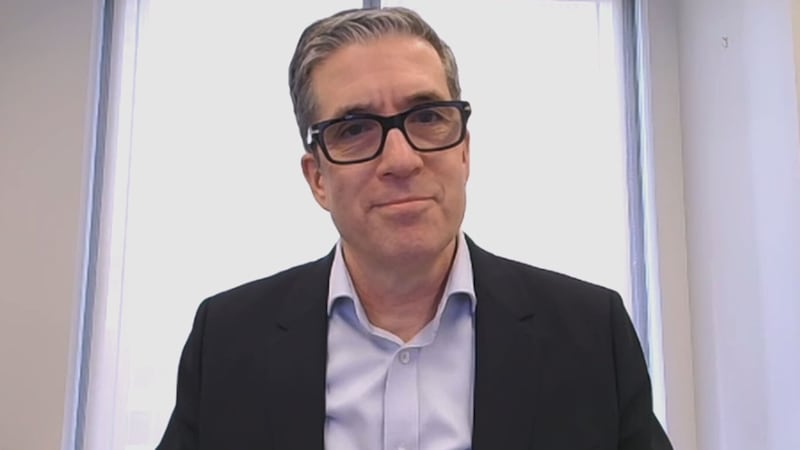
Read the full transcript below:
ROGER: Well, shares of Johnson & Johnson are up today after it reported a beat in earnings and bumped up its outlook for the year, led by growth in new cancer medicines and a drug for treatment-resistant depression. Here to talk about the latest earnings is Matt Miksic, senior analyst in medical supplies and devices research at Barclays. Matt, thanks very much for joining us.
MATT: Glad to.
ROGER: All right, they beat estimates by a penny. How does that stack up?
MATT: Yeah, I’d say they beat the top line by considerably more than a penny, but you get right to kind of a key point of the quarter. So they’ve had a very strong year, let’s say, in underlying pharma growth. Innovative medicines is the division, as they name it. But they also talked about having some pretty significant new product launches that they’re investing behind on the back of this strength. So, for example, innovative medicines beat, I think, the Street by about $350 million. They’re putting some of that into new sales force additions and promotions and setting the stage for these new drugs to make them as successful as possible. So that’s what offset some of the top-line beat.
ROGER: All right, what were some of the big wins for them last year — or last quarter? Sorry, not last year, last quarter.
MATT: Yeah, last quarter. So there are some familiar names that they continue to grow really well for the company, like Darzalex, one of their cancer drugs, and Tremfya, which is for immunology indications. Both of those continue to be large-scale growth drivers for them. I’d say some of the exciting new products that investors are focused on are an oral immunology drug for the treatment of psoriasis, which is Icotyde, a first-of-its-kind therapy, and where they are investing some of the promotional and marketing dollars that I mentioned. And then in Lexa, which is a drug-device combination for the treatment of bladder cancer. So those are kind of on the leading edge of just leaving the launch pad, but some of the main drivers continue to be strong, like Tremfya or Darzalex.
ROGER: All right, and in all this, of course, they have their deal — I don’t want to call it the deal with the devil, but I’m not going to — the deal with Trump to avoid the tariffs. Is that paying off for them?
MATT: Yeah, I think it’s paid off in the sense that they found some common ground with the administration. They were making some very large investments, and they leaned into U.S. investments for manufacturing, as they talked about last year and again today on the conference call. So I think those work for them. They want to be in a place where they’re providing at least half of their innovative medicines from the U.S., and most of the U.S.-based innovative medicines in the U.S.
And then when you get into things like bringing therapies to U.S. patients at a more attractive price, the details get a little murkier for us here on the Street. But we see some of that coming through in some of the IRA program payments, for example. There were some cuts to Imbruvica this year, which showed up in the numbers in the first quarter. And those are part of the ongoing relationship between the pharma industry and CMS to negotiate and give U.S. patients a break.
ROGER: All right. And looking forward now, I think you mentioned Icotyde. They’ve got 1,500 patients on the drug already, and one of their EVPs, Jennifer Taubert, saying they are extremely optimistic, saying it could be one of the biggest products for them.
MATT: Yeah, it gets to one of the strengths that the company has as well, which is drug on the one hand, and device and procedure support and training on the other, that comes with having a large medtech business. So yeah, Icotyde — large market, large underserved or undertreated market for bladder cancer, non-muscle invasive bladder cancer in the U.S., about 600,000 patients annually.
And they really didn’t get reimbursement set completely until the end of the quarter, so I think they did about $30 million in the first quarter, but that’s probably an understated number, given the trajectory leaving the quarter with new reimbursement. So yeah, very exciting drug.
ROGER: And now they’ve raised projections for sales ever so slightly. What potential headwinds could they be facing?
MATT: Yeah, I think there’s lots of uncertainty — probably the word of the year, maybe the last six to eight months. But underlying health-care utilization and trends, I’d say in both drugs and devices, have been very solid. So we’re not looking for any significant headwinds or changes in market direction.
I think there were concerns about utilization of surgical volumes in the first quarter, some weather concerns as well, and none of those are really playing out in the survey work that we’re doing, or certainly in the results that Johnson & Johnson reported. So we think not everything was great this quarter, but some things were solid. And I think that’s why they took guidance up just a little bit, understanding still that it’s the first quarter of the year. Companies don’t often want to beat in the first quarter and then really take up guidance — it’s still early.
ROGER: All right. We talked a lot about the meds. Medical devices, you mentioned — how are they looking there?
MATT: Good, yeah, strong. I think orthopedics and cardio are two big, important markets for lots of the companies that we cover, and both of them looked on the strong side, or at least stronger than expected for the quarter. And so that bodes well for some of the other names in our universe reporting through Thursday and into next week and the week after. So I’d say medtech and devices are off to a good start.
ROGER: Okay, we’ll wrap it up there. Matt, thanks very much for joining us today. We appreciate it.
MATT: You bet, anytime. Thanks.
ROGER: Cheers. Matt Miksic, senior analyst in medical supplies and devices research at Barclays.
---
This BNN Bloomberg summary and transcript of the April 14, 2026 interview with Matt Miksic are published with the assistance of AI. Original research, interview questions and added context was created by BNN Bloomberg journalists. An editor also reviewed this material before it was published to ensure its accuracy and adherence with BNN Bloomberg editorial policies and standards.

