Morgan Stanley shares moved higher after the bank reported stronger-than-expected first-quarter results, led by equity trading and wealth management. The results come amid a broader surge in trading activity across major U.S. banks.
BNN Bloomberg spoke with Brennan Hawken, managing director and head of diversified financials research at BMO Capital Markets, about what is driving trading gains, the strength of wealth management, and investor concerns around private credit.
Key Takeaways
- Equity trading strength was driven by market volatility, helping fuel record trading revenue across major U.S. banks.
- Wealth management continues to anchor growth, with strong net new asset inflows signalling healthy client demand.
- FICC trading showed mixed trends across banks, though Morgan Stanley avoided the softness seen at some peers.
- Private credit concerns remain limited for Morgan Stanley due to its relatively small exposure within overall earnings.
- Strategic acquisitions are focused on building private market capabilities and expanding wealth management ecosystems.
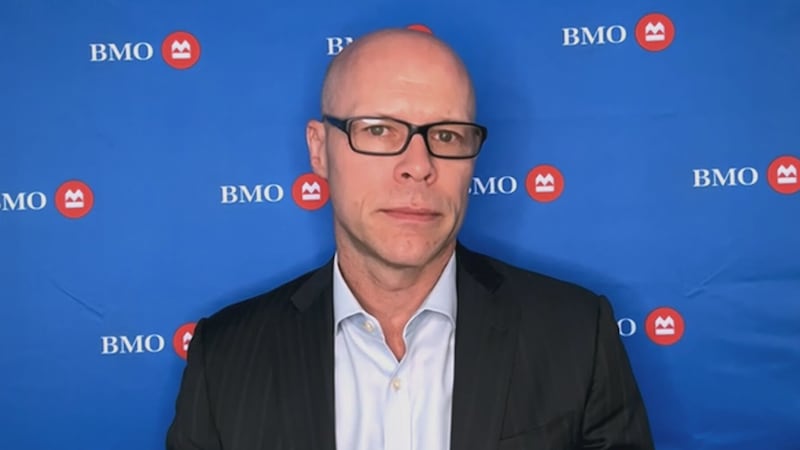
Read the full transcript below:
ANDREW: Morgan Stanley shares moving higher in the premarket after the bank delivered stronger-than-expected results from its equity trading division and wealth management business. And this echoes other banks, which have been posting record stock trading revenues. Let’s get more from Brennan Hawken, managing director, head of diversified financials research at BMO Capital Markets. Thanks very much indeed for joining us. It’s amazing, really — the stock market’s not far off record highs, massive equity trading volumes.
BRENNAN: Yeah, we saw a great deal of volatility in the first quarter. Not surprisingly, that led to really strong trading results. Now, interestingly, what we’ve seen so far — Goldman kicked us off on Monday, and Goldman’s FICC results were a little on the weaker side. We didn’t realize that until we got some of the peer results out, but the FICC businesses, where you sometimes can have some market-making and positioning headwinds, turned out to be a bit of a soft spot for Goldman. But Morgan did not see that at all, and neither did JPMorgan nor Citi yesterday.
ANDREW: Sorry, you said with FICC — what is that? Fixed income?
BRENNAN: Yeah, sorry. FICC stands for fixed income, currency and commodity. So it’s like the rates businesses, the credit businesses, the commodities businesses. So you were just talking about oil — like the trading of the commodities futures — that all is going to sit within the FICC businesses.
ANDREW: Jeff, maybe we can put up a five-year chart for Morgan Stanley. It looks like it has been a real star performer for investors — total return of 166 per cent over five years.
BRENNAN: Yeah, Morgan has been a great stock in the course of that time. And really what we’ve been seeing with Morgan Stanley is a recognition that we should not be treating the stock as a securities business, like an institutional business, the investment bank, and rather as a wealth manager. Preceding that five-year period, or corresponding with roughly the beginning of it, they bought in E-Trade, and that really increased the size. That was on the back of several other deals that they did, going all the way back to the financial crisis when they bought Smith Barney from Citigroup. That really increased the scale of the wealth business for Morgan. Then they continued to add on with smaller deals, E-Trade being one of them, and then we saw the growth really improve in that wealth management business. The growth here for them continues to be really strong. Net new assets is the proxy for organic growth among wealth management firms. They just put up 6.4 per cent here in the first quarter, annualized. My guess is that’s going to be on the upper end of the range for wealth management firms here in the first quarter. So not only are they huge, but they’re actually growing at a really healthy clip.
ANDREW: Private credit has been flashing red lights where some companies are concerned. Apparently, Morgan Stanley has this thing called North Haven Private Income Fund, and it did cap redemptions during the quarter. Is that hanging over the stock right now, do you think?
BRENNAN: I don’t think so, because of the size. So private credit — we cover the alts as well, so I’m intimately familiar with the focus on private credit, right? You know, covering firms like Blackstone and Ares and Apollo — and those stocks have had a tough time. There’s a lot more leverage to those trends. The headwinds that we’ve seen in the redemptions have constrained those stocks, and they’re down, you know, often some 30 per cent year to date. Morgan — it’s just so much smaller. The investment management business from Morgan is the smallest business that they have. It’s about high single-digit to low double-digit percentage of earnings. And so it’s just — and private credit within that business is very small, probably less than 10 per cent of the AUM. So it’s really not — yes, they capped the redemptions, much like all the other peer funds did, but it’s really not a big deal. Within wealth management, they do distribute these vehicles, but the alts investments as a percentage of client assets within the wealth business is still a mid single-digit percentage for Morgan Stanley. So while they facilitate that, it’s still rather small.
ANDREW: So Ted Pick is the CEO, and the bank just pulled off its first acquisition under his leadership. It bought an outfit called EquityZen, and apparently it lets clients trade shares in private companies. Schmidt — was that a big investment?
BRENNAN: No, it’s bolt-on. You categorized it correctly, Andrew. But what they’re working to do, and what a lot of these wealth management firms are looking to do — Schwab is doing a similar thing — is to build some private trading ecosystems, and EquityZen fits absolutely within that. Many years ago, they bought a firm called Solium, which is a stock plan business, but it’s focused on private companies, and then they built out cap table management capabilities. So they’ve been steadily adding these private capabilities within the wealth business. And if you think about it, it’s almost its own virtuous circle, right? You’ve got the banking, so you can develop the banking relationship, bring those companies public. You’ve got the wealth business, because the IPO is going to be a big wealth creator for the people that work at that firm. And so you can really have all of your main businesses benefiting from that ecosystem.
ANDREW: And you have an outperform on Morgan Stanley, a yield of just over two per cent. Do many people buy the stock for the yield?
BRENNAN: I don’t hear a lot of people buying it for the yield. This was true a few years ago, when the yield was a little higher and expected to grow at a faster pace than the earnings as they leaned into more capital return. Yield — the two per cent is probably a little above the S&P, this is my sense. So it’s not — it’s certainly not a liability. It’s certainly not bad. But I think most people buy this because it is a high-quality financial firm that is doing a really good job of executing the growth strategy. And when you look at it on a relative basis to the market, it’s really not that expensive versus the growth it delivers.
ANDREW: Thank you very much, Brennan. Really appreciate it. Brennan Hawken, managing director, head of diversified financials research at BMO Capital Markets.
---
This BNN Bloomberg summary and transcript of the April 15, 2026 interview with Brennan Hawken are published with the assistance of AI. Original research, interview questions and added context was created by BNN Bloomberg journalists. An editor also reviewed this material before it was published to ensure its accuracy and adherence with BNN Bloomberg editorial policies and standards.

