BRP lowered its full-year profit outlook after warning that new U.S. tariffs will create a significant cost burden, even as first-quarter revenue climbed nearly 30 per cent on stronger demand and product mix.
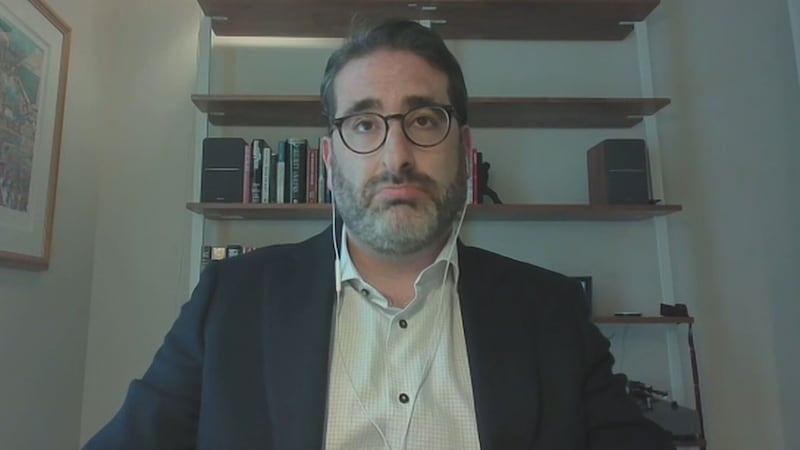
BNN Bloomberg spoke with Jonathan Goldman, analyst, diversified industrials at Scotiabank, about BRP’s tariff mitigation efforts, resilient consumer demand and why investors viewed the company’s updated guidance as better than feared.
Key Takeaways
- BRP reinstated guidance after previously suspending it, reducing its estimated tariff-related EBITDA impact from roughly $500 million to about $300 million through mitigation efforts.
- The company identified about $200 million in savings through pricing adjustments, overhead reductions and operational efficiencies without changing its long-term business outlook.
- First-quarter revenue rose nearly 30 per cent, supported by strong snowmobile demand, new product launches and resilient spending from higher-income consumers.
- BRP said demand for its recreational vehicles has remained stronger than expected despite weaker consumer confidence and broader economic uncertainty.
- Analysts said the updated guidance provides investors with greater visibility on tariff exposure and earnings expectations after months of uncertainty.
Read the full transcript below:
ROGER: BRP, the maker of Ski-Doos, Sea-Doos and other powersports equipment, is trading higher today. It posted weaker first-quarter earnings, and revenues were up nearly 30 per cent. But BRP expects U.S. tariffs to weigh on its performance and has cut its profit outlook for the year. For more on the numbers, let’s bring in Jonathan Goldman, analyst, diversified industrials at Scotiabank. Jonathan, thanks, as always, for joining us.
JONATHAN: Good morning. Thanks for having me again.
ROGER: Okay, is this what you expected for BRP?
JONATHAN: I would say no one knew what to expect.
ROGER: They’ve had a tumultuous year, haven’t they?
JONATHAN: It’s been a tumultuous half decade, I would say. I mean, I think a lot of companies could say that if we just rewind a bit. What happened is, I guess, six weeks ago at this point, BRP withdrew its guidance for the year. It suspended guidance, and that was because of the change to Section 232 tariffs. Previously, the company was only paying tariffs on the content of the steel and aluminum in its units, and then, all of a sudden, overnight, it was subject to paying the 25 per cent tariff on everything. So, it withdrew guidance, and at the time, about six weeks ago, it said it would be a $500-million hit to EBITDA. Today, and to their credit, they reinstated guidance, and they’ve cut that bill down to only about $300 million. So, probably better than feared, probably better than anyone expected, if they expected anything. Pretty impressive what they did so far.
ROGER: Do we know why the change, that drop? What is that, a 40 per cent drop? Yeah, about a 40 per cent drop, I guess?
JONATHAN: Exactly. So, the original hit was a 40 per cent drop to earnings. They cut that down to only a 25 per cent hit to their earnings. A bunch of different factors: one, the industry has been better than they thought it would be. The seasonal demand for snowmobiles has been stronger. There was a better promotional environment than they anticipated. The other off-road products are doing well. But the other piece that’s truly remarkable is they found an incremental $200 million of cost savings and other initiatives in the business. This is overhead reductions, nominally raising prices by less than 1 per cent to 2 per cent, and some other efficiencies to offset that tariff bill. So, pretty amazing that you could just look around in six weeks and find $200 million of savings to offset that bill. The management team, the entire business, definitely deserves a lot of credit here.
ROGER: Now, does that seem extreme, or does that tell you that maybe the company wasn’t running as tight as it should?
JONATHAN: I mean, drastic times call for drastic measures. What’s amazing is they took these actions and they haven’t impacted the long-term profitability or outlook for the business. BRP is a diligent, well-run business management team. They’re always looking at innovation, so they haven’t cut any costs or corners here that would impair the long-term fundamentals. I think they squeezed out everything they possibly could, maybe delaying some in-house projects or development, looking for ways to save here, but I don’t think it was run any tighter than it should have been. It’s just drastic times. People will find whatever they can do to find some savings there.
ROGER: Okay, and CUSMA, I mean, that’s been the centre point for them. The negotiations are coming up. What are they expecting? What are they bracing for? Do they kind of have two paths laid out for themselves?
JONATHAN: That’s the billion-dollar question. Originally, it was just USMCA, right? And then we have this separate Section 232 piece. On the earnings call today, the company said they’re going in with assumptions that we’ll see a convergence between those two pieces of legislation and trade policy, meaning if there’s some sort of resolution on USMCA, and we restore what actually is supposed to be a free-trade agreement, we could see the same thing resolve itself on Section 232. So, I think any sort of negotiations, any sort of talk, that’s the next catalyst for the company, for the stock. Obviously, it would help visibility. I think all parties, on all sides of the border and the three countries, are looking for some resolution. I think everyone has come to the realization that a lack of free trade doesn’t help anybody. Sure, there are always things that can be improved, and we could repurpose manufacturing and protect some industries, but I think everyone understands that it’s to everyone’s benefit to come to some sort of agreement.
ROGER: And are you surprised at the increase in sales? We’ve talked about a lot of people seeming to struggle, but then we see this from BRP. I mean, essentially, in many ways, recreational vehicles. Or were there stronger commercial sales for them?
JONATHAN: That’s a really good question. So, you hit the nail on the head. The economy is not great. It’s not like people are running, when you see the consumer confidence numbers, to go and buy things. So, I guess that was surprising, that demand has been more resilient than we expected. Part of that is seasonal — a really strong snowmobile season. The other piece to it, and you probably know this as well, is BRP skews more recreational than utility or commercial vehicles. So, what’s surprising here, or I guess maybe we should have known, is BRP’s products tend to target wealthier households, more affluent households, and they’ve been holding in relatively well. I mean, I think I’ve heard from one corporate that you’re going to need gas prices to go much higher than four bucks a gallon before people stop buying $80,000 units, second cars, effectively. So, that’s kind of been the story here: high-quality units, performance-based, wealthy households, and they’ve been resilient, and they’ve been buying these new products, which have been really well received, the new models that they’ve released.
ROGER: They have an $800,000 recreational vehicle?
JONATHAN: Not that much. I think it could go up to $100,000, maybe $120,000, not that high. It used to be in the boats, but they tend to be in the $30,000-to-$35,000 range and all the way down.
ROGER: And so, you have it at $80, yeah, $80 for the stock. Were there any changes on that? Are you still solid on that?
JONATHAN: We’re still reviewing our estimates. What I would say is what the results do today is add more clarity to the story. If you looked at consensus going in, I think the range of estimates was anything from $700 million of EBITDA all the way to $1.2 billion. So, a wide range. No one knew what to expect. What this does is it really solidifies the bill, at least at this point. Obviously, things can change depending on what social media comes out — but at least now we have something to set a peg to, and we can forecast earnings. Any time you have more visibility and more certainty on forecasting earnings and free cash flow, it has positive implications for the stock and valuation, which investors prize.
ROGER: All right, we’ll wrap it up there, Jonathan. But thanks, as always, for joining us. Appreciate it.
JONATHAN: My pleasure.
ROGER: Jonathan Goldman, analyst, diversified industrials at Scotiabank.
---
This BNN Bloomberg summary and transcript of the May 28, 2026 interview with Jonathan Goldman are published with the assistance of AI. Original research, interview questions and added context was created by BNN Bloomberg journalists. An editor also reviewed this material before it was published to ensure its accuracy and adherence with BNN Bloomberg editorial policies and standards.

