Stingray shares came under pressure after the company reported fourth-quarter revenue that fell short of analyst expectations, even as management pointed to strong momentum from its TuneIn acquisition and growing advertising business.
BNN Bloomberg spoke with Eric Boyko, president, co-founder and CEO at Stingray, about the company’s advertising growth, integration of TuneIn, free cash flow outlook and plans for future acquisitions.
Key Takeaways
- Stingray says TuneIn is already driving significant growth, with management citing strong demand for programmatic advertising and connected TV inventory.
- The company reported programmatic advertising sales are running at roughly US$275 million annually, up from virtually zero a year ago following the TuneIn acquisition.
- Management expects synergies from TuneIn to continue improving profitability after initial margin pressure from cross-selling efforts during integration.
- The U.S. remains Stingray’s primary growth engine, with the company saying most broadcasting and streaming revenue is tied to the American advertising market.
- Stingray expects stronger free cash flow generation to support debt reduction, while leaving room for acquisitions, dividend growth or additional share buybacks.
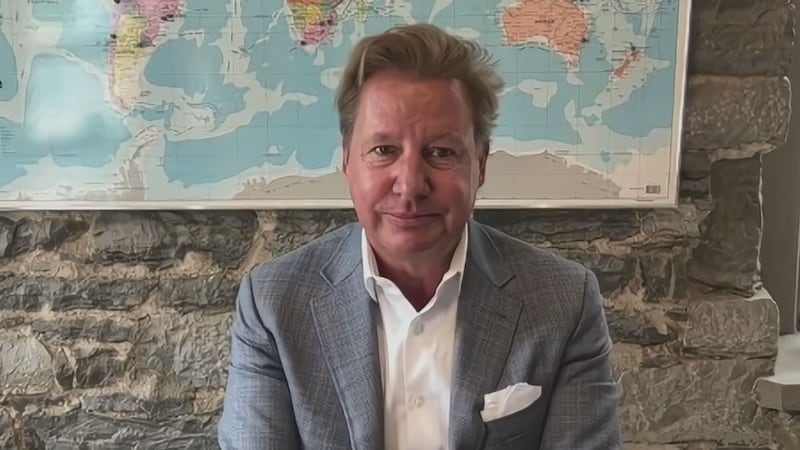
Read the full transcript below:
ROGER: Shares of Stingray are under pressure today after revenue came in below expectations. Joining us now is Eric Boyko, president, co-founder and CEO of Stingray. Eric, thanks, as always, for joining us.
ERIC: Thank you, Roger.
ROGER: Okay, your revenue took a hit. What happened? Where did you lose?
ERIC: It was really more, you know, we did a huge acquisition with TuneIn in November, and January, February and March were the first three months of this acquisition. Pricing, gross margin — but we’re very happy, and we reported to the market today that, starting in April, May and June, which is our Q1 for next year, our organic sales are well above 20 per cent. So we’re very excited about the synergies. We have achieved $42 million of positive synergies with TuneIn and our cost savings, so we’re happy with how the year is starting. The consensus is for our EBITDA to grow from $160 million to $230 million next year, from the analysts, and we’re excited to be above that consensus.
ROGER: So, you think you had the EBITDA margin compression? You think that’ll negate that, then?
ERIC: It was really, you know, the first few months, we started cross-selling, and we were cross-selling at zero per cent gross margin. So it’s great to get cross-selling, but if you’re doing a gross profit of zero per cent, we quickly adjusted our margins. We’re not going to be — you know, we told the market that we would do US$500,000 sales a day on programmatic ads. We’ve achieved US$550,000, so officially, on a run-rate basis, we’re doing US$275 million of programmatic ads, and we were doing zero a year ago. So that, for us, is very exciting. A lot of it is coming because we’re selling ads on connected TVs, so we’re taking advantage of that market. That also has grown from US$30,000 a day to US$175,000 a day, so we’re now doing $90 million a year of ads on connected TVs with the help of TuneIn. So I think it’s going to be a fantastic year for us. We’re here for the long term, and we’re very excited about this acquisition.
ROGER: And with that $90 million a year, how do you see that growing after that? Is this just the initial growth? Is there more room after that?
ERIC: You know, the programmatic ads market — it’s really pipe connecting. We have over 8,000 publishers, announcers or companies that use TuneIn and use Stingray that try to reach customers via connected TVs and connected devices. Those 8,000 will be in cars, on smart speakers, on your TVs and on radio. That market is growing exponentially. So we don’t know what the cap is on that, but right now we’re growing by over 100 per cent. Where is it going to stop? I think, in the next few quarters, instead of telling the market about pro forma, we’ll be able to show the execution and show actual results. So we’re very confident.
ROGER: Okay, just want to go back to the revenue for a sec. Your radio revenue was soft, and international revenue also declined. How do you see those turning around, or how do you try and turn those around?
ERIC: Yeah, so when we say international, for us it excludes the U.S. Just for example, I think our revenue in April in the U.S. was up 91 per cent excluding TuneIn. Right now, 76 per cent of our revenues in the broadcasting side, or streaming side, comes from the U.S. I must say, in our case, the U.S. represents 70 per cent of the ads market worldwide, and our focus and our office is in New York. Europe is great. It’s great to go visit, and great to go on vacation in Italy and Greece, but Europe is a small market. Asia is also a nice market, but small.
ROGER: Okay, you’ve grown your free cash flow. What do you plan to do with that?
ERIC: Yeah, so this year, based on the estimates of the analysts, our sales are going up by 40 per cent, our EBITDA goes up by 50 per cent and our free cash flow goes from $100 million to $160 million, so almost $2.50 a share. If we’re able to prove that scenario, if a stock generates $2.50 a share, then we should be trading at 10 times that free cash flow. This year, we’re expected to reimburse $80 million to $100 million of debt. But I agree with you, by the end of December we’ll be below two times EBITDA, and then all the analysts and investors will say, “Okay, what are you doing with your extra cash?” The goal is for sure another acquisition, but right now we’re very busy with TuneIn. We could increase the dividend or do more share buybacks.
ROGER: And just quickly, I want to touch on The Singing Machine. How is that going?
ERIC: So, The Singing Machine is not a usual product because we sell machines. We’ll sell $40 million of machines. But the goal of that strategy — as you know, we are the largest owner of a karaoke catalogue in the world. I think the largest. That’s why we’re in every car in the world. I got good news and bad news for your families. Every car in the world will have karaoke in the next five years, so it’s going to be — I call that table stakes. When you go for lunch, they give you a knife and fork and a napkin. Every car will come with karaoke, to the demise of most parents. And now, with The Singing Machine, every car will also have a microphone. So it’s going to be interesting. In five years from now, you can say you spoke to me about this, and you can tell your grandchildren that’s what happened.
ROGER: I heard some cheers of approval from our production crew over here, Eric, so I think they’re excited about it. Thank you very much for joining us today. Appreciate it. Always good talking to you.
ERIC: Thank you, Roger.
ROGER: Cheers. Eric Boyko, president, co-founder and CEO of Stingray.
---
This BNN Bloomberg summary and transcript of the June 10, 2026 interview with Eric Boyko are published with the assistance of AI. Original research, interview questions and added context was created by BNN Bloomberg journalists. An editor also reviewed this material before it was published to ensure its accuracy and adherence with BNN Bloomberg editorial policies and standards.

