SpaceX began trading following the largest initial public offering on record, drawing significant investor attention and raising fresh questions about valuation, growth expectations and the long-term outlook for Elon Musk’s ventures.
BNN Bloomberg spoke with Paul Harris, portfolio manager at Harris Douglas Asset Management, who said strong investor demand could support the shares in the near term but warned that expectations for the company remain exceptionally high and may be difficult to meet over time.
Key Takeaways
- Harris expects strong demand for SpaceX shares initially, supported by investor enthusiasm and underwriting support.
- He believes the company’s valuation is difficult to justify based on its current revenue base and future assumptions.
- Harris questioned whether several of Elon Musk’s long-term ambitions across multiple businesses will be delivered on schedule.
- Investors interested in the stock may benefit from waiting for trading volatility to settle and for more financial results to become available.
- Beyond technology, Harris sees opportunities in financials and healthcare, while remaining cautious on commodities such as gold.
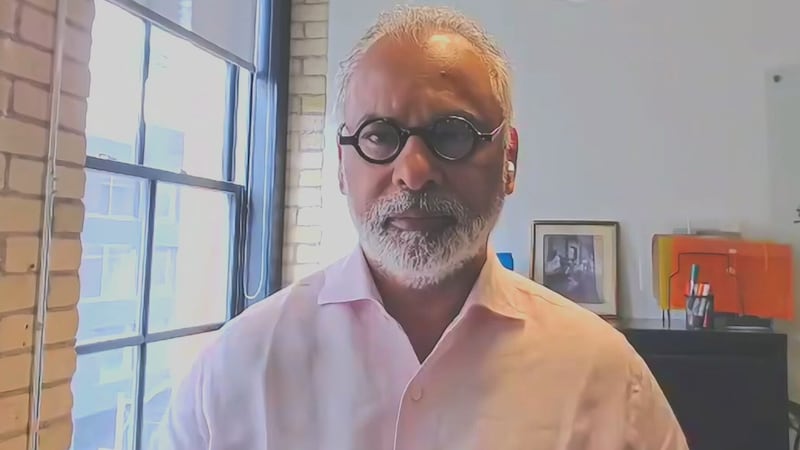
Read the full transcript below:
LINDSAY: The biggest IPO ever starts trading today. SpaceX will appear on the Nasdaq under the ticker symbol SPCX. So, should retail investors jump in and buy? Let’s get some perspective now from Paul Harris, portfolio manager at Harris Douglas Asset Management. Good morning. It’s great to have you join us.
PAUL: Thank you for having me.
LINDSAY: What are your overall views on SpaceX as a company, particularly its long-term prospects? What do you think?
PAUL: Well, I think the IPO probably goes well because it’s oversubscribed, and you’ve got Goldman and Morgan Stanley leading this. They’re also probably going to be involved in two bigger deals coming with ChatGPT and Anthropic down the road, so they want this to be very successful.
So, I think that’s the case. I don’t think the stock will open until midday. It’s going to take a long time for it to open, but my issue is very simple. There are a lot of expectations around this company, whether it’s the space business, the AI business or the satellite business. The satellite business is where all the money comes from, it sounds like, but it is massively overvalued at these levels given its revenue base.
So, I think there will be a lot of volatility. One of the issues I have is that Elon Musk has this aura about him, that everything he does is very successful. But a lot of things he’s talked about, whether it’s Tesla and robotaxis and all that stuff, he really hasn’t done much with those things. Waymo is way better off in robotaxis than Tesla has been, and Tesla has really lost a lot of ground to BYD, which is the Chinese maker of electric vehicles.
So, there are a lot of things he’s talked about that make one wonder whether they come to fruition. There’s also a lot of talk about going to Mars and all these other things, but this is a very complicated business, as Jeff Bezos found out. It’s really difficult to make these kinds of predictions and say you’re going to be worth a trillion dollars or dominate the AI business.
He has to deliver on a lot of this stuff, but he does have this aura about him that people really love, and they kind of jump on that bandwagon. So, I don’t see this IPO going poorly in any way, but I do think you have to think about the value of the business at some point and whether it can achieve some of the goals outlined in its prospectus.
LINDSAY: Would you consider buying at this point, or would you be waiting for a better entry point? What are you watching for as this IPO is listed?
PAUL: Well, I don’t think I would buy it. It’s also going to be very hard for many people to buy it. I think that’s another issue. For Canadian investors, it’s going to be difficult to access.
I think you need to let these things settle down and see where they trade. If you’re really interested in the stock, then you can purchase it at that point. There are also a lot of other very big IPOs coming over the next little while.
I think there’s a better chance that you wait, let the stock settle down and then make a decision. Maybe even wait until you see some earnings numbers and some additional financial information.
LINDSAY: There have also been discussions about a potential merger between SpaceX and Tesla. How do you view that possibility and the implications associated with it?
PAUL: Well, I think he’s probably going to do that because Tesla is not the kind of company it once was. I think he would get a higher valuation for Tesla by moving it into SpaceX.
It seems like everybody has talked about this for a while, that he will move Tesla into the SpaceX company. Tesla has lost a lot of ground over the last couple of years. They don’t meet their production numbers on a regular basis. As I said, they’re nowhere in robotaxis. There’s a lot more competition, especially from China, and I think Chinese companies have done a much better job on the battery side.
If you look at Europe, Canada and the United States, it’s different because you see a lot of Teslas here. But if you look at Europe, BYD is dominating quite aggressively. They make a vehicle that’s actually quite affordable. People are happy to buy electric vehicles, but maybe not at $80,000. They’re happy to buy them at $30,000.
I think he’s missed that part of the market. He may be able to get it back, but he built the Cybertruck instead of making a $35,000 electric vehicle, which probably would have been better for the EV industry.
LINDSAY: More broadly, looking at the technology sector today, what’s your outlook?
PAUL: Technology continues to do well. AI will still drive it, and I think there’s a lot of room for these companies to grow.
The balance sheets of some of these companies are changing from very free-cash-flow-oriented businesses to businesses generating less free cash flow because of increased spending. I think people are concerned about them taking on more debt.
The companies you have to look at are the Microsofts of the world, which still generate lots of free cash flow and have cloud businesses where they can rent out capacity from what they’re building.
Other companies don’t have that ability. But there are a lot of areas in the economy, including financials, that investors should look at because that industry is changing quite a bit. The current administration is allowing more deals to go through and reducing capital requirements.
Healthcare also continues to do well. There are lots of areas to invest in. You don’t necessarily have to be in technology, but there is certainly a need to have exposure because these companies continue to grow and generate strong earnings. You just have to be careful about which ones you buy.
LINDSAY: Anything you’re staying away from at the moment?
PAUL: I’m not a big fan of gold. We own oil stocks, but they can be too volatile. We don’t own miners or gold companies. We don’t think they’re great businesses because they’re driven by the underlying commodity.
So, we’ve stayed away from those areas for a long time. There are lots of other areas in the stock market where I think you can do quite well.
LINDSAY: Okay, we’ll leave it there. Paul Harris, portfolio manager at Harris Douglas Asset Management, always appreciate your time. Thanks so much for joining us.
PAUL: Thank you.
---
This BNN Bloomberg summary and transcript of the June 12, 2026 interview with Paul Harris are published with the assistance of AI. Original research, interview questions and added context was created by BNN Bloomberg journalists. An editor also reviewed this material before it was published to ensure its accuracy and adherence with BNN Bloomberg editorial policies and standards.

