Planned Stelco layoffs are raising questions about the future of Canada’s steel sector. Washington’s push to bring manufacturing to the U.S. is challenging the foundations of cross-border trade.
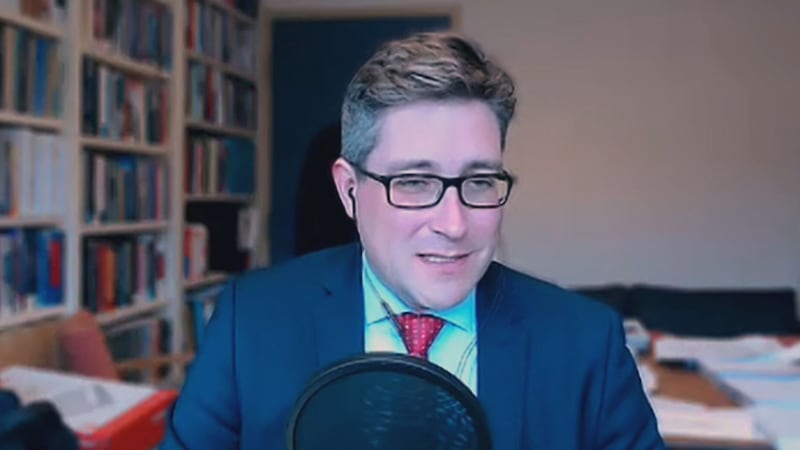
BNN Bloomberg spoke with Nicolas Lamp, associate professor at Queen’s University’s Faculty of Law, about Ottawa’s response to the trade war and the choices facing Canada’s steel industry.
Key Takeaways
- Lamp proposes temporary government ownership of the Stelco plant, with Canadian management, to preserve jobs and expertise while its long-term prospects become clearer.
- A court-ordered divestiture could create a path to a government purchase if no Canadian private sector buyer emerges, Lamp says.
- Lamp suggests a trade deal could lower U.S. steel tariffs from 50 per cent to 25 per cent, while Canada’s own trade barriers are keeping domestic steel prices high.
- Global steel overcapacity and cheaper foreign production limit the prospects for replacing U.S. sales with exports elsewhere, Lamp argues.
- Planned government projects and reported demand from Canadian steel users strengthen the case for maintaining domestic supply, according to Lamp.
Read the full transcript below:
ROGER: Last week, Stelco said it plans to lay off hundreds of workers as the trade war with the U.S. continues to batter Canada’s steel sector. While the company says those jobs could return if Ottawa and Washington reach a deal, our next guest argues the problem runs much deeper and suggests that Canada should consider nationalizing its steel industry. Here to share his perspective is Nicolas Lamp, associate professor at Queen’s University’s Faculty of Law. And Nicolas, thanks very much for joining us.
NICOLAS: Thank you for having me.
ROGER: Okay, you say this is not a traditional trade dispute. What do you mean by that?
NICOLAS: Canada has lots of trade disputes with the United States about softwood lumber, about dairy supply management, but it’s usually about how the rules should be applied. Here we have a situation where the U.S. is trying to fundamentally change the rules. Of course, Canada is trying to resist, but it’s not a dispute about existing rules. It’s an attempt by the U.S. to essentially say to Canada, “We don’t want you to have a steel industry. We want to make all our own steel. And so, if that means that U.S. deal industry goes out of out of business, we don’t mind.”
ROGER: So, are Canadian officials approaching this in the wrong way, then, do you think?
NICOLAS: I don’t see a mistake with Canadian officials. I mean, Canadian officials have been negotiating with the U.S. They have been trying to convince the United States that Canada and the U.S. are strongest when they work together, that really we should be teaming up against the threat from China in many respects, and so I think they’ve been doing all they can. But this situation is a very complicated one, where we have a U.S. company owning a Canadian steel plant and letting the workers go. And normally, of course, if a Canadian company shuts down, there’s no reason for the government to get involved. Like, the market should take over. But this is a very different situation.
ROGER: And how? What then should we be looking at? Is it — is it not realistic to expect? We talk about the automotive industry being so intertwined. Is the steel industry not the same? Is it not easily untangled?
NICOLAS: It’s a bit different because the Canadian government is providing a lot of protection to the steel industry at the moment. We have tariff-rate quotas on steel. We have high tariffs on steel. So, as a result, the price of steel in Canada is actually quite high right now. So this should be a good time to be producing steel, and so this raises some questions about the motives of the company here, because, of course, this is a U.S. company which is also producing steel in the United States, and it’s pretty clear that the interests of that company are not necessarily aligned with the interests of the workers in that steel plant, but — or with the — with the interests of the Canadian government.
ROGER: And so you say that Canada should consider nationalizing steel. What would that look like to you?
NICOLAS: Well, it’s interesting. The industry minister Joly has come out with this letter on Monday to the company, saying that it wants to uphold the company to its commitment that it made when it acquired the plant, and she mentioned that one of the remedies that the government may seek is a court order for divestiture, which is essentially a forced sale of the asset, and so that could be one way in which the company could be forced to sell it. And then, if there’s no Canadian buyer, no private sector buyer, the government could step in and buy the company. So that’s one way in which this could happen.
ROGER: And is Canada capable of running a steel company?
NICOLAS: Well, it wouldn’t. We wouldn’t obviously put the Canadian government in charge, right? It would be a comparable situation to the — to the Trans Mountain pipeline, where the government bought it. Then, of course, it will put some Canadian management in charge and hope that there will be, at some point, a private sector buyer. But I think, given these very unusual circumstances, right, where you have the trade war with the U.S., 50 per cent tariff on Canadian exports to the U.S., which probably will come down in an eventual deal, maybe to 25 per cent, as was negotiated in — in August. We also have these very high tariff barriers, which mean that the price of steel is very high, and so there is a very good case that this is not the time to essentially let this — this steel plant die. This is a time to try to keep the workers there, keep — try to keep the expertise in Hamilton in place to see what the long-term situation will be. And so I’m not saying that the Canadian government should permanently nationalize the entire Canadian steel industry. I’m just saying it should temporarily step in, try to keep this plant operating, so that we can then decide, once we know what the long-term picture is going to be, whether it makes sense to keep it going.
ROGER: Okay. Now, the U.K. nationalized their — did they national — they nationalize their entire steel industry. How did that go?
NICOLAS: Well, the U.K. was in a similar situation in the sense that it was — they had — was for foreign owners. The Chinese — a Chinese company was owning British Steel, but it was going under, and they — the British government stepped in. And it’s on the hook for billions to try to make these U.S. British Steel viable again. So that is a scenario where — which is, I think, quite different. British — I’m not sure that’s a good idea for the British government to spend this kind of taxpayer money in order to not just take over the existing assets and liability of British Steel, but also make this massive investment to make the company competitive again. I think that’s a different situation than the one we have now, where, I mean, as I understand it, the commitment would be — would be much more temporary.
ROGER: Okay, and is there demand outside of the U.S. for what the — what Stelco could produce? Could we sell it somewhere else, or are working?
NICOLAS: I don’t look at it in a — I don’t think so. I don’t think so. We have massive overcapacity globally in steel, and, of course, the Chinese and other South Asian producers can offer steel much more cheaply than we can. But the truth is, we have a very sheltered Canadian market now, and the government is planning many projects that will require a lot of steel, and so we — we have actually newspaper articles in the Globe and the Financial Post reporting that Canadian steel users are crying out for more steel, and so if you shelter a market, which means you drive up the price, you also have to make sure that there’s enough supply, and so you could even say the Canadian government has a responsibility here to make sure that there’s steel supply for Canadian steel users.
ROGER: Okay, we have to wrap it up there, Nicolas. But thank you very much for joining us.
NICOLAS: My pleasure.
ROGER: Nicolas Lamp, associate professor at the Queen’s University Faculty of Law.
---
This BNN Bloomberg summary and transcript of the Oct. 7, 2026 interview with Nicolas Lamp are published with the assistance of AI. Original research, interview questions and added context was created by BNN Bloomberg journalists. An editor also reviewed this material before it was published to ensure its accuracy and adherence with BNN Bloomberg editorial policies and standards.

