North American markets opened the week lower after U.S.-Iran peace talks ended without a deal, raising concerns about oil supply disruptions and broader economic strain. A potential blockade and tightening energy flows are adding to uncertainty.
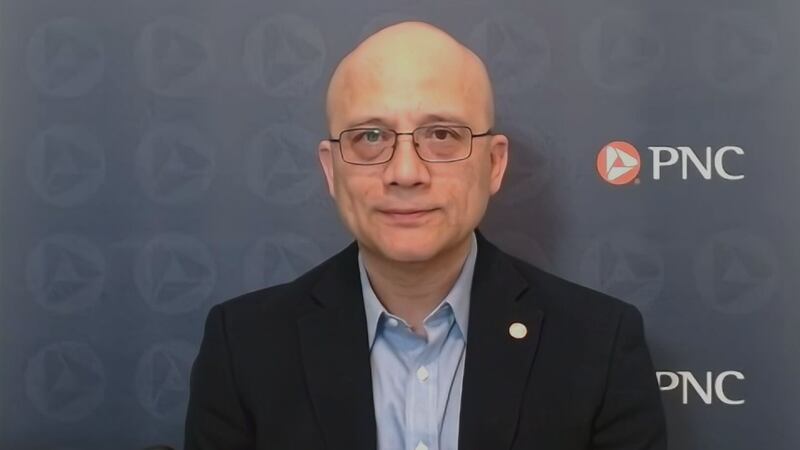
BNN Bloomberg spoke with Yung-Yu Ma, chief investment strategist at PNC Financial Services Group, who said markets are navigating heightened geopolitical risk while waiting for clearer signals on supply disruptions and negotiations.
Key Takeaways
- Failed U.S.-Iran talks are increasing the risk of oil supply disruptions, with shortages possible within weeks rather than just higher prices.
- Markets are not fully pricing in worst-case outcomes, but uncertainty remains high with potential for escalation or stalled negotiations.
- The current pullback is not seen as a broad-based buying opportunity, with investors advised to stay patient and maintain long-term positioning.
- China is expected to play a behind-the-scenes role in pushing for renewed negotiations while managing its own energy exposure.
- Long-term investment themes tied to energy security — including renewables, electrification and infrastructure — are expected to strengthen.
Read the full transcript below:
ANDREW: North American markets are slipping at the start of trading today after peace talks between the U.S. and Iran over the weekend ended without a deal. That has added to fears of a prolonged cutoff in oil shipments, with the global energy market already strained. Users and refiners are scrambling worldwide to secure supplies, and the U.S. is set to block Iranian ports as of today.
We’re joined by Yung-Yu Ma, chief investment strategist at PNC Financial Services Group. Yung-Yu, thank you for joining us. Could you walk us through what you’re watching most closely right now? There’s a lot going on.
YUNG-YU: Thanks, it’s great to be here. The most important thing is whether near-term pressure on both sides — the U.S. and Iran — is enough to bring them back to the negotiating table and find areas of compromise.
We’re likely to see pressure and shortages in the coming weeks in some markets, which could strain the global economy and introduce nonlinear effects. Instead of just higher prices, we could see outright shortages, where companies can’t access the inputs they need to manufacture goods.
We’re getting close to more severe pain points, and that should apply significant pressure on both sides.
ANDREW: So do you see this as more of a buy-the-dip opportunity in equities, rather than a broad-based selloff?
YUNG-YU: We don’t see it as a broad-based selloff. There’s likely a point where both sides reach some type of agreement that allows energy and other products to flow through the Strait of Hormuz again. There’s tremendous pressure on all parties.
That said, we’re not viewing this as a buy-the-dip environment. It’s more a time to stay put with longer-term positioning. The market hasn’t pulled back that much, and even today’s moves suggest investors are not pricing in the most severe outcomes.
There’s still significant uncertainty — escalation remains possible, infrastructure could be damaged, and negotiations could stall. We’d want to see a much deeper pullback before becoming more constructive. For now, it’s about staying the course.
ANDREW: So to clarify, you’re cautious. Have you made any changes to portfolios since the end of February when the conflict began?
YUNG-YU: We haven’t. We’ve been emphasizing patience and waiting for a more meaningful opportunity if markets pull back enough.
Over the medium term, we do see stronger trends emerging in areas like renewable energy and energy security, including electrification, infrastructure and utilities in the U.S. These areas could see renewed strength coming out of this conflict.
But right now, uncertainty is extremely high. Whipsaw risk is elevated, as we’ve seen over the past week or so, where shifts in messaging or ceasefire developments can quickly move markets. We’re focused on maintaining long-term positioning and waiting for more clarity.
ANDREW: Where do you see China positioning itself? It’s been a major buyer of Iranian oil — is it scrambling for alternative supply?
YUNG-YU: China is a major buyer of Iranian oil, but it also has other suppliers. It’s likely applying pressure and has played a constructive role previously in bringing Iran to the table. We expect that pressure to continue, potentially encouraging renewed negotiations.
China does face some economic pressure as an oil importer, but it also has reserves it can draw on. Its economy is not as exposed in the near term as some others and is relatively well-positioned to weather supply disruptions.
At the same time, China has a strong interest in stability in the Middle East, given its investments across the region. That should support efforts behind the scenes to bring parties back to negotiations.
ANDREW: One theme you highlight is electrical infrastructure, including demand from data centres.
YUNG-YU: Yes, data centres are part of it, but the theme is broader. Renewables could see a resurgence as well. About half of U.S. states have renewable energy policies at the state level, even if federal support has been reduced.
The political environment could shift again over time, and globally, there’s going to be a renewed focus on energy security and clean energy.
Electrification, grid expansion, infrastructure, construction and materials — all of these areas have a long runway for growth. This is a global theme, not just a U.S. story.
ANDREW: Thank you very much. Yung-Yu Ma, chief investment strategist at PNC Financial Services Group.
---
This BNN Bloomberg summary and transcript of the April 13, 2026 interview with Yung-Yu Ma are published with the assistance of AI. Original research, interview questions and added context was created by BNN Bloomberg journalists. An editor also reviewed this material before it was published to ensure its accuracy and adherence with BNN Bloomberg editorial policies and standards.

