Strong earnings from major U.S. banks and upbeat semiconductor results are reinforcing optimism as markets hover near record highs and investor positioning shifts.
BNN Bloomberg spoke with Jim Thorne, chief market strategist at Wellington-Altus Private Wealth, who said investors are rotating back into growth and technology while remaining underinvested in a rising market.
Key Takeaways
- Strong earnings from major banks and semiconductor companies are supporting equities near record highs.
- Investors are rotating out of value and defensives and back into growth, particularly in technology and AI-related names.
- Underinvestment is creating a potential “pain trade” higher as investors are forced to chase markets upward.
- A barbell strategy combining technology and commodities is favoured amid both AI expansion and a commodity supercycle.
- Policy direction in Canada, including energy and rates, remains a key uncertainty for growth and the consumer outlook.
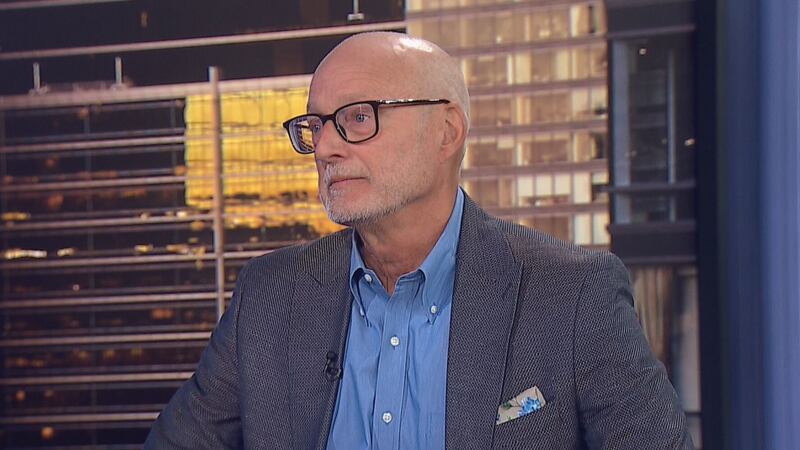
Read the full transcript below:
ANDREW: So there’s lots going on in earnings. Morgan Stanley and Bank of America reporting beats, as did the semiconductor company ASML, and that chip equipment giant raised its 2026 forecast. We are joined by Jim Thorne, chief market strategist at Wellington-Altus Private Wealth. It’s great to see you.
JIM: Good morning, Andy.
ANDREW: Thoughts on the market — what are you paying most attention to right now, Jim?
JIM: Right now, we’re seeing, I think, a pivot away from value stocks and into the growth area. So for the last couple of days, you’re starting to see tech, the Mag Seven, semiconductors, software companies really start to get a strong bid. And you’re starting to see, for example, the banks are coming in with great earnings, but some people are taking some money off the table because they’ve had nice runs. So I think the interesting thing is going to be, if and as and when we do get clarity in the Middle East, how do the markets go forward? We’re at 7,000 on the S&P right now, to record highs, right? And remember, the Street was basically calling for a 20 per cent drawdown this year because of the midterm election cycle. That’s not going to happen.
So Andy, the pain trade is due north, as traders would say. And I think the investors are underinvested, and we are still in a secular bull market.
ANDREW: The pain trade is due north.
JIM: Yeah.
ANDREW: Just clarify that one for us.
JIM: Pain trade. So everybody’s defensive. They sold the dip, right? So they’re all sitting on cash. They’re all in consumer staples, they’re defensive. And then what happens is, when you get clarity, everybody’s got to rush in and get in offensive. So due north means we’re going up, Andy. We’re going up, and the market’s not positioned for it.
ANDREW: One thing that interested me anyway this week, we saw Celestica, CLS, get back to record territory. And that’s a barometer, perhaps, of sentiment on this massive buildout of AI equipment.
JIM: It is. And you know, it’s a big theme. You got ASML numbers this morning showing that it’s still got legs. And so when you look at it, you sit there and you, as investors, you want to have a barbell approach. One is you want to embrace technology and embrace that wave. And then the other is you have to realize that we’re in a commodity supercycle. And, you know, the U.S. is building real stuff. So Andy, what you need to do is go back and think about how we invested after 2003 and 2004, which was industrials, picks and shovels, you know, infrastructure. So you CAT, Deere, and so it’s a barbell approach right now. And really what you don’t want to be in is cash.
ANDREW: What about the big U.S. banks? Would you have a weighting there, Jim?
JIM: Yes, I think financial institutions is a core holding, whether you’re in Canada or the United States. Andy, I think the big question is going to be now, with Anthropic and AI, is they are going to have to innovate, right — the banks. And, you know, had you had the governor of the Bank of Canada and you had the Fed talking to the banks because of what was coming out of Anthropic and AI and how their stack, their tech stack, is vulnerable. They need to start to innovate and embrace AI, and they need to embrace blockchain, and they’re starting to.
ANDREW: Yeah, of course they do. They have, for generations, served as middlemen or trolls under the bridge, extracting fees for transferring money. That’s not all of their business, but that’s because people don’t trust each other. They have this middleman. So do you think blockchain will, in any kind of a reasonable timeframe, change life?
JIM: Yes, I think that’s the interesting part. Andy, we go from AI being a productivity earnings story to — last week — it was a stability, trust story because of, you know, now, are banks stable enough to handle all this AI? And are their systems strong enough? But they are evolving. I would say one thing that’s very interesting, for example, Goldman Sachs now is coming out, or there’s talk of Goldman Sachs coming out with a bitcoin yield product. You’re starting to see Wall Street finally embrace this new asset class and this new technology.
ANDREW: Mr. Carney, the Prime Minister’s Liberals winning a majority this week. What do you want to see them do here, Jim?
JIM: Well, the way I frame it is, it’s the six weeks where everything has changed, right? Canada can basically take a pole position in this new world where energy security is more important than climate change. Will he put the foot on the gas and get Canada embracing its resources?
ANDREW: Reliability of supply — I mean, it’s always been important, but the spotlight has really been put on it.
JIM: It is, and I think he knows it. That’s the whole point. Will he state it? Will we get there, and will we embrace it in Canada? Because it’s now about security. So it’s about AI, it’s about cheap energy, and it’s about secure energy. And Andy, we should be revelling in this as a country, and we need to understand that our economic growth really isn’t as strong as people suggest. And, you know, for example, our second-largest export last year was gold, right? What would our GDP numbers look like if gold didn’t go up from 2,000 to 4,500 or 5,000? So we have a lot of wonderful opportunity. Will Carney abandon, or shall we say not use as the driving force of our industrial policy, climate change? Andy, Venezuela — Chevron just went into Venezuela to expand their production. Venezuela oil is dirtier than the West. The oil out of Alberta right now — we can beat against Iraqi oil, dirty oil. Canadian oil is already better for the climate than Iraqi oil. Can we start to frame the conversation differently? We already do it. Our LNG is already better for the environment. So let’s get away from the Trudeau agenda and embrace our advantages and start getting capital and shovels into the ground.
ANDREW: Yeah. Mind you, at that big LNG Canada plant, they’ve had massive flaring, gas flaring. Now maybe it’s just teething troubles as they ramp up the huge facility.
JIM: Well, there’s always growing pains, right, Andy?
ANDREW: Yeah, but they’re burning off far more LNG than they were meant to, or natural gas. But of course, we’ll see. It’s a massive engineering project. Finally, what about the Canadian consumer? Is there any interesting consumer stocks in Canada right now?
JIM: I think what I think everybody owns up here — they all own the same stuff. If I hear one more person talk about Couche-Tard, I’m going to die, right? And then there’s Shopify. Now, the Canadian consumer — it’s a story of haves and have-nots, right? I mean, the economic growth — if Carney embraces what’s going on, Western Canada should be the basis of our industrial policy. But that means we’re going to have a tough road to hoe, basically, in central and southern Ontario. And then the other question is also, is Tiff Macklem too tight? Should he bring interest rates down? We’re going to find out, Andy, right now in the spring season of the real estate market, whether it turns around or not. We rightly or wrongly embraced real estate as a core tenant of our economy, right? I was down in the States — don’t blame me, OK — but if the rates — and they’re low, he cut — but if they’re not low enough, maybe he’s got to go another 100 basis points lower to get real estate going, because Carney knows that even if he embraces resources, it’s going to take four or five years for the real economic event to happen. There’s been no shovels in the ground.
ANDREW: Jim, thanks very much.
JIM: Thank you.
ANDREW: Always great having you on. Jim Thorne, chief market strategist at Wellington-Altus Private Wealth.
---
This BNN Bloomberg summary and transcript of the April 15, 2026 interview with Jim Thorne are published with the assistance of AI. Original research, interview questions and added context was created by BNN Bloomberg journalists. An editor also reviewed this material before it was published to ensure its accuracy and adherence with BNN Bloomberg editorial policies and standards.

