Canada’s energy sector is increasingly being viewed as a long-term investment, supported by durable reserves, rising demand and shifting investor sentiment.
BNN Bloomberg spoke with David Szybunka, senior portfolio manager and managing director of the energy team at Canoe Financial, who said investors are focusing on risk-adjusted returns while repositioning within the sector.
Key Takeaways
- Energy stocks were outperforming even before geopolitical tensions, reinforcing a broader re-rating of the sector’s long-term value.
- Investors are prioritizing risk-adjusted returns as supply disruptions raise concerns about prolonged impacts on global energy flows.
- Capital is rotating away from crowded oil trades toward underperforming areas such as royalties and energy services.
- Royalty companies could benefit from rising commodity prices and increased capital spending across producers’ land bases.
- Natural gas and global LNG dynamics are tightening supply expectations, supporting a more constructive multi-year outlook.
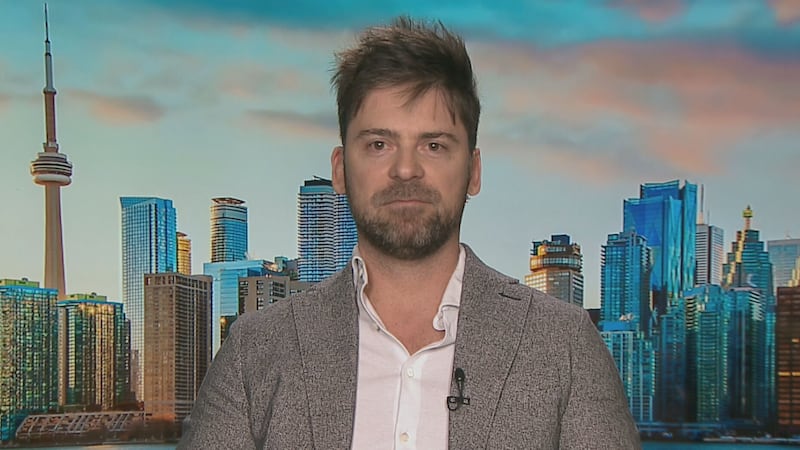
Read the full transcript below:
ANDREW: Canada’s energy sector makes the case that it’s a long-term opportunity because of reserves in the oilsands that last decades, and not just a short-term trade. Let’s get more from David Szybunka, senior portfolio manager and managing director, energy team at Canoe Financial. Thanks very much indeed for joining us, David. It is interesting, isn’t it? For example, Suncor just extended its reserve life by decades. So those oilsands are not going away.
DAVID: No, they’re not. And I mean, you kind of bring up the oilsands, the extension of the reserves. I’d just say on the year, the energy stocks have done quite well, and energy stocks were outperforming before the war even started, right? And you kind of see the Canadian energy stocks doing quite well the last kind of two, three years on the back of what you just said, of more reserve life, recognition of what they actually have. But I would say all the energy demand tied to AI, all these types of things, the stocks were outperforming before the war, and then now we’ve kind of had this war incident with Iran, and this is all making investors feel like, I think we’re going to need this energy stuff for a while, right? And so I think it’s really important to recognize that all we’re really doing is extending the terminal value of the sector, or increasing it, that is, and I think that’s really good for the sector as a whole. As people think about that, it’s going to make investors want to take weight up over time.
ANDREW: This current disruption has been described in some ways as the biggest in history, and we’re only, in a way, beginning to feel it because the tankers, the last tankers, have left before the war. Some of them have only just docked.
DAVID: Yeah. When we think about just what’s happened here, this is a shock, right? And shocks aren’t healthy, period, for the market. And so when we think about the period that we’re in, we’re in risk management mode to some degree. We’re not just thinking about max upside, where could oil go? We’re thinking about where is the best risk-adjusted return for our clients. We see the upside, but let’s manage through this period. There is risk to stuff that you just talked about. There are countries that aren’t going to be able to get certain diesel, gasoline, fertilizers, these types of things. I’d say all the reports that I’m reading are just that if the Strait of Hormuz opens tomorrow, things go back to normal in the next 60 to 90 days. I don’t think they go back to normal. I think this is going to take some time to de-bottleneck. China is not just going to increase or cancel their export ban on diesel and gasoline just because the Strait is open. They’re going to take care of people in China. So these are all things that we think about in the current environment. Could this cause a global recession? Are other countries going to be impacted a long time? And I think there are ways for us to manage risk through that within the energy funds.
ANDREW: Right. So you have a couple of ideas for us. The first are royalty players, PrairieSky Royalty, PSK, and Topaz Energy, TPZ, which was a spinoff from Tourmaline quite a while ago. Tell us why you like these royalty plays.
DAVID: Yeah. So if you just kind of think about coming out of COVID, the mindset was oil is going to be $40 to $50 for a long time. And when you kind of look back on that period and look at what stocks did really well, integrated oils did really well. You kind of V-bottomed on a lot of the Exxon, Chevron, Suncor, CNQs. You didn’t have that long to buy them, but stuff like royalties, you had a lot of time to buy them. The mindset was oil at $40 to $50 for a long time. Who’s ever going to drill wells? And so that underperformance, I think, is the opportunity today. I don’t know where we’re going to settle out at, but I don’t see how we go back to where we were on commodity prices. There are physical disruptions on global LNG. The global LNG forward curves have really moved up. There’s a lot of cash in the system today. Cash is building. You can feel the producers have more cash, but I just think we settle out higher on the commodities. If that’s the case, there’s going to be more spending at the margin. It doesn’t mean we go back to the old ways of the sector — grow, grow, grow, spend, spend, spend — but I think global capex is going up. And when you think about that across the royalty businesses, just like they really lagged coming out of COVID, I think these could be some of the best stocks as we kind of push forward, saying what if they do get a little bit more spending across their lands, price times volume. And I think both those stocks are set up really, really well.
ANDREW: SLB, also known as Schlumberger, a global play on energy.
DAVID: Yeah. And so just remember one other thing on those royalties, they haven’t moved, Andy. They were flat last year, and they’re up 10 to 20 per cent this year. You look at other areas of the oils, they have had big moves, and that kind of ties into Schlumberger too. Go look at a three-, four-, five-year chart of Schlumberger versus an Exxon. It hasn’t moved. And so when you’re trying to manage risk within the funds, there are places that you can take profits on, move to other areas and enter Schlumberger. This is the biggest service provider globally. You get a little bit more incremental capex across the board — earnings or EBITDA cash flows. The estimates have been coming down for two, three years. We think we’re bottoming on the estimates. And what’s happening globally is making investors feel like there should be some more capex in the system — governments, companies, allocations of capital. Schlumberger will do really, really well on that. Stocks like this could be the new leadership, as opposed to just where the leadership has been.
ANDREW: And finally, Trican Well Service, TCW, that stock’s had a pretty good run.
DAVID: Yeah. Again, the services have done fine, but they’ve really lagged relative to some other subsectors within energy. And so when we look at just what’s happening, Western Canadian prices right now — I’m not saying they’re staying here — but condensate prices closed yesterday over $150 a barrel. Heavy oil is over $100 a barrel. Well payouts for producers are literally under six months, depending on the play. So are you sure you should buy your stock back at an all-time high with that incremental cash flow? Maybe you pay down a bit of debt here in this environment, but maybe you just increase some spending at the margin, because your well payout is under six months. And so we think that’s going to happen in terms of allocation of capital. And the Tricans of the world really haven’t moved. Again, you bring up that 10-year chart and see where stocks like this are trading.
ANDREW: David, we better jump. Thank you very much. Exciting times in oil. Leave us with a final thought. David, you’ve been around oil investing for a while. Did you ever think we’d see a situation like this where some important regions are apparently at risk of just running out of fuel?
DAVID: Yeah. I mean, I haven’t experienced this in my career. When we kind of do analogs and look back, the 1973 oil shock was probably the best analog that we see. But you’re kind of describing stuff that happened through the Second World War, where ships could not make it to other countries. And these are kind of things the market’s shrugging off for now. We’ll see how it all plays out. We’ll get smarter over the next two, three months. But yeah, we’ll see how these shocks play out. They tend not to be healthy for the market in general, even though energy would benefit on some of the back of that. And Andy, I just want to say congrats on the retirement coming in the next few days here. Really appreciate all our conversations over the years.
ANDREW: David, thanks very much indeed. Yep, I’m going to miss you guys. David Szybunka, senior portfolio manager and managing director, energy team at Canoe Financial.
---
This BNN Bloomberg summary and transcript of the April 15, 2026 interview with David Szybunka are published with the assistance of AI. Original research, interview questions and added context was created by BNN Bloomberg journalists. An editor also reviewed this material before it was published to ensure its accuracy and adherence with BNN Bloomberg editorial policies and standards.

